


男
Learn 里 — HSK 3.0 Level 1
里
TOP-50
Frequency
The ranking is based on data from open sources.
HSK 3.0 · Level 1
Translation
- (char./m.) neighborhood; native place; a Chinese unit of length(=1/2km)
- (n.) inside, inner; lining (of a garment)
- (radical.) village, mile
Simplified
里
Traditional
裏
Strokes count
7

Words with 里 10
Same pronunciation 13
Similar pronunciation 108
Synonyms 22
Antonyms 4
Writing and worksheets
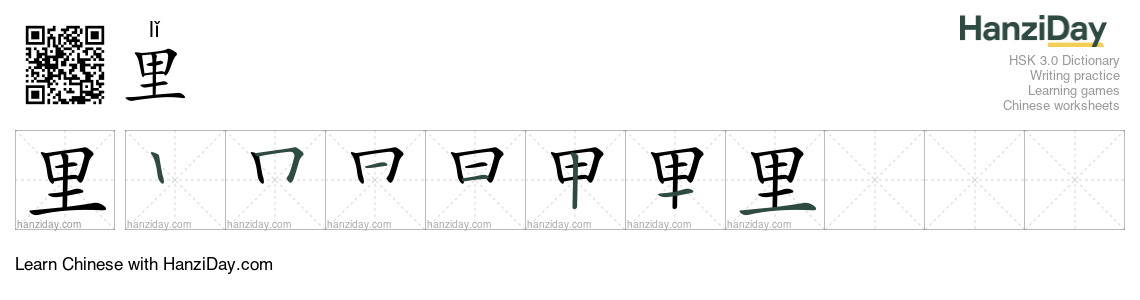
Stroke order
Games & Exercises 9
Find Hanzi
Find Hanzi is a playful exercise for learning Chinese. Spot characters, boost attention, download PDF, and enjoy studying Chinese through games!
Find Radical
Practice Chinese radicals online: choose the Hanzi containing the target component, use optional pinyin hints, and create printable PDF exercises.
Tone Trainer
Learn Mandarin tones online with the Chinese Tone Trainer. Practice tone recognition, pronunciation, and exercises for beginners and advanced learners.
Hanzi Connect
Match Hanzi with pinyin or identify words by sound. Use your own vocabulary or HSK 3.0/YCT levels. Play online after sign-in; printable PDFs with answers are for PRO.
Lost Stroke
Play online: find the missing stroke or radical, restore Chinese characters in order, and create printable PDF worksheets with pinyin and answers.
Calligraphy
Create calligraphy and custom Chinese character coloring pages with pinyin, stroke order, outline styles, and writing grids. Download a print-ready PDF for class or home.
Memo
Flip cards to match Chinese characters or pair Hanzi with Pinyin. Build a custom HSK 3.0 or YCT deck, play online, and create printable PDF cards.
Sudoku
Play Hanzi Sudoku online with 4×4, 6×6, or 9×9 grids, four difficulty levels, custom characters, and HSK 3.0/YCT sets. Create printable PDFs with answers.
Writing trainer
Practice Chinese character writing online with correct stroke order, outlines, a 3–2–1 preview, mistake-based hints, pinyin, and focused Hanzi review.








Examples of use 99
她
骄
傲
地
说
:
尽
管
我
的
家
很
小
,
但
这
里
是
全
世
界
最
温
暖
的
地
方
,
因
为
有
家
人
的
爱
。
She proudly said: Although my home is small, it is the warmest place in the world because of the love of my family.
杯
子
在
桌
子
里
。
(phr.) The cup is inside the table (or desk).
杯
子
里
的
水
快
满
了
。
The glass is almost full.
杯
子
里
还
有
茶
吗
?
Is there any tea in the cup?
我
的
书
包
里
有
三
本
笔
记
本
。
There are three notebooks in my schoolbag.
家
里
面
不
太
热
。
It isn't too hot at home.
你
不
能
进
,
这
里
是
出
口
。
You can't enter. This is the exit.
电
话
里
讲
不
明
白
。
I couldn't understand it on the phone.
我
脑
子
里
总
想
着
这
件
事
,
怎
么
也
睡
不
着
。
I always think about it in my mind, and I can't sleep.
这
里
我
们
不
妨
听
听
佩
•
詹
森
的
故
事
。
Here we might as well listen to the story of Pei Zhan Sen.
公
园
里
有
太
多
花
粉
了
,
他
不
能
去
,
他
去
的
话
会
生
病
的
。
There is too much pollen in the park. He can't go. If he goes, he will get sick.
你
敢
不
敢
一
个
人
到
山
里
去
?
Do you dare to go to the mountains alone?
奶
奶
喜
欢
在
家
里
,
不
喜
欢
外
出
。
Grandma prefers being at home to going out.
我
可
以
乘
大
象
不
注
意
,
进
到
大
象
鼻
子
里
去
。
I can take the elephant without paying attention and go into the elephant's nose.
我
心
里
隐
约
有
些
不
安
,
抱
着
包
裹
就
往
工
地
跑
。
I was vaguely uneasy in my heart, so I ran to the construction site with the parcel in my arms.
周
瑜
觉
得
自
己
很
有
才
,
却
总
比
不
过
诸
葛
亮
,
心
里
一
直
不
服
气
。
Zhou Yu felt that he was very talented, but he was always unconvinced.
请
不
要
在
教
室
里
吃
东
西
。
Please don't eat in the classroom.
妈
妈
在
院
子
里
种
了
很
多
蔬
菜
。
Mother grows a lot of vegetables in the yard.
冰
箱
里
有
很
多
吃
的
和
喝
的
,
有
水
果
,
有
牛
奶
,
还
有
菜
。
There are many things to eat and drink in the refrigerator, including fruits, milk and vegetables.
很
多
老
年
人
喜
欢
在
这
里
喝
茶
。
Many old people like to drink tea here.
在
吃
药
之
前
,
应
该
好
好
读
一
下
盒
子
里
的
说
明
。
You should read the instructions in the box carefully before taking the medicine.
我
把
家
里
的
水
果
都
吃
光
了
。
I ate up all the fruit at home.
家
里
的
水
果
都
吃
光
了
,
我
们
再
去
买
一
些
。
We have eaten up all the fruits at home, so let's buy some more.
把
大
衣
脱
下
来
吧
,
房
间
里
很
热
。
Take off your coat. It's very hot in the room.
今
天
全
校
师
生
都
在
体
育
馆
里
开
大
会
。
Today, all the teachers and students have a meeting in the gymnasium.
我
们
的
车
在
大
山
里
沿
着
公
路
盘
旋
而
行
。
Our car circled along the highway in the mountains.
大
城
市
里
有
成
千
上
万
的
打
工
者
。
There are thousands of migrant workers in big cities.
请
你
讲
讲
你
在
大
学
里
的
日
子
,
好
吗
?
Would you please tell me something about your days in college?
大
城
市
里
很
热
闹
。
It's very lively in big cities.
动
物
园
里
有
老
虎
和
大
熊
猫
。
There are tigers and giant pandas in the zoo.
大
家
都
认
为
这
里
很
干
净
。
Everybody thinks it's very clean here.
这
里
的
留
学
生
大
约
有
三
百
个
。
There are approximately three hundred foreign exchange students here.
建
伟
在
大
学
的
一
座
公
寓
楼
里
开
了
一
家
书
店
,
顺
便
卖
点
儿
文
具
、
电
池
、
小
日
用
品
等
。
Jianwei opened a bookstore in an apartment building of the university, selling stationery, batteries and small daily necessities by the way.
他
家
住
在
这
栋
大
楼
里
。
His family lives in this building.
家
里
的
空
调
坏
了
,
咱
们
另
外
再
买
一
个
吧
。
The air conditioning in our house has broken, let's buy another one.
花
园
里
有
很
多
五
颜
六
色
的
花
。
There are many colorful flowers in the garden.
花
园
里
有
很
多
漂
亮
的
花
儿
。
There are many beautiful flowers in the garden.
家
里
所
有
的
书
我
都
看
过
了
。
I have read all the books at home.
哪
里
都
找
不
到
我
的
手
机
了
。
I can't find my phone anywhere.
每
年
都
有
成
千
上
万
的
人
来
这
里
旅
游
。
Thousands of people visit here every year.
要
小
心
水
里
的
水
母
!
Be careful of jellyfish in the water!
请
问
,
这
里
有
没
有
打
印
的
地
方
?
Excuse me, is there any place to print here?
商
店
里
的
东
西
比
外
面
商
店
的
贵
很
多
。
The things in the shop is much more expensive than the shops outside.
你
要
在
信
里
讲
讲
自
己
的
近
况
。
You need to talk about your own recent situation in the letter.
中
国
各
地
的
人
都
喜
欢
来
这
里
旅
游
。
People from all over China like to travel here.
这
里
的
海
鲜
很
美
味
。
The seafood here is delicious.
这
里
是
房
子
的
阳
面
,
采
光
好
。
This is the sunny side of the house, with good lighting.
我
的
收
件
箱
里
什
么
都
没
有
。
There's nothing in my inbox.
在
我
的
脑
海
里
,
父
亲
很
少
与
我
们
亲
近
。
In my mind, my father is rarely close to us.
商
店
里
的
那
条
羊
毛
头
巾
雪
白
雪
白
的
。
The wool headscarf in the shop is white.
这
里
的
景
色
太
美
了
,
我
来
照
张
相
。
The scenery here is so beautiful. Let me take a picture.
这
里
的
海
鲜
很
新
鲜
!
The seafood here is very fresh!
家
里
什
么
馅
儿
的
月
饼
都
有
。
There are moon cakes with any stuffing at home.
我
们
的
画
被
妈
妈
放
在
了
客
厅
里
。
Our picture was put in the living room by my mother.
这
里
的
夏
天
有
很
多
阳
光
。
There is a lot of sunshine here in summer.
你
的
客
厅
里
怎
么
到
处
是
书
啊
?
Why are there books all over your living room?
你
的
可
乐
里
要
放
冰
块
吗
?
Do you want ice in your coke?
请
问
,
这
里
附
近
有
停
车
的
地
方
吗
?
Excuse me, is there a parking place near here?
这
里
的
海
鲜
汤
虽
然
有
点
贵
,
但
是
很
好
喝
。
The seafood soup here is a little expensive, but it tastes good.
有
的
花
喜
干
,
就
别
多
浇
水
;
有
的
花
喜
欢
潮
湿
的
环
境
,
就
别
放
在
太
阳
地
里
。
Some flowers like to dry, don't water more; Some flowers like humid environment, so don't put them in the sun.
我
买
了
一
面
镜
子
,
放
在
我
的
房
间
里
。
I bought a mirror and put it in my room.
这
里
的
冬
天
很
干
燥
。
The winter here is very dry.
他
是
这
里
的
店
员
。
He is a shop assistant here.
她
喜
欢
在
下
雨
的
日
子
在
书
店
里
看
书
。
She likes reading in the bookstore on rainy days.
我
的
脑
子
里
想
的
都
是
我
的
作
业
。
All I can think about is my homework.
他
的
电
脑
在
他
的
书
包
里
。
His computer is in his schoolbag.
他
是
这
里
的
工
人
。
He is a worker here.
这
里
有
点
黑
,
我
们
开
电
灯
吧
。
It's a little dark here. Let's turn on the lights.
放
学
后
,
学
校
里
有
点
冷
清
。
After school, the school is a little deserted.
这
里
附
近
不
但
有
美
术
展
览
,
而
且
有
电
影
院
和
图
书
馆
。
There is not only an art exhibition nearby here, but also a cinema and library.
房
间
里
比
外
面
暖
和
多
了
。
It's much warmer in the room than outside.
你
要
是
在
这
里
该
有
多
好
啊
!
It would be good if you were here!
花
园
里
有
许
多
玫
瑰
花
。
There are many roses in the garden.
书
包
里
有
很
多
书
。
There are many books in the schoolbag.
学
校
里
有
一
个
商
店
。
There is a shop in the school.
今
天
学
校
里
有
一
个
晚
会
。
There is a party at school today.
外
面
好
热
,
快
来
这
里
凉
快
一
下
。
It's hot outside. Come here and cool off.
你
好
,
这
里
是
前
台
。
Hello, this is the front desk.
由
于
家
里
老
人
突
然
生
病
,
我
只
好
放
弃
出
国
。
I had to give up going abroad due to an old family member suddenly falling ill.
外
面
好
热
,
快
到
这
里
来
凉
快
一
下
。
It's hot outside. Come here and cool off.
一
套
校
服
里
有
衬
衫
、
裤
子
、
外
套
、
袜
子
和
皮
鞋
。
There are shirts, trousers, coats, socks and leather shoes in a school uniform.
他
小
时
候
家
里
很
穷
。
His family was poor when he was young.
最
近
这
里
很
冷
。
It's very cold here recently.↵
这
个
包
很
轻
,
里
面
没
什
么
东
西
。
This bag is very light and there is nothing in it.
这
位
作
家
每
天
早
上
都
跑
步
,
他
一
般
会
跑
十
五
公
里
。
The writer runs every morning. He usually runs fifteen kilometers.
这
里
明
天
会
下
雨
吗
?
Will it rain here tomorrow?
由
于
连
年
的
战
争
,
家
里
生
活
非
常
困
难
。
Life at home is very difficult because of years of war.
他
轻
轻
地
推
开
了
门
,
发
现
房
间
里
没
有
人
。
He gently pushed open the door and found no one in the room.
我
马
上
出
来
了
,
你
在
哪
里
?
I'll be right out. Where are you?
老
师
说
从
这
里
上
台
,
从
那
里
下
台
。
The teacher said to go on stage from here and step down from there.
放
学
后
,
学
校
里
冷
冷
清
清
。
After school, the school is deserted.
这
里
是
女
士
服
装
,
那
里
是
男
士
服
装
。
Here are ladies' clothes and there are men's clothes.
图
书
馆
里
有
中
国
书
法
作
品
。
There are Chinese calligraphy works in the library.
你
们
办
公
室
里
有
传
真
机
吗
?
Do you have a fax machine in your office?
请
问
,
我
可
以
在
这
里
照
相
吗
?
Excuse me, can I take pictures here?
公
园
里
有
厕
所
吗
?
Is there a toilet in the park?
这
里
一
年
到
头
都
是
夏
季
。
It is summer here all the year round.
你
住
在
哪
里
?
Where do you live?
科
学
馆
在
哪
里
?
Where is the Science Museum?
Learn 里 (lǐ) in context
里 appears here with its available localized meaning and tone-marked pinyin lǐ. Listen to the pronunciation and review any examples, illustrations, or lexical links shown for this entry.
Use the sections available on this page to compare characters, components, radicals, related words, matching pronunciation, synonyms, or antonyms. HanziDay shows only the information supported by this entry.
里 in HSK 3.0 Level 1
HanziDay organizes HSK 3.0 vocabulary around the new three-stage, nine-level framework. This entry belongs to Level 1; open the level list to study it alongside other vocabulary from the same stage.
Practice the stroke order for 里
Use the stroke animation to follow the writing order, then practice the sequence with the interactive writing tool. After signing in, you can also create a printable worksheet from this entry within your current allowance.