


为
Learn 力 — HSK 3.0 Level 5
力
TOP-500
Frequency
The ranking is based on data from open sources.
HSK 3.0 · Level 5
Translation
- (n.) physical strength; (Physics) force
- (radical.) power
- (char.) power, ability, strength; with all one's might
Radical
Simplified
力
Traditional
力
Strokes count
2

Words with 力 69
Same pronunciation 64
Similar pronunciation 59
Synonyms 53
Writing and worksheets
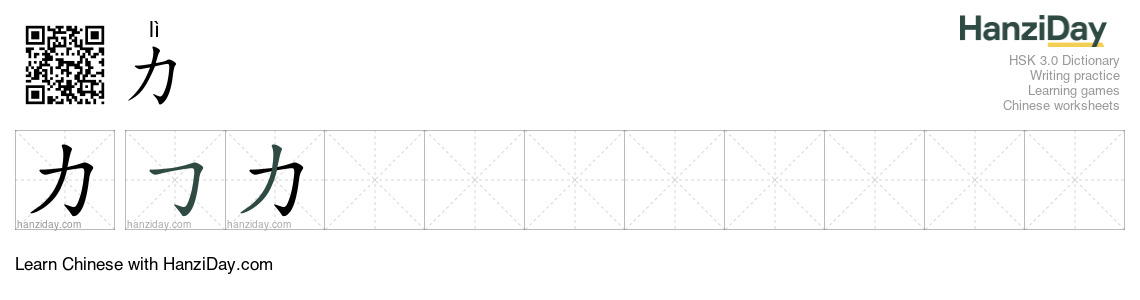
Stroke order
Games & Exercises 9
Find Hanzi
Find Hanzi is a playful exercise for learning Chinese. Spot characters, boost attention, download PDF, and enjoy studying Chinese through games!
Find Radical
Practice Chinese radicals online: choose the Hanzi containing the target component, use optional pinyin hints, and create printable PDF exercises.
Tone Trainer
Learn Mandarin tones online with the Chinese Tone Trainer. Practice tone recognition, pronunciation, and exercises for beginners and advanced learners.
Hanzi Connect
Match Hanzi with pinyin or identify words by sound. Use your own vocabulary or HSK 3.0/YCT levels. Play online after sign-in; printable PDFs with answers are for PRO.
Lost Stroke
Play online: find the missing stroke or radical, restore Chinese characters in order, and create printable PDF worksheets with pinyin and answers.
Calligraphy
Create calligraphy and custom Chinese character coloring pages with pinyin, stroke order, outline styles, and writing grids. Download a print-ready PDF for class or home.
Memo
Flip cards to match Chinese characters or pair Hanzi with Pinyin. Build a custom HSK 3.0 or YCT deck, play online, and create printable PDF cards.
Sudoku
Play Hanzi Sudoku online with 4×4, 6×6, or 9×9 grids, four difficulty levels, custom characters, and HSK 3.0/YCT sets. Create printable PDFs with answers.
Writing trainer
Practice Chinese character writing online with correct stroke order, outlines, a 3–2–1 preview, mistake-based hints, pinyin, and focused Hanzi review.








Examples of use 32
力
气
(n.) (spoken Chinese) physical effort, physical strength
力
量
(n.) physical strength or power; ability, force, power; effect, efficacy, potency
那
么
多
人
,
弟
弟
一
下
子
就
把
爸
爸
找
出
来
了
,
弟
弟
的
眼
力
真
好
!
So many people, my brother found out my father at once, and my brother's eyesight is really good!
如
果
不
吃
巧
克
力
,
我
可
能
受
不
了
。
If I don't eat chocolate, I may not be able to stand it.
在
面
试
的
时
候
千
万
不
能
害
羞
,
应
该
努
力
表
现
出
自
己
的
优
点
。
Don't be shy during the interview, you should try your best to show your strengths.
妹
妹
的
记
忆
力
很
好
,
看
什
么
都
过
目
不
忘
。
My sister has a good memory and never forgets anything.
只
有
不
断
提
升
自
己
的
决
策
能
力
,
才
能
真
正
为
自
己
的
人
生
做
主
。
Only by constantly improving one's decision-making ability can one truly make decisions for one's own life.
这
个
健
身
计
划
不
适
合
他
,
所
以
事
倍
功
半
,
尽
管
他
努
力
地
锻
炼
身
体
,
但
是
现
在
没
有
什
么
效
果
。
This fitness program is not suitable for him, so it gets twice the effort with half the result. Although he works hard to exercise, it has no effect now.
我
的
中
文
听
力
不
太
好
。
My Chinese listening is not very good.
它
是
那
么
弱
小
,
丝
毫
没
有
对
抗
大
象
的
力
量
。
It is so weak that it has no strength against elephants.
大
象
现
在
毫
无
抵
抗
能
力
,
只
要
我
在
它
身
体
的
重
要
部
位
咬
几
个
洞
,
它
就
没
命
了
。
The elephant has no resistance now. As long as I bite a few holes in important parts of its body, it will die.
这
盒
巧
克
力
是
从
哪
儿
来
的
?
Where did this box of chocolates come from?
他
真
可
怜
,
已
经
努
力
了
很
多
年
,
但
还
是
没
实
现
他
的
理
想
。
It's really sad for him. He has worked hard for many years, but he still hasn't realised his dreams.
她
的
听
力
和
口
语
都
很
好
,
但
是
写
字
不
太
好
。
She is good at listening and speaking, but she is not very good at writing.
他
用
了
全
身
的
力
气
,
才
把
我
的
行
李
全
部
搬
到
宿
舍
。
He used all his strength to move all my suitcases to the dormitory.
演
出
开
始
时
人
们
认
为
很
有
魅
力
,
但
是
糟
糕
的
结
局
会
给
人
留
下
难
以
忘
记
的
坏
印
象
。
At the beginning of the performance, people think it is attractive, but the bad ending will leave an unforgettable bad impression.
例
如
,
做
节
目
时
,
与
开
幕
式
相
比
,
我
们
宁
可
把
更
多
的
精
力
集
中
在
闭
幕
式
上
,
这
样
可
以
加
强
观
众
对
节
目
的
印
象
。
For example, when doing a program, we would rather focus more on the closing ceremony than the opening ceremony, which can enhance the audience's impression of the program.
要
相
信
人
民
的
力
量
。
Believe in the strength of the people.
对
不
起
,
这
件
事
我
也
无
能
为
力
,
你
找
别
人
帮
你
吧
。
Sorry, there's nothing I can do about it. Please find someone else to help you.
船
上
的
士
兵
奋
力
敲
鼓
,
齐
声
高
喊
,
声
音
能
多
响
亮
就
多
响
亮
。
The soldiers on board beat the drums hard and shouted in unison as loudly as they could.
我
努
力
使
自
己
的
口
气
缓
和
下
来
。
I tried to soften my tone.
人
同
时
具
有
了
坚
定
的
意
志
力
和
敏
锐
的
判
断
力
,
这
就
是
成
长
。
People have firm willpower and keen judgment at the same time, which is growth.
给
你
一
块
巧
克
力
。
Here's a piece of chocolate.
北
风
与
南
风
为
了
比
谁
更
有
能
力
而
吵
了
起
来
。
The north wind and the south wind quarreled over who was more capable than them.
我
们
每
天
为
了
通
过
考
试
而
努
力
学
习
。
We study hard every day in order to pass the exam.
老
鼠
几
乎
耗
费
了
全
部
力
气
。
The mouse spent almost all its strength.
王
力
这
个
星
期
五
下
午
在
吗
?
Will Wang Li be here this Friday afternoon?
没
有
目
标
就
缺
乏
动
力
,
这
道
理
我
固
然
懂
。
I certainly understand that there is no motivation without goals.
拉
力
pulling force | (fig.) allure | (materials testing) tensile strength | (loanword) rally
发
力
to exert oneself; to apply force | (of an enterprise etc) to gain momentum; to perform strongly
风
力
wind force | wind power
长
力
气
to grow in strength (physical strength)
Learn 力 (lì) in context
力 appears here with its available localized meaning and tone-marked pinyin lì. Listen to the pronunciation and review any examples, illustrations, or lexical links shown for this entry.
Use the sections available on this page to compare characters, components, radicals, related words, matching pronunciation, synonyms, or antonyms. HanziDay shows only the information supported by this entry.
力 in HSK 3.0 Level 5
HanziDay organizes HSK 3.0 vocabulary around the new three-stage, nine-level framework. This entry belongs to Level 5; open the level list to study it alongside other vocabulary from the same stage.
Practice the stroke order for 力
Use the stroke animation to follow the writing order, then practice the sequence with the interactive writing tool. After signing in, you can also create a printable worksheet from this entry within your current allowance.