


人
Learn 个 — HSK 3.0 Level 1
个
Translation
- (m.) a measure word for general use
- (char.) single, individual
- (n.) size, stature, height (same as 个儿)
- (pro.) self
Radical
Simplified
个
Traditional
個
Strokes count
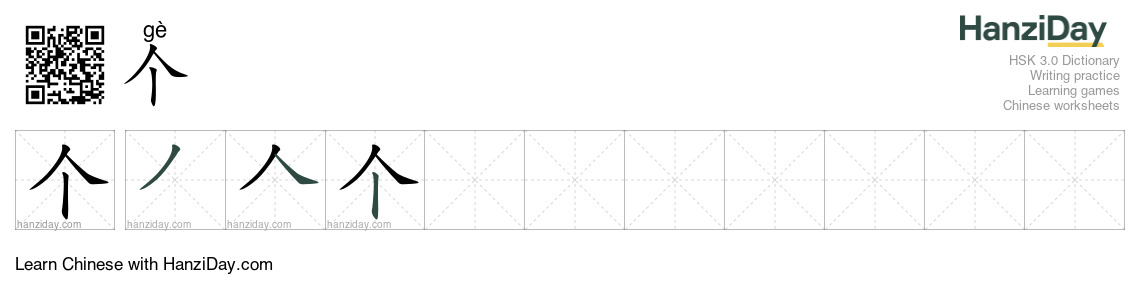
3

Words with 个 12
Same pronunciation 6
Similar pronunciation 47
Synonyms 48
Writing and worksheets
Stroke order
Games & Exercises 9
Find Hanzi
Find Hanzi is a playful exercise for learning Chinese. Spot characters, boost attention, download PDF, and enjoy studying Chinese through games!
Find Radical
Practice Chinese radicals online: choose the Hanzi containing the target component, use optional pinyin hints, and create printable PDF exercises.
Tone Trainer
Learn Mandarin tones online with the Chinese Tone Trainer. Practice tone recognition, pronunciation, and exercises for beginners and advanced learners.
Hanzi Connect
Match Hanzi with pinyin or identify words by sound. Use your own vocabulary or HSK 3.0/YCT levels. Play online after sign-in; printable PDFs with answers are for PRO.
Lost Stroke
Play online: find the missing stroke or radical, restore Chinese characters in order, and create printable PDF worksheets with pinyin and answers.
Calligraphy
Create calligraphy and custom Chinese character coloring pages with pinyin, stroke order, outline styles, and writing grids. Download a print-ready PDF for class or home.
Memo
Flip cards to match Chinese characters or pair Hanzi with Pinyin. Build a custom HSK 3.0 or YCT deck, play online, and create printable PDF cards.
Sudoku
Play Hanzi Sudoku online with 4×4, 6×6, or 9×9 grids, four difficulty levels, custom characters, and HSK 3.0/YCT sets. Create printable PDFs with answers.
Writing trainer
Practice Chinese character writing online with correct stroke order, outlines, a 3–2–1 preview, mistake-based hints, pinyin, and focused Hanzi review.







Examples of use 217
据
说
,
曾
经
有
一
位
很
有
个
性
、
极
爱
冒
险
的
大
导
演
到
南
美
丛
林
拍
有
关
古
代
印
加
文
明
的
纪
录
片
。
It is said that there was once a great director with great personality and adventure who went to the jungles of South America to make a documentary about ancient Inca civilization.
今
天
我
满
十
八
岁
了
,
是
个
小
大
人
了
。
Today, I turn eighteen years old, and I am a little adult.
我
们
班
有
八
个
男
生
。
There are eight boys in our class.
她
有
八
个
中
国
同
学
。
She has eight Chinese classmates.
老
板
,
能
不
能
稍
微
便
宜
一
点
儿
,
再
打
个
八
折
吧
!
Boss, can you make it a little cheaper and make another 20% discount?
只
有
爸
爸
妈
妈
才
能
分
出
来
她
们
姐
妹
两
个
人
。
Only Mum and Dad can tell the sisters apart.
弟
弟
求
爸
爸
妈
妈
给
他
买
个
新
的
电
脑
。
My brother begged our parents to buy him a new computer.
爸
爸
妈
妈
给
了
我
一
个
新
的
苹
果
手
机
。
Mom and Dad gave me a new iPhone.
爸
爸
是
个
工
作
狂
,
明
天
都
工
作
到
很
晚
。
Dad is a workaholic and will work late tomorrow.
他
爸
爸
是
个
商
人
。
His father is a businessman.
妈
妈
,
可
以
给
我
买
一
个
笔
记
本
吗
?
Mom, can you buy me a notebook?
木
头
上
有
一
个
小
本
子
。
There is a small notebook on the wood.
如
果
您
在
本
商
店
购
买
超
过
三
百
元
的
商
品
,
就
可
以
得
到
一
个
精
美
的
购
物
袋
,
多
买
多
得
。
If you buy more than 300 yuan's worth of goods in this shop, you can get a beautiful shopping bag, and you can get more if you buy more.
我
买
了
一
件
衣
服
,
一
个
书
包
;
另
外
,
我
还
买
了
一
本
书
。
I bought a dress, a schoolbag; In addition, I also bought a book.
妈
妈
有
一
个
出
国
的
机
会
,
去
日
本
工
作
,
可
是
她
没
去
。
Mother had a chance to go abroad and work in Japan, but she didn't go.
利
用
大
数
据
对
一
个
病
种
进
行
细
致
的
监
测
,
意
义
是
不
言
而
喻
的
。
The significance of using big data to monitor a disease carefully is self-evident.
我
还
没
想
好
要
不
要
去
那
个
公
司
工
作
。
I still have not finished thinking about whether or not I want to go and work at that company.
不
管
忙
不
忙
,
他
每
天
都
要
锻
炼
一
个
小
时
。
Regardless of whether he is busy or not, he will exercise for an hour every day.
那
个
人
有
很
多
钱
,
可
以
穿
很
贵
的
皮
毛
,
有
很
多
金
子
,
可
是
不
会
写
字
。
That man has a lot of money, can wear expensive fur, has a lot of gold, but can't write.
西
安
真
是
个
好
地
方
,
不
仅
风
景
很
美
,
而
且
人
也
非
常
热
情
。
Xi'an truly is a good place; not only is the scenery beautiful, the people are also extremely enthusiastic.
每
个
人
都
想
当
一
个
富
人
,
但
其
实
富
人
也
并
不
那
么
快
乐
。
Everyone wants to be a rich person, but in reality, rich people are not even that happy.
这
个
菜
不
好
吃
。
This dish is not delicious.
我
不
会
读
这
个
字
。
I can't read this word.
在
其
他
粮
食
不
足
的
情
况
下
,
用
橡
子
喂
猴
子
倒
是
个
办
法
。
In other cases of food shortage, feeding monkeys with acorns is a way.
你
敢
不
敢
一
个
人
到
山
里
去
?
Do you dare to go to the mountains alone?
我
们
这
次
旅
游
一
共
要
住
三
个
不
同
的
旅
馆
。
We will stay in three different hotels on this trip.
不
好
意
思
,
刚
才
我
接
了
个
电
话
,
请
你
继
续
说
。
Sorry, I got a call just now. Please go on.
一
个
人
的
信
用
很
重
要
,
你
不
可
以
说
到
做
不
到
。
A person's credit is very important, you can't say you can't do it.
两
个
孩
子
上
学
不
用
接
送
,
做
作
业
不
用
督
促
。
Two children don't need to pick up and drop off when they go to school, and they don't need to
等
比
赛
结
束
了
,
我
们
一
起
去
吃
个
饭
,
放
松
放
松
吧
。
When the game is over, let's have a meal together and relax.
我
最
喜
欢
吃
鸡
腿
了
!
我
可
以
一
下
子
吃
三
个
!
I like chicken legs best! I can eat three at once!
还
有
一
个
钟
头
吃
晚
饭
。
There is still an hour to have dinner.
今
天
早
上
我
吃
了
一
个
面
包
。
I ate a loaf of bread this morning.
他
早
饭
吃
两
个
鸡
蛋
。
He eats two eggs for breakfast.
昨
天
我
吃
了
一
个
梨
子
。
I ate a pear yesterday.
他
午
饭
只
吃
了
一
个
热
狗
。
He only had a hot dog for lunch.
我
每
天
都
吃
一
个
鸡
蛋
。
I eat an egg every day.
如
果
饿
了
,
我
们
就
找
个
地
方
吃
饭
。
If we are hungry, we will find a place to eat.
猴
子
们
似
乎
只
弄
懂
了
主
人
前
面
说
的
一
个
“
三
”
,
觉
得
自
己
吃
了
亏
。
Monkeys seem to have only understood a "three" mentioned by their masters and feel that they have suffered losses.
从
前
,
大
概
在
距
今
两
千
五
百
多
年
前
的
春
秋
时
期
,
有
一
个
人
叫
子
路
,
他
是
孔
子
最
年
长
的
学
生
。
Once upon a time, in the Spring and Autumn Period about 2,500 years ago, there was a man named Zilu, who was the oldest student of Confucius.
一
个
已
经
拥
有
巨
大
幸
福
的
人
,
应
该
原
谅
和
理
解
那
些
伤
害
过
自
己
的
人
。
A person who already has great happiness should forgive and understand those who have hurt himself.
会
议
已
经
进
行
了
两
个
多
小
时
,
大
家
还
在
认
真
地
讨
论
这
个
问
题
。
The meeting has been going on for more than two hours, and everyone is still discussing this issue seriously.
十
个
大
人
Ten adults
长
大
后
我
想
当
一
个
科
学
家
。
I want to be a scientist when I grow up.
我
长
大
了
,
我
是
个
大
学
生
了
。
I have grown up, and I am a college student.
姐
姐
下
个
月
要
去
大
学
报
到
了
。
My sister will report to the university next month.
大
象
现
在
毫
无
抵
抗
能
力
,
只
要
我
在
它
身
体
的
重
要
部
位
咬
几
个
洞
,
它
就
没
命
了
。
The elephant has no resistance now. As long as I bite a few holes in important parts of its body, it will die.
绳
子
终
于
被
咬
断
了
,
巨
网
出
现
了
一
个
大
缺
口
。
The rope was finally bitten, and a big gap appeared in the giant net.
大
象
愤
怒
地
说
:
“
你
这
个
愚
蠢
的
家
伙
。
”
The elephant said angrily, "you stupid fellow."
这
个
大
树
内
部
的
供
水
系
统
具
体
的
运
转
状
况
是
怎
么
样
的
?
What is the specific operation status of the water supply system inside this big tree?
这
里
的
留
学
生
大
约
有
三
百
个
。
There are approximately three hundred foreign exchange students here.
我
们
的
大
脑
究
竟
如
何
感
知
抽
象
艺
术
,
是
一
个
有
趣
的
话
题
。
How our brains perceive abstract art is an interesting topic.
两
个
大
人
。
Two adults.
今
天
早
上
我
是
第
一
个
到
教
室
的
。
This morning I was the first to arrive at the classroom.
家
里
的
空
调
坏
了
,
咱
们
另
外
再
买
一
个
吧
。
The air conditioning in our house has broken, let's buy another one.
这
个
月
的
账
单
来
了
,
可
是
我
们
上
个
月
的
账
还
没
还
呢
。
This month's bill has come, but we haven't paid our last month's bill yet.
我
有
一
个
六
岁
的
弟
弟
。
I have a six-year-old younger brother.
别
动
,
你
的
身
上
有
个
小
虫
子
。
Don't move, you have a little bug on your body.
今
天
在
餐
厅
过
生
日
的
小
朋
友
可
以
获
得
一
个
生
日
蛋
糕
。
Children who are celebrating their birthday in the restaurant today can get a birthday cake.
中
国
的
学
生
一
年
有
两
个
长
的
假
期
,
一
个
在
夏
天
,
一
个
在
冬
天
。
Chinese students have two long holidays a year, one in summer and one in winter.
妈
妈
把
全
部
的
时
间
都
花
在
照
顾
三
个
孩
子
上
了
。
Mother spent all her time taking care of three children.
想
交
个
真
正
的
朋
友
很
困
难
。
It is difficult to make a true friend.
我
想
买
个
新
的
洗
衣
机
。
I want to buy a new washing machine.
没
想
到
这
两
个
颜
色
放
在
一
起
怪
好
看
的
。
I didn't expect these two colours to look so unusually good together.
一
个
教
室
是
汉
语
老
师
的
。
One classroom belongs to the Chinese teacher.
这
是
中
国
的
西
安
,
我
有
一
个
朋
友
在
那
儿
。
This is Xi'an, China. I have a friend there.
门
口
有
一
个
女
的
。
There is a woman at the door.
这
篇
文
章
的
作
者
是
一
个
非
常
著
名
的
作
家
。
The author of this article is a very famous writer.
他
是
我
最
尊
重
的
一
个
老
师
。
He is one of the teachers I respect the most.
我
认
为
教
育
是
最
重
要
的
事
,
我
以
后
想
当
一
个
教
育
家
。
I think education is the most important thing, and I want to be an educator in the future.
中
国
是
一
个
非
常
安
全
的
国
家
。
China is a very safe country.
我
在
中
国
过
了
一
个
难
忘
的
春
节
。
I had an unforgettable Spring Festival in China.
这
是
我
的
一
个
朋
友
。
This is a friend of mine.
我
的
故
乡
是
云
南
的
一
个
小
城
。
My hometown is a small town in Yunnan.
他
是
一
个
非
常
有
责
任
心
的
人
。
He is a person with a very responsible heart.
我
的
妈
妈
是
一
个
画
家
。
My mother is a painter.
老
鼠
是
山
神
的
宠
物
,
它
厌
倦
了
宠
物
的
生
活
,
也
很
厌
恶
宠
物
这
个
角
色
。
Mouse is the pet of mountain god. It is tired of pet life and hates the role of pet.
男
的
在
一
个
宠
物
店
工
作
。
The man works in a pet shop.
如
果
租
一
个
星
期
的
话
,
要
多
少
钱
?
How much will it cost if it is rented for one week?
我
的
家
乡
是
中
国
北
部
的
一
个
山
区
。
My hometown is a mountainous area in northern China.
今
天
你
是
最
后
一
个
到
学
校
的
!
You are the last one to arrive at school today!
对
中
国
人
来
说
,
春
节
是
一
个
非
常
重
要
的
节
日
。
Spring Festival is a very important festival for Chinese people.
他
是
一
个
很
自
信
的
人
,
相
信
自
己
可
以
做
到
。
He is a very confident person and believes he can do it.
那
个
演
员
很
受
年
轻
人
的
欢
迎
。
That actor is very popular with young people.
一
个
偶
然
的
机
会
,
他
发
现
如
果
了
解
汉
字
的
来
源
和
演
变
过
程
,
再
学
习
它
就
变
得
轻
松
、
容
易
。
By chance, he found that if he understood the origin and evolution of Chinese characters, it would be easy to learn them .
女
儿
却
是
一
脸
的
疑
惑
,
反
问
道
:
“
你
们
不
是
也
有
时
候
说
,
哪
个
朋
友
好
相
处
,
哪
个
朋
友
很
自
私
吗
?
The daughter was puzzled and asked, "don't you sometimes say which friend is easy to get along with and which friend is selfish?
今
天
晚
上
有
几
百
个
观
众
来
看
我
们
的
节
目
呢
!
There are hundreds of viewers watching our programme tonight!
请
你
从
这
些
句
子
中
选
择
你
认
为
正
确
的
一
个
。
Please choose the sentence among these that you think is the most correct.
节
约
和
浪
费
这
两
个
词
的
意
思
是
相
反
的
。
The words economy and waste have opposite meanings.
他
们
走
的
方
向
正
好
是
相
反
的
:
一
个
向
东
,
一
个
向
西
。
They went in exactly opposite directions: one went east and the other went west.
预
习
是
个
好
习
惯
,
它
能
帮
助
我
们
提
前
了
解
要
学
习
的
内
容
。
Preparing for a lesson is a good habit. It can help us find out what to learn in advance.
我
的
学
校
一
共
有
一
千
两
百
个
学
生
。
There are twelve hundred students in my school.
他
现
在
已
经
是
一
个
非
常
著
名
的
歌
手
了
。
He is a very famous singer now.
这
是
你
们
的
一
个
朋
友
。
This is a friend of yours.
工
作
的
时
候
,
经
常
写
几
十
个
字
,
就
到
院
中
去
转
转
,
看
看
这
棵
,
看
看
那
朵
。
When he works, he often writes dozens of words, then goes around the courtyard and looks at this tree and that flower.
我
今
天
得
到
了
一
个
来
自
国
外
的
礼
物
。
I got a gift from abroad today.
他
是
一
个
来
自
中
国
的
老
师
。
He is a teacher from China.
你
们
看
,
这
是
七
个
小
矮
人
的
房
间
。
Look, this is the Seven Dwarves' room.
以
前
有
一
个
中
国
老
师
,
他
教
过
我
一
点
儿
功
夫
,
我
表
演
给
你
看
看
。
I used to have a Chinese teacher who taught me a little kung fu. I'll show you.
我
上
午
十
点
半
要
见
一
个
朋
友
。
I want to see a friend at 10:30 in the morning.
我
买
了
一
个
新
电
脑
。
I bought a new computer.
我
一
个
月
看
两
次
电
影
。
I watch movies twice a month.
一
部
电
影
,
开
始
虽
然
剧
情
平
平
常
常
,
如
果
最
后
半
个
小
时
能
使
我
们
感
动
,
我
们
依
然
会
向
别
人
推
荐
它
。
Although the plot of a movie is ordinary at first, if the last half hour can move us, we will still recommend it to others.
我
有
三
个
外
国
朋
友
,
他
们
都
会
说
中
文
。
I have three foreign friends, all of whom speak Chinese.
炎
热
的
夏
天
,
踢
完
一
场
球
赛
,
每
个
队
员
都
已
经
是
汗
如
雨
下
。
In the hot summer, after playing a ball game, every player was already sweating profusely.
你
会
读
这
个
字
吗
?
Can you read this word?
你
们
学
校
有
多
少
个
学
生
?
How many students does your school have?
他
上
个
星
期
买
了
很
多
东
西
。
He bought a lot of things last week.
世
界
上
有
很
多
个
国
家
。
There are many countries in the world.
上
海
有
两
个
飞
机
场
。
There are two airports in Shanghai.
我
们
这
个
周
末
一
起
去
野
餐
吧
?
Shall we have a picnic together this weekend?
学
校
里
有
一
个
商
店
。
There is a shop in the school.
一
个
美
国
人
的
汉
字
情
缘
An American's Love in Chinese Characters
一
个
南
瓜
灯
A jack-o '-lantern
我
有
一
个
知
心
朋
友
,
我
什
么
都
跟
她
说
。
I have a bosom friend, and I tell her everything.
呵
,
这
两
个
瓜
加
起
来
恐
怕
有
五
六
斤
了
。
Oh, I'm afraid these two melons add up to five or six pounds.
他
的
确
很
帅
,
真
是
一
个
帅
哥
!
He is really handsome, he is really a handsome guy!
下
个
周
末
我
带
你
去
公
园
玩
,
好
不
好
?
I'll take you to the park next weekend, OK?
这
个
盘
子
十
元
一
个
。
This plate costs ten yuan each.
他
受
伤
时
,
一
个
人
在
山
上
,
好
在
后
来
救
护
车
来
了
,
他
得
救
了
。
When he was injured, he was alone in the mountains. Fortunately, the ambulance came and he was saved.
老
师
让
我
参
加
了
一
个
武
术
俱
乐
部
。
The teacher made me join a martial arts club.
我
们
家
有
三
个
孩
子
,
两
个
男
孩
,
一
个
女
孩
。
There are three children in our family, two boys and one girl.
我
有
两
个
好
朋
友
。
I have two good friends.
我
能
问
您
一
个
问
题
吗
?
Can I ask you a question?
这
个
声
音
听
起
来
像
是
一
个
小
女
孩
。
This voice sounds like it's a little girl's.
一
个
女
人
a woman
我
是
第
一
个
。
I was the first.
今
天
学
校
里
有
一
个
晚
会
。
There is a party at school today.
我
有
五
个
汉
语
老
师
。
I have five Chinese teachers.
我
给
朋
友
打
个
电
话
。
I will make a call to friend.
我
们
班
有
五
个
老
师
。
Our class has five teachers.
三
十
个
人
Thirty people
门
口
有
五
个
人
。
There are five people at the door.
我
们
班
有
两
个
张
老
师
。
Our class has two teachers called Mr Zhang.
一
个
好
妈
妈
A good mother
在
第
一
个
红
绿
灯
往
右
走
。
Go right at the first traffic light.
我
们
做
作
业
做
了
两
个
小
时
了
,
我
们
休
息
一
下
吧
。
We have been doing our homework for two hours. Let's have a rest.
我
最
近
交
了
一
个
新
朋
友
。
I recently made a new friend.
你
有
几
个
哥
哥
?
How many older brothers do you have?
我
有
一
台
钢
琴
,
一
把
小
提
琴
,
一
支
口
琴
,
和
一
个
手
风
琴
。
I have a piano, a violin, a harmonica, and an accordion.
我
每
天
上
学
要
一
个
小
时
。
It takes me an hour to go to school every day.
我
想
买
一
个
钢
笔
和
一
个
铅
笔
。
I want to buy a pen and a pencil.
我
想
要
一
个
单
人
间
。
I'd like a single room.
我
家
周
围
有
好
几
个
公
园
。
There are several parks around my home.
作
为
一
个
中
学
生
As a high school student↵
一
个
卧
室
是
蓝
色
的
。
One (of the) bedroom (s) is blue colour.
一
个
被
通
缉
了
1
5
年
的
罪
犯
,
今
天
还
应
该
为
当
初
触
犯
法
律
的
行
为
受
到
惩
罚
吗
?
Should a criminal who has been wanted for 15 years still be punished for breaking the law today?
我
们
旅
行
社
安
排
一
个
导
游
带
客
人
一
起
去
。
Our travel agency will arrange a tour guide to go with guests together.
让
我
先
洗
个
澡
。
Let me take a bath first.
快
回
来
,
有
个
人
要
见
你
。
Come back quickly, there is someone to see you.
我
有
三
个
勺
子
,
其
中
一
个
是
木
勺
子
,
I have three spoons, one of which is a wooden spoon.
我
很
开
心
能
认
识
这
样
一
个
家
庭
。
I am very happy to get to know a family like this.
春
季
是
四
季
中
的
第
一
个
季
节
。
Spring is the first of the four seasons.
五
个
子
女
Five children
六
个
好
人
Six good people
一
个
弟
弟
one younger brother
一
个
哥
哥
one older brother
我
有
一
个
哥
哥
,
你
呢
?
I have one elder brother, what about you?
我
有
一
个
哥
哥
和
一
个
姐
姐
。
I have one older brother and one older sister.
你
有
几
个
弟
弟
?
How many younger brothers do you have?
你
有
几
个
姐
姐
?
How many older sisters do you have?
我
一
个
人
在
家
,
经
常
感
到
孤
单
。
I am at home alone and often feel lonely.
我
们
一
个
钟
头
以
后
见
!
I'll see you in an hour!
我
是
一
个
小
学
生
I am a pupil
今
天
下
午
我
朋
友
家
有
一
个
生
日
派
对
。
There is a birthday party at my friend's house this afternoon.
品
有
三
个
口
。
The character "product" is made up of three "mouths".
他
和
她
有
两
个
子
女
。
He and she have two children.
你
别
烦
我
了
,
我
想
自
己
一
个
人
。
Don't bother me, I want to be alone.
她
在
看
音
乐
节
目
,
这
个
节
目
很
有
意
思
。
She is watching a music program, which is very interesting.
几
个
弟
弟
?
How many younger brothers?
我
有
两
个
哥
哥
。
I have two older brothers.
那
是
一
个
夕
阳
将
落
的
傍
晚
。
It was a sunset evening.
我
们
班
来
了
一
个
新
老
师
。
A new teacher came to our class.
他
有
几
百
个
朋
友
,
只
有
两
个
好
朋
友
。
He has several hundred friends, only have two good friends.
他
流
利
地
讲
了
一
个
汉
语
故
事
。
He told a Chinese story fluently.
两
个
好
人
。
Two good people.
我
有
一
个
问
题
。
I have a question.
他
是
一
个
有
钱
人
。
He is a rich man.
就
是
找
一
个
班
插
班
听
课
,
随
意
学
学
而
已
。
Is to find a class to attend classes and learn at will.
他
们
两
个
是
母
子
关
系
。
The two of them are mother and child.
他
雇
了
2
0
来
个
当
地
人
为
他
带
路
和
搬
运
行
李
。
He hired about 20 locals to lead the way and carry his luggage.
三
个
小
时
快
乐
减
一
个
小
时
无
聊
等
于
两
个
小
时
快
乐
,
也
就
是
说
,
我
愉
快
地
度
过
了
两
个
小
时
。
Three hours of happiness minus one hour of boredom equals two hours of happiness, that is to say, I spent two hours happily.
我
有
三
个
中
国
朋
友
。
I have three Chinese friends.
我
们
飞
了
十
个
小
时
。
We flew for ten hours.
一
个
肉
包
子
三
块
。
A meat bun costs three yuan.
我
有
两
个
新
老
师
,
一
个
姓
李
,
一
个
姓
王
。
I have two new teachers, one with the surname Li and the other with the surname Wang.
一
个
孩
子
在
哭
。
A child is crying.
我
写
错
了
一
个
字
,
能
借
我
一
块
橡
皮
吗
?
I've written a character wrong, could you lend me a rubber?
给
我
一
个
鸡
蛋
吧
。
Give me an egg.
再
来
一
个
鸡
蛋
?
Another egg?
我
们
有
一
百
零
五
个
学
生
。
We have 105 students.
你
老
师
有
一
个
哥
哥
。
Your teacher has a brother.
老
师
有
四
个
新
朋
友
。
The teacher has four new friends.
我
们
学
校
有
一
万
个
学
生
。
There are ten thousand students in our school.
四
个
老
师
。
Four teachers.
门
外
有
一
个
人
。
There is a man outside the door.
下
个
星
期
我
想
请
几
天
假
。
I'd like to take a few days off next week.
这
个
网
站
有
意
思
。
This website is interesting.
小
朋
友
,
你
一
个
人
上
学
,
你
妈
妈
放
心
吗
?
Children, you go to school alone, does your mother rest assured?
她
每
个
星
期
三
都
有
科
学
课
。
She has science every Wednesday.
上
个
月
last month
这
个
词
怎
么
读
?
How to read this word?
这
个
苹
果
熟
了
吗
?
Is this apple ripe?
做
个
好
梦
!
to make clothes
两
个
星
期
。
Two weeks.
这
个
箱
子
很
轻
。
This suitcase is very light.
这
个
盒
子
很
漂
亮
。
This box is very beautiful.
一
个
勺
子
a spoon
哪
个
人
which person
四
个
杯
four cups or glasses
这
个
字
this character
一
个
女
孩
a girl
一
个
鸡
蛋
an egg
一
个
问
题
a question
一
个
房
间
a bank
他
是
一
个
艺
术
家
。
a room
几
个
朋
友
He is an artist.
Learn 个 (gè) in context
个 appears here with its available localized meaning and tone-marked pinyin gè. Listen to the pronunciation and review any examples, illustrations, or lexical links shown for this entry.
Use the sections available on this page to compare characters, components, radicals, related words, matching pronunciation, synonyms, or antonyms. HanziDay shows only the information supported by this entry.
个 in HSK 3.0 Level 1
HanziDay organizes HSK 3.0 vocabulary around the new three-stage, nine-level framework. This entry belongs to Level 1; open the level list to study it alongside other vocabulary from the same stage.
Practice the stroke order for 个
Use the stroke animation to follow the writing order, then practice the sequence with the interactive writing tool. After signing in, you can also create a printable worksheet from this entry within your current allowance.