


八
Learn 人 — HSK 3.0 Level 1
人
TOP-10
Frequency
The ranking is based on data from open sources.
HSK 3.0 · Level 1
Translation
- (n.) person, people, human being
- (radical.) person, man
- (n.) adult; somebody; everybody; one's character or reputation; man power; one's physical or mental condition
Simplified
人
Traditional
人
Strokes count
2
Words with 人 127
Same pronunciation 3
Similar pronunciation 24
Synonyms 17
Antonyms 2
Writing and worksheets
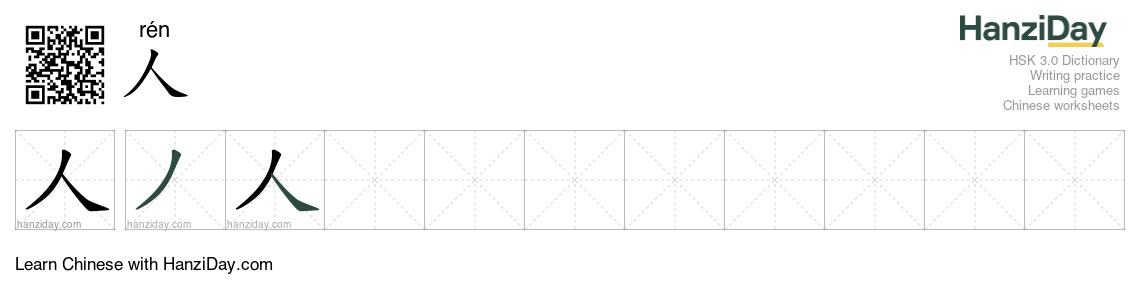
Stroke order
Games & Exercises 9
Find Hanzi
Find Hanzi is a playful exercise for learning Chinese. Spot characters, boost attention, download PDF, and enjoy studying Chinese through games!
Find Radical
Practice Chinese radicals online: choose the Hanzi containing the target component, use optional pinyin hints, and create printable PDF exercises.
Tone Trainer
Learn Mandarin tones online with the Chinese Tone Trainer. Practice tone recognition, pronunciation, and exercises for beginners and advanced learners.
Hanzi Connect
Match Hanzi with pinyin or identify words by sound. Use your own vocabulary or HSK 3.0/YCT levels. Play online after sign-in; printable PDFs with answers are for PRO.
Lost Stroke
Play online: find the missing stroke or radical, restore Chinese characters in order, and create printable PDF worksheets with pinyin and answers.
Calligraphy
Create calligraphy and custom Chinese character coloring pages with pinyin, stroke order, outline styles, and writing grids. Download a print-ready PDF for class or home.
Memo
Flip cards to match Chinese characters or pair Hanzi with Pinyin. Build a custom HSK 3.0 or YCT deck, play online, and create printable PDF cards.
Sudoku
Play Hanzi Sudoku online with 4×4, 6×6, or 9×9 grids, four difficulty levels, custom characters, and HSK 3.0/YCT sets. Create printable PDFs with answers.
Writing trainer
Practice Chinese character writing online with correct stroke order, outlines, a 3–2–1 preview, mistake-based hints, pinyin, and focused Hanzi review.









Examples of use 142
她
骄
傲
地
说
:
尽
管
我
的
家
很
小
,
但
这
里
是
全
世
界
最
温
暖
的
地
方
,
因
为
有
家
人
的
爱
。
She proudly said: Although my home is small, it is the warmest place in the world because of the love of my family.
这
个
雪
人
好
可
爱
!
This snowman is so cute!
只
有
爸
爸
妈
妈
才
能
分
出
来
她
们
姐
妹
两
个
人
。
Only Mum and Dad can tell the sisters apart.
那
么
多
人
,
弟
弟
一
下
子
就
把
爸
爸
找
出
来
了
,
弟
弟
的
眼
力
真
好
!
So many people, my brother found out my father at once, and my brother's eyesight is really good!
他
爸
爸
是
个
商
人
。
His father is a businessman.
当
我
遇
到
困
难
时
,
我
最
想
的
人
是
爸
爸
妈
妈
。
When I encounter problems, the people I want most are Dad and Mum.
也
许
有
人
认
为
,
在
这
种
情
况
下
根
本
不
可
能
分
辨
出
来
。
Some people may think that it is impossible to distinguish in this case.
买
东
西
不
用
在
川
流
不
息
的
人
群
中
奔
走
,
仅
需
登
录
网
站
,
动
几
下
手
指
,
下
几
道
指
令
就
可
以
把
东
西
买
回
家
。
You don't have to run in the endless stream of people to buy things, just log on to the website, move your fingers and give instructions to buy things home.
虽
然
这
件
事
发
生
在
上
个
世
纪
,
但
是
人
们
永
远
都
不
能
忘
记
那
段
历
史
。
Although this happened in the last century, people can never forget that history.
我
自
己
来
做
吧
,
我
不
喜
欢
欠
人
情
。
I'll do it myself. I don't like to owe people.
翟
峰
和
妻
子
都
是
铁
路
工
人
,
工
作
稳
定
、
待
遇
不
错
。
Zhai Feng and his wife are both railway workers, with stable jobs and good pay.
那
个
人
有
很
多
钱
,
可
以
穿
很
贵
的
皮
毛
,
有
很
多
金
子
,
可
是
不
会
写
字
。
That man has a lot of money, can wear expensive fur, has a lot of gold, but can't write.
我
很
讨
厌
脾
气
不
好
的
人
。
I hate people with bad temper.
西
安
真
是
个
好
地
方
,
不
仅
风
景
很
美
,
而
且
人
也
非
常
热
情
。
Xi'an truly is a good place; not only is the scenery beautiful, the people are also extremely enthusiastic.
不
要
打
扰
别
人
看
书
。
Don't disturb others' reading.
如
果
突
然
被
闹
钟
叫
醒
,
将
在
心
理
上
使
人
产
生
心
慌
、
情
绪
低
落
、
感
觉
没
睡
醒
等
不
适
。
If you are suddenly woken up by the alarm clock, it will make people feel flustered, depressed and uncomfortable.
每
个
人
都
想
当
一
个
富
人
,
但
其
实
富
人
也
并
不
那
么
快
乐
。
Everyone wants to be a rich person, but in reality, rich people are not even that happy.
这
些
数
据
确
实
令
人
不
安
。
These figures are really disturbing.
每
个
人
都
有
自
己
的
看
法
,
大
家
的
看
法
不
一
定
一
样
。
Everyone has their own views, and everyone's views are not necessarily the same.
大
部
分
人
不
理
解
这
一
定
律
。
Most people don't understand this law.
今
天
人
不
多
。
not many people today.
你
敢
不
敢
一
个
人
到
山
里
去
?
Do you dare to go to the mountains alone?
没
有
人
敢
贪
污
、
贿
赂
、
不
择
手
段
。
No one dares to embezzle, bribe or do anything.
有
人
纳
闷
儿
,
猫
为
什
么
能
快
速
跳
跃
起
来
,
瞄
准
都
不
用
,
一
下
就
能
拍
到
苍
蝇
?
Some people wonder why cats can jump up quickly without aiming, and they can shoot flies at once.
只
有
不
断
提
升
自
己
的
决
策
能
力
,
才
能
真
正
为
自
己
的
人
生
做
主
。
Only by constantly improving one's decision-making ability can one truly make decisions for one's own life.
有
人
迫
不
及
待
地
想
探
究
其
真
相
。
Some people can't wait to explore the truth.
因
为
他
爸
妈
是
不
同
国
家
的
人
,
所
以
他
会
说
两
种
不
同
的
语
言
Because his parents are from different countries, he can speak two different languages
在
很
多
人
看
来
,
只
有
年
轻
人
才
会
网
上
购
物
,
其
实
不
少
老
年
人
也
会
。
In the eyes of many people, only young people can shop online, in fact so can many old people.
一
个
人
的
信
用
很
重
要
,
你
不
可
以
说
到
做
不
到
。
A person's credit is very important, you can't say you can't do it.
我
不
相
信
她
没
有
钱
,
相
反
,
我
觉
得
她
是
全
班
最
有
钱
的
人
。
I don't believe she has no money. On the contrary, I think she is the richest person in the class.
无
论
药
的
味
道
苦
不
苦
,
病
人
都
得
吃
完
。
No matter whether the taste of the medicine is bitter or not, the patient has to finish it.
由
于
一
半
的
人
都
没
有
来
,
我
们
今
天
的
会
开
不
了
了
。
As half of the people didn't come, we couldn't hold the meeting today.
我
喜
欢
去
不
同
的
地
方
旅
游
,
了
解
当
地
人
的
生
活
。
I like to travel to different places and learn about the life of local people.
社
会
不
需
要
只
会
享
福
的
人
。
Society doesn't need people who can only enjoy happiness.
很
多
老
年
人
喜
欢
在
这
里
喝
茶
。
Many old people like to drink tea here.
一
家
人
高
高
兴
兴
地
生
火
做
饭
,
饱
饱
地
吃
了
顿
团
圆
饭
。
The family happily made a fire to cook and had a full reunion dinner.
山
西
人
喜
欢
吃
酸
,
这
在
全
中
国
都
是
有
名
的
。
People from Shanxi like sour food. This is well known all over China.
春
节
的
时
候
,
中
国
人
会
吃
汤
圆
。
Chinese people eat sweet round dumplings during the Spring Festival.
猴
子
们
似
乎
只
弄
懂
了
主
人
前
面
说
的
一
个
“
三
”
,
觉
得
自
己
吃
了
亏
。
Monkeys seem to have only understood a "three" mentioned by their masters and feel that they have suffered losses.
这
个
消
息
太
让
人
吃
惊
了
。
The news is amazing.
我
的
午
饭
总
会
被
人
吃
了
。
My lunch will always be eaten.
从
前
,
大
概
在
距
今
两
千
五
百
多
年
前
的
春
秋
时
期
,
有
一
个
人
叫
子
路
,
他
是
孔
子
最
年
长
的
学
生
。
Once upon a time, in the Spring and Autumn Period about 2,500 years ago, there was a man named Zilu, who was the oldest student of Confucius.
一
天
,
他
让
士
兵
们
去
找
一
头
大
象
和
一
些
出
生
时
眼
睛
就
瞎
了
的
人
回
来
。
One day, he asked the soldiers to find an elephant and some people who were blind at birth.
当
大
导
演
进
一
步
询
问
原
因
时
,
当
地
人
的
回
答
令
他
受
益
终
生
。
When the director asked further why, the local people's answers benefited him all his life.
一
个
已
经
拥
有
巨
大
幸
福
的
人
,
应
该
原
谅
和
理
解
那
些
伤
害
过
自
己
的
人
。
A person who already has great happiness should forgive and understand those who have hurt himself.
昆
虫
这
样
的
小
动
物
,
一
秒
钟
之
内
接
收
的
信
息
量
,
比
人
类
等
体
型
大
的
生
物
多
得
多
。
Small animals like insects receive much more information in one second than large creatures like humans.
新
年
到
了
,
人
们
都
回
家
过
年
,
大
人
给
孩
子
发
红
包
,
买
新
衣
。
When the New Year comes, people go home for the New Year. Adults give red envelopes to their children and buy new clothes.
“
大
伙
儿
要
和
睦
相
处
,
对
人
要
宽
容
。
”
"Everyone should live in harmony and be tolerant of people."
有
的
人
家
喜
欢
种
草
、
养
花
、
种
竹
子
,
有
的
人
家
则
喜
欢
用
大
盆
养
金
鱼
。
Some people like to plant grass, flowers and bamboo, while others like to raise goldfish in big pots.
当
他
的
琴
声
雄
壮
豪
迈
的
时
候
,
打
柴
人
说
:
“
这
旋
律
表
达
了
高
山
的
雄
伟
壮
观
。
When his music was majestic and heroic, the woodcutter said, "This melody expresses the majesty of the mountains.
通
过
老
人
的
介
绍
,
鲍
全
从
龙
王
那
儿
求
到
了
治
病
救
人
的
白
玉
壶
。
Through the introduction of the old man, Bao Quan asked the Dragon King for a white jade pot to cure diseases and save people.
成
功
的
教
育
就
是
让
每
个
人
都
能
找
到
自
己
生
活
的
方
向
。
Successful education is to enable everyone to find their own direction in life.
我
们
的
老
师
是
中
国
人
。
Our teacher is Chinese.
他
们
是
我
的
家
人
。
They are my family.
我
的
一
家
人
都
住
在
上
海
。
My family all live in Shanghai.
你
的
家
人
在
美
国
的
什
么
地
方
?
Where is your family in America?
人
的
一
生
中
,
究
竟
什
么
是
最
重
要
的
?
What is the most important thing in a person's life?
他
能
把
什
么
事
都
说
得
让
人
很
明
白
,
他
的
口
才
很
好
。
He can make everything clear, and his eloquence is very good.
每
年
都
有
成
千
上
万
的
人
来
这
里
旅
游
。
Thousands of people visit here every year.
我
们
要
做
对
社
会
有
用
的
人
。
We should be useful to society.
我
的
朋
友
是
法
国
人
,
他
会
说
一
点
儿
中
文
。
My friend is French. He can speak a little Chinese.
哪
些
人
是
你
的
朋
友
?
Who are your friends?
旅
游
的
过
程
中
我
们
认
识
了
很
多
人
。
We met a lot of people in the course of traveling.
他
是
一
个
非
常
有
责
任
心
的
人
。
He is a person with a very responsible heart.
人
性
化
的
服
务
humane service
印
度
的
人
口
很
多
。
India has a large population.
当
地
的
人
民
都
很
友
好
。
The local people are very friendly.
中
国
各
地
的
人
都
喜
欢
来
这
里
旅
游
。
People from all over China like to travel here.
山
上
的
景
色
很
迷
人
。
The scenery on the mountain is charming.
真
的
有
外
星
人
吗
?
Are there really aliens?
我
把
手
机
它
老
人
家
伺
候
得
好
好
的
。
I took good care of my mobile phone.
对
中
国
人
来
说
,
春
节
是
一
个
非
常
重
要
的
节
日
。
Spring Festival is a very important festival for Chinese people.
他
是
一
个
很
自
信
的
人
,
相
信
自
己
可
以
做
到
。
He is a very confident person and believes he can do it.
导
游
让
游
客
休
息
的
时
候
,
一
部
分
人
会
在
车
上
睡
觉
,
另
一
部
分
人
会
下
车
活
动
一
下
儿
。
When the tour guide gives tourists a rest, some people will sleep in the car, while others will get off the bus for a while.
那
个
演
员
很
受
年
轻
人
的
欢
迎
。
That actor is very popular with young people.
人
民
的
快
乐
生
活
是
我
们
工
作
的
重
心
。
The happy life of the people is the focus of our work.
我
们
应
该
以
那
些
敢
说
真
话
的
人
为
镜
子
,
这
样
才
能
及
时
发
现
自
己
的
缺
点
。
We should take those who dare to tell the truth as mirrors, so as to find our shortcomings in time.
我
的
很
多
亲
人
都
在
上
海
。
Many of my relatives are in Shanghai.
当
地
的
人
都
很
乐
于
助
人
。
The local people are very helpful.
演
出
开
始
时
人
们
认
为
很
有
魅
力
,
但
是
糟
糕
的
结
局
会
给
人
留
下
难
以
忘
记
的
坏
印
象
。
At the beginning of the performance, people think it is attractive, but the bad ending will leave an unforgettable bad impression.
要
相
信
人
民
的
力
量
。
Believe in the strength of the people.
哪
个
人
是
你
的
妹
妹
?
Which one is your sister?
那
些
人
是
我
的
朋
友
。
Those people are my friends.
校
服
的
价
格
是
五
百
元
人
民
币
。
The price of school uniforms is 500 yuan.
你
们
看
,
这
是
七
个
小
矮
人
的
房
间
。
Look, this is the Seven Dwarves' room.
他
是
这
里
的
工
人
。
He is a worker here.
一
部
电
影
,
开
始
虽
然
剧
情
平
平
常
常
,
如
果
最
后
半
个
小
时
能
使
我
们
感
动
,
我
们
依
然
会
向
别
人
推
荐
它
。
Although the plot of a movie is ordinary at first, if the last half hour can move us, we will still recommend it to others.
我
们
一
家
人
都
很
好
,
谢
谢
!
Our whole family is very well, thank you!
很
多
人
拿
着
鲜
花
站
在
门
口
。
Lots of people are standing at the door holding flowers.
那
个
地
方
四
季
如
春
,
所
以
很
多
人
喜
欢
去
那
里
度
假
。
That place is like spring all the year round, so many people like to go there for vacation.
老
李
家
今
天
来
了
很
多
人
。
Many people came to Lao Li's family today.
有
很
多
外
国
人
住
在
上
海
。
There are many foreigners living in Shanghai.
我
们
学
校
课
外
活
动
多
,
每
个
人
放
学
后
都
很
忙
。
There are many extracurricular activities in our school, and everyone is busy after school.
实
践
证
明
,
第
二
种
人
得
到
的
总
是
比
第
一
种
人
更
多
。
Practice has proved that the second kind of people always get more than the first kind of people.
春
运
到
了
,
站
台
上
人
很
多
。
Spring Festival travel rush arrived, and there were many people on the platform.
要
过
节
了
,
马
路
上
人
慢
慢
多
了
起
来
。
It's time for the holidays, and there are more people on the road.
一
个
美
国
人
的
汉
字
情
缘
An American's Love in Chinese Characters
他
受
伤
时
,
一
个
人
在
山
上
,
好
在
后
来
救
护
车
来
了
,
他
得
救
了
。
When he was injured, he was alone in the mountains. Fortunately, the ambulance came and he was saved.
一
个
女
人
a woman
三
十
个
人
Thirty people
门
口
有
五
个
人
。
There are five people at the door.
我
想
要
一
个
单
人
间
。
I'd like a single room.
我
们
旅
行
社
安
排
一
个
导
游
带
客
人
一
起
去
。
Our travel agency will arrange a tour guide to go with guests together.
快
回
来
,
有
个
人
要
见
你
。
Come back quickly, there is someone to see you.
六
个
好
人
Six good people
我
一
个
人
在
家
,
经
常
感
到
孤
单
。
I am at home alone and often feel lonely.
你
别
烦
我
了
,
我
想
自
己
一
个
人
。
Don't bother me, I want to be alone.
两
个
好
人
。
Two good people.
他
是
一
个
有
钱
人
。
He is a rich man.
他
雇
了
2
0
来
个
当
地
人
为
他
带
路
和
搬
运
行
李
。
He hired about 20 locals to lead the way and carry his luggage.
门
外
有
一
个
人
。
There is a man outside the door.
小
朋
友
,
你
一
个
人
上
学
,
你
妈
妈
放
心
吗
?
Children, you go to school alone, does your mother rest assured?
我
妈
妈
是
机
场
工
作
人
员
。
My mother is an airport worker.
由
于
家
里
老
人
突
然
生
病
,
我
只
好
放
弃
出
国
。
I had to give up going abroad due to an old family member suddenly falling ill.
由
于
人
们
在
一
周
内
的
营
养
摄
入
和
饮
食
模
式
会
影
响
到
他
们
的
体
重
变
化
,
因
此
节
食
者
的
体
重
会
在
一
周
内
上
下
波
动
。
Because people's nutrient intake and diet patterns will affect their weight changes during the week, dieters' weight will fluctuate up and down during the week.
除
此
以
外
,
由
于
人
们
争
先
恐
后
报
考
热
门
专
业
,
以
致
人
才
饱
和
,
就
业
困
难
。
In addition, because people are scrambling to apply for popular majors, talents are saturated and employment is difficult.
他
非
常
想
念
老
家
和
亲
人
。
He misses his hometown and relatives very much.
我
和
老
公
对
视
一
眼
,
这
么
小
的
孩
子
怎
么
学
会
了
背
后
议
论
人
。
My husband and I looked at each other. How did such a small child learn to talk about people behind his back?
人
同
时
具
有
了
坚
定
的
意
志
力
和
敏
锐
的
判
断
力
,
这
就
是
成
长
。
People have firm willpower and keen judgment at the same time, which is growth.
西
方
人
觉
得
汉
字
很
难
学
。
Westerners find Chinese characters difficult to learn.
我
是
上
海
人
,
会
说
上
海
话
。
I am from Shanghai and can speak Shanghai dialect.
我
家
有
五
口
人
。
There are five people in my family.
我
们
家
今
天
来
客
人
了
。
Our family has guests today.
我
们
一
家
人
怎
么
办
啊
?
What could our family do?
有
时
赶
上
狂
风
暴
雨
,
情
况
紧
急
,
他
就
得
劳
驾
全
家
人
抢
救
花
草
。
Sometimes, when he catches up with the storm and the situation is urgent, he has to bother the whole family to rescue the flowers and plants.
我
们
国
家
人
口
一
直
在
增
长
。
The population of our country has been increasing.
他
轻
轻
地
推
开
了
门
,
发
现
房
间
里
没
有
人
。
He gently pushed open the door and found no one in the room.
班
上
有
一
位
同
学
对
花
粉
过
敏
,
一
位
对
面
粉
过
敏
,
另
一
位
对
花
生
过
敏
,
还
有
一
位
对
尘
土
过
敏
。
其
他
人
都
没
有
什
么
过
敏
。
One student in the class is allergic to pollen, one is allergic to flour, another is allergic to peanuts, and another is allergic to dust. No one else has any allergies.
你
同
学
是
哪
国
人
?
Which country is your classmate from?
广
场
上
人
山
人
海
。
The square was crowded with people.
人
类
自
身
也
饱
受
污
染
的
危
害
。
Human beings themselves suffer from pollution.
门
口
有
人
。
There is someone at the door.
她
们
是
中
国
人
。
They are Chinese.
每
个
人
都
有
一
杯
水
。
Everyone has a glass of water.
旅
游
类
书
籍
便
把
服
务
对
象
锁
定
为
外
国
人
。
Tourism books target foreigners.
一
些
新
职
业
的
出
现
,
需
要
新
型
人
才
的
加
入
。
The emergence of some new occupations requires the addition of new talents.
白
女
士
是
中
国
人
。
Ms. Bai is Chinese.
我
马
上
拨
打
张
师
傅
的
电
话
,
却
无
人
接
听
。
I immediately called Master Zhang, but no one answered.
学
生
们
每
个
人
都
有
运
动
服
。
Each of the students has sportswear.
她
人
美
,
心
也
美
。
She is beautiful in person and heart.
小
月
是
中
国
人
,
小
天
也
是
中
国
人
。
Xiao Yue is Chinese; Xiao Tian is Chinese, too.
入
口
处
有
一
群
人
。
There is a group of people at the entrance.
Learn 人 (rén) in context
人 appears here with its available localized meaning and tone-marked pinyin rén. Listen to the pronunciation and review any examples, illustrations, or lexical links shown for this entry.
Use the sections available on this page to compare characters, components, radicals, related words, matching pronunciation, synonyms, or antonyms. HanziDay shows only the information supported by this entry.
人 in HSK 3.0 Level 1
HanziDay organizes HSK 3.0 vocabulary around the new three-stage, nine-level framework. This entry belongs to Level 1; open the level list to study it alongside other vocabulary from the same stage.
Practice the stroke order for 人
Use the stroke animation to follow the writing order, then practice the sequence with the interactive writing tool. After signing in, you can also create a printable worksheet from this entry within your current allowance.