


凹
Learn 回 — HSK 3.0 Level 1
回
TOP-500
Frequency
The ranking is based on data from open sources.
HSK 3.0 · Level 1
HSK 3.0 · Level 3
YCT 3
Translation
- (v.) to return, to go back, to turn around
- (v./m.) to reply, answer back; (of the number of occurrence) time; (an event) piece; (of a novel) chapter
- (char.) circle, wind
Radical
Simplified
回
Traditional
回
Strokes count
6

Words with 回 29
Same pronunciation 7
Similar pronunciation 55
Synonyms 36
Antonyms 4
Writing and worksheets
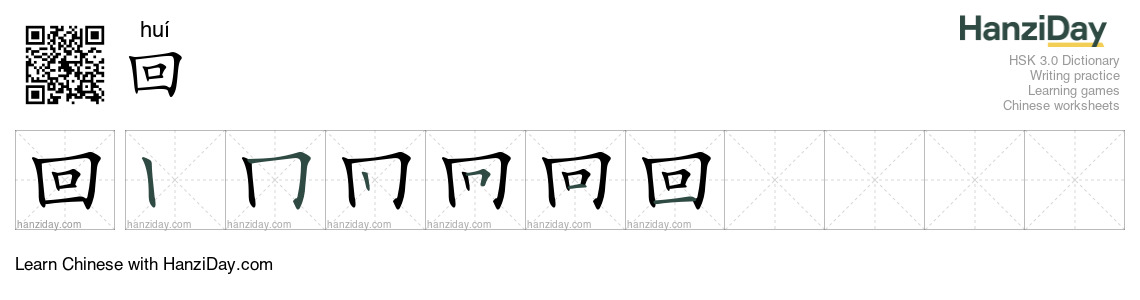
Stroke order
Games & Exercises 9
Find Hanzi
Find Hanzi is a playful exercise for learning Chinese. Spot characters, boost attention, download PDF, and enjoy studying Chinese through games!
Find Radical
Practice Chinese radicals online: choose the Hanzi containing the target component, use optional pinyin hints, and create printable PDF exercises.
Tone Trainer
Learn Mandarin tones online with the Chinese Tone Trainer. Practice tone recognition, pronunciation, and exercises for beginners and advanced learners.
Hanzi Connect
Match Hanzi with pinyin or identify words by sound. Use your own vocabulary or HSK 3.0/YCT levels. Play online after sign-in; printable PDFs with answers are for PRO.
Lost Stroke
Play online: find the missing stroke or radical, restore Chinese characters in order, and create printable PDF worksheets with pinyin and answers.
Calligraphy
Create calligraphy and custom Chinese character coloring pages with pinyin, stroke order, outline styles, and writing grids. Download a print-ready PDF for class or home.
Memo
Flip cards to match Chinese characters or pair Hanzi with Pinyin. Build a custom HSK 3.0 or YCT deck, play online, and create printable PDF cards.
Sudoku
Play Hanzi Sudoku online with 4×4, 6×6, or 9×9 grids, four difficulty levels, custom characters, and HSK 3.0/YCT sets. Create printable PDFs with answers.
Writing trainer
Practice Chinese character writing online with correct stroke order, outlines, a 3–2–1 preview, mistake-based hints, pinyin, and focused Hanzi review.









Examples of use 31
爸
爸
一
回
家
就
睡
觉
了
。
Dad went to bed as soon as he got home.
买
东
西
不
用
在
川
流
不
息
的
人
群
中
奔
走
,
仅
需
登
录
网
站
,
动
几
下
手
指
,
下
几
道
指
令
就
可
以
把
东
西
买
回
家
。
You don't have to run in the endless stream of people to buy things, just log on to the website, move your fingers and give instructions to buy things home.
我
买
不
到
车
票
,
只
能
坐
船
回
家
了
。
I can't get a ticket, so I have to go home by boat.
回
家
的
快
乐
和
被
亲
情
包
围
的
幸
福
感
染
了
我
,
我
也
恨
不
得
马
上
飞
到
父
母
跟
前
,
与
他
们
团
圆
。
The happiness of going home and being surrounded by family infected me, and I couldn't wait to fly to my parents immediately to reunite with them.
部
分
留
学
生
寒
假
不
回
国
,
他
们
打
算
在
中
国
过
春
节
。
Some overseas students don't return home during winter vacation. They plan to spend the Spring Festival in China.
一
天
,
他
让
士
兵
们
去
找
一
头
大
象
和
一
些
出
生
时
眼
睛
就
瞎
了
的
人
回
来
。
One day, he asked the soldiers to find an elephant and some people who were blind at birth.
当
大
导
演
进
一
步
询
问
原
因
时
,
当
地
人
的
回
答
令
他
受
益
终
生
。
When the director asked further why, the local people's answers benefited him all his life.
长
大
后
,
我
要
回
报
我
的
父
亲
。
When I grow up, I want to repay my father.
大
家
现
在
可
以
回
家
了
。
Everyone can go home now.
新
年
到
了
,
人
们
都
回
家
过
年
,
大
人
给
孩
子
发
红
包
,
买
新
衣
。
When the New Year comes, people go home for the New Year. Adults give red envelopes to their children and buy new clothes.
可
以
回
收
的
东
西
请
放
在
那
里
。
Please put things that can be recycled there.
张
远
是
专
门
从
国
外
飞
回
来
的
。
Zhang Yuan flew back from abroad especially (for this).
我
看
她
总
是
笑
着
回
答
老
师
的
问
题
。
In my opinion, she always answers the teacher's questions with a smile.
我
买
了
一
张
去
英
国
的
来
回
票
。
I bought a round-trip ticket to England.
你
每
天
几
点
回
家
?
What time do you go home every day?
他
每
天
回
来
都
很
累
。
He is tired everyday when he gets back.
每
年
我
都
回
老
家
过
年
。
Every year I go back to my hometown for the New Year.
他
每
年
都
回
一
次
国
。
He goes back to England once a year.
那
些
回
忆
是
多
么
美
好
啊
!
Those memories are so beautiful!
我
带
了
很
多
饺
子
回
来
。
I brought back a lot of dumplings.
明
天
我
要
回
家
,
我
太
高
兴
了
!
I'm going home tomorrow. I'm so happy!
快
回
来
,
有
个
人
要
见
你
。
Come back quickly, there is someone to see you.
年
度
考
核
,
我
和
小
林
的
敬
业
精
神
、
兢
兢
业
业
的
工
作
态
度
受
到
了
表
扬
,
经
济
上
也
得
到
了
丰
厚
的
回
报
。
In the annual assessment, Kobayashi and I were praised for our professionalism and conscientious working attitude, and we also got rich returns economically.
因
为
哥
哥
还
没
回
家
,
所
以
妈
妈
很
生
气
。
Mother is very angry because my brother hasn't come home yet.
这
次
去
法
国
我
专
门
带
了
一
瓶
红
酒
回
来
。
I brought back a bottle of red wine from this last trip to France especially.
姐
姐
从
伦
敦
写
明
信
片
回
来
了
!
My sister came back from London to write postcards!
妈
妈
每
天
坐
首
发
班
车
下
班
回
家
。
Mother takes the first bus home from work every day.
快
给
他
回
信
吧
!
Write back to him quickly!
我
明
年
三
月
回
国
。
I will return to China in March next year.
这
个
春
节
你
回
老
家
过
吗
?
Have you been back to your hometown this Spring Festival?
你
终
于
回
来
了
!
You're back at last!
Learn 回 (huí) in context
回 appears here with its available localized meaning and tone-marked pinyin huí. Listen to the pronunciation and review any examples, illustrations, or lexical links shown for this entry.
Use the sections available on this page to compare characters, components, radicals, related words, matching pronunciation, synonyms, or antonyms. HanziDay shows only the information supported by this entry.
回 in HSK 3.0 Level 1
HanziDay organizes HSK 3.0 vocabulary around the new three-stage, nine-level framework. This entry belongs to Level 1; open the level list to study it alongside other vocabulary from the same stage.
Practice the stroke order for 回
Use the stroke animation to follow the writing order, then practice the sequence with the interactive writing tool. After signing in, you can also create a printable worksheet from this entry within your current allowance.