


不
Learn 下 — HSK 3.0 Level 1
下
Translation
- (adj.) next
- (n.) below
- (v.) (of rain, snow) to fall; go down, descend; finish or get off (work, etc.)
- (v.) play (chess)
- (v.) put sth. into; apply; form (opinion)
- (m.) (to indicate repetition of an action); (to indicate one's ability or skill); (dialect, to indicate amount of sth in a container)
- (v.) (used in the negative) be less than
- (v.) (from a higher position) to go or come down to...
- (v.) to issue or send (notice, order, etc.); to leave (stage, expressway, etc.); (of animal) give birth to, lay (eggs)
- (char.) to capture; to yield
Radical
Simplified
下
Traditional
下
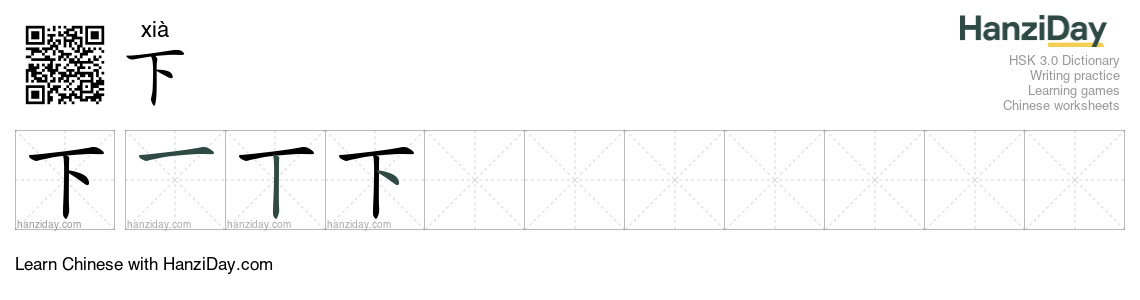
Strokes count
3

Words with 下 52
Same pronunciation 5
Similar pronunciation 26
Synonyms 20
Antonyms 2
Writing and worksheets
Stroke order
Games & Exercises 9
Find Hanzi
Find Hanzi is a playful exercise for learning Chinese. Spot characters, boost attention, download PDF, and enjoy studying Chinese through games!
Find Radical
Practice Chinese radicals online: choose the Hanzi containing the target component, use optional pinyin hints, and create printable PDF exercises.
Tone Trainer
Learn Mandarin tones online with the Chinese Tone Trainer. Practice tone recognition, pronunciation, and exercises for beginners and advanced learners.
Hanzi Connect
Match Hanzi with pinyin or identify words by sound. Use your own vocabulary or HSK 3.0/YCT levels. Play online after sign-in; printable PDFs with answers are for PRO.
Lost Stroke
Play online: find the missing stroke or radical, restore Chinese characters in order, and create printable PDF worksheets with pinyin and answers.
Calligraphy
Create calligraphy and custom Chinese character coloring pages with pinyin, stroke order, outline styles, and writing grids. Download a print-ready PDF for class or home.
Memo
Flip cards to match Chinese characters or pair Hanzi with Pinyin. Build a custom HSK 3.0 or YCT deck, play online, and create printable PDF cards.
Sudoku
Play Hanzi Sudoku online with 4×4, 6×6, or 9×9 grids, four difficulty levels, custom characters, and HSK 3.0/YCT sets. Create printable PDFs with answers.
Writing trainer
Practice Chinese character writing online with correct stroke order, outlines, a 3–2–1 preview, mistake-based hints, pinyin, and focused Hanzi review.








Examples of use 112
他
的
爸
爸
妈
妈
最
近
没
了
工
作
,
他
家
的
生
活
有
点
困
难
,
我
们
帮
他
们
一
下
。
His parents have lost their jobs recently, and life in his family is a bit difficult. Let's help them.
那
么
多
人
,
弟
弟
一
下
子
就
把
爸
爸
找
出
来
了
,
弟
弟
的
眼
力
真
好
!
So many people, my brother found out my father at once, and my brother's eyesight is really good!
也
许
有
人
认
为
,
在
这
种
情
况
下
根
本
不
可
能
分
辨
出
来
。
Some people may think that it is impossible to distinguish in this case.
买
东
西
不
用
在
川
流
不
息
的
人
群
中
奔
走
,
仅
需
登
录
网
站
,
动
几
下
手
指
,
下
几
道
指
令
就
可
以
把
东
西
买
回
家
。
You don't have to run in the endless stream of people to buy things, just log on to the website, move your fingers and give instructions to buy things home.
今
天
不
会
下
雨
。
It is not going to rain today.
天
气
的
事
情
由
不
得
我
们
,
如
果
明
天
下
雨
,
比
赛
就
能
办
了
。
The weather is not up to us. If it rains tomorrow, the game can be held.
你
看
,
现
在
已
经
不
刮
风
了
,
也
许
明
天
不
会
下
雨
。
You see, it's not windy now, perhaps it won't rain tomorrow.
不
好
意
思
,
我
拿
不
到
上
面
的
东
西
,
你
能
帮
我
拿
一
下
吗
?
Sorry, I can't get the things on it. Can you hold them for me?
在
其
他
粮
食
不
足
的
情
况
下
,
用
橡
子
喂
猴
子
倒
是
个
办
法
。
In other cases of food shortage, feeding monkeys with acorns is a way.
不
知
道
为
什
么
,
我
今
天
觉
得
有
点
烦
,
我
可
能
得
休
息
一
下
。
I don't know why, but I feel a little bored today. I may have to have a rest.
如
果
不
舒
服
,
就
去
医
院
检
查
一
下
身
体
吧
。
If you don't feel well, go to the hospital and have a physical examination.
有
人
纳
闷
儿
,
猫
为
什
么
能
快
速
跳
跃
起
来
,
瞄
准
都
不
用
,
一
下
就
能
拍
到
苍
蝇
?
Some people wonder why cats can jump up quickly without aiming, and they can shoot flies at once.
刚
搜
索
了
一
下
,
离
不
开
手
机
也
是
一
种
精
神
病
。
I just searched, and it is also a kind of mental illness to be inseparable from mobile phones.
不
要
从
高
的
地
方
往
下
跳
。
Don't jump from high places.
看
今
晚
的
天
色
,
明
天
也
许
不
会
下
雨
。
Look at the weather tonight, it may not rain tomorrow.
三
岁
以
下
的
小
朋
友
不
上
学
。
Children under the age of three don't go to school.
大
象
不
留
神
落
入
了
打
猎
者
设
下
的
巨
网
中
。
The elephant accidentally fell into the huge net set by the hunters.
这
么
多
天
不
下
雨
,
土
地
都
干
了
。
After so many days without rain, the land has dried up.
看
到
大
象
悲
惨
的
样
子
,
老
鼠
不
忍
下
手
。
Seeing the elephant's miserable appearance, the mouse couldn't bear to start.
我
作
业
还
没
做
好
,
妈
妈
不
让
我
下
楼
。
I haven't finished my homework yet, so my mother won't let me go downstairs.
我
最
喜
欢
吃
鸡
腿
了
!
我
可
以
一
下
子
吃
三
个
!
I like chicken legs best! I can eat three at once!
在
吃
药
之
前
,
应
该
好
好
读
一
下
盒
子
里
的
说
明
。
You should read the instructions in the box carefully before taking the medicine.
这
个
太
凉
了
,
热
一
下
再
吃
吧
。
This is too cold. Heat it up before eating it.
把
大
衣
脱
下
来
吧
,
房
间
里
很
热
。
Take off your coat. It's very hot in the room.
大
家
讨
论
一
下
吧
。
Let's discuss it.
我
很
想
去
你
们
学
校
参
观
一
下
图
书
馆
,
听
说
那
儿
又
大
又
漂
亮
。
I really want to visit the library in your school. I heard it is big and beautiful.
大
家
下
午
好
!
Good afternoon, everyone!
今
天
下
午
就
是
首
场
比
赛
了
,
大
家
准
备
好
了
吗
?
This afternoon is the first game. Are you ready?
姐
姐
下
个
月
要
去
大
学
报
到
了
。
My sister will report to the university next month.
下
次
上
课
前
,
请
大
家
先
预
习
一
下
。
Before the next class, please preview it first.
你
能
解
释
一
下
迟
到
的
原
因
吗
?
Can you explain the reason why you are late?
一
般
情
况
下
,
你
花
的
钱
越
多
,
买
的
东
西
也
就
越
好
。
Under normal circumstances, the more money you spend, the better things you buy.
请
报
名
参
加
活
动
的
同
学
们
都
来
填
一
下
这
张
表
格
。
Please can all the students who have signed up for this activity fill out this form.
做
事
要
冷
静
,
开
始
前
仔
细
地
整
理
一
下
工
作
的
重
点
,
然
后
再
开
始
做
。
Do things calmly, carefully sort out the key points of the work before starting, and then start doing it.
鸟
虫
发
出
的
声
音
让
我
的
听
觉
无
法
停
下
。
The sound of birds and insects makes my hearing unable to stop.
我
想
体
验
一
下
那
里
的
生
活
。
I want to experience the life there.
你
从
高
处
往
下
蹦
,
跌
倒
了
,
脸
上
留
下
的
疤
痕
掩
盖
了
它
。
You jumped down from a height and fell down, and the scar on your face covered it.
我
来
给
你
介
绍
一
下
你
的
新
邻
居
。
Let me introduce your new neighbour.
商
场
的
地
下
是
停
车
场
。
Underground the mall is a parking lot.
导
游
让
游
客
休
息
的
时
候
,
一
部
分
人
会
在
车
上
睡
觉
,
另
一
部
分
人
会
下
车
活
动
一
下
儿
。
When the tour guide gives tourists a rest, some people will sleep in the car, while others will get off the bus for a while.
今
天
上
午
的
天
气
是
阴
天
,
但
是
下
午
就
是
晴
天
了
。
It was cloudy this morning, but it was sunny in the afternoon.
你
的
分
数
怎
么
越
来
越
下
降
了
?
Why are your grades getting lower and lower?
这
是
我
早
上
开
会
记
下
的
。
This is what I wrote down at the meeting this morning.
演
出
开
始
时
人
们
认
为
很
有
魅
力
,
但
是
糟
糕
的
结
局
会
给
人
留
下
难
以
忘
记
的
坏
印
象
。
At the beginning of the performance, people think it is attractive, but the bad ending will leave an unforgettable bad impression.
她
喜
欢
在
下
雨
的
日
子
在
书
店
里
看
书
。
She likes reading in the bookstore on rainy days.
我
昨
天
下
午
四
点
在
家
看
电
视
呢
。
I was watching TV at home at four o'clock yesterday.
这
次
国
际
会
议
安
排
在
下
午
三
点
。
This international conference is arranged for three o'clock in the afternoon.
我
们
下
午
三
点
在
书
店
见
,
好
吗
?
Let's meet at the bookstore at three o'clock in the afternoon, shall we?
下
午
三
点
我
们
要
开
会
。
We have a meeting at three o'clock in the afternoon.
我
下
午
四
点
走
。
I leave at four o'clock in the afternoon.
今
天
下
午
我
们
五
点
下
课
。
We finish class at five this afternoon.
下
午
我
和
妈
妈
一
起
去
商
店
买
东
西
了
I went shopping together with mum in the afternoon
炎
热
的
夏
天
,
踢
完
一
场
球
赛
,
每
个
队
员
都
已
经
是
汗
如
雨
下
。
In the hot summer, after playing a ball game, every player was already sweating profusely.
对
不
起
,
我
今
天
下
午
没
空
。
Sorry, I'm not free this afternoon.
今
天
上
午
是
多
云
,
下
午
会
下
雨
。
It is cloudy this morning and it will rain in the afternoon.
翟
峰
和
妻
子
没
有
积
蓄
,
卖
房
卖
车
买
下
了
一
艘
二
手
船
,
翟
峰
叫
它
“
彩
虹
号
”
。
Zhai Feng and his wife had no savings, so they sold their houses and cars and bought a second-hand boat. Zhai Feng called it "Rainbow".
父
亲
要
跟
我
下
棋
,
我
高
兴
地
答
应
了
。
My father wanted to play chess with me, and I happily agreed.
下
个
周
末
我
带
你
去
公
园
玩
,
好
不
好
?
I'll take you to the park next weekend, OK?
我
们
做
作
业
做
了
两
个
小
时
了
,
我
们
休
息
一
下
吧
。
We have been doing our homework for two hours. Let's have a rest.
今
天
下
午
我
朋
友
家
有
一
个
生
日
派
对
。
There is a birthday party at my friend's house this afternoon.
下
个
星
期
我
想
请
几
天
假
。
I'd like to take a few days off next week.
小
狗
在
椅
子
下
。
The puppy is under the chair.
下
午
好
!
Good afternoon!
下
午
好
,
你
们
要
喝
什
么
?
Good afternoon. What would you like to drink?
等
一
下
儿
,
好
吗
?
Wait a minute, will you?
外
面
好
热
,
快
来
这
里
凉
快
一
下
。
It's hot outside. Come here and cool off.
外
面
好
热
,
快
到
这
里
来
凉
快
一
下
。
It's hot outside. Come here and cool off.
由
于
人
们
在
一
周
内
的
营
养
摄
入
和
饮
食
模
式
会
影
响
到
他
们
的
体
重
变
化
,
因
此
节
食
者
的
体
重
会
在
一
周
内
上
下
波
动
。
Because people's nutrient intake and diet patterns will affect their weight changes during the week, dieters' weight will fluctuate up and down during the week.
我
努
力
使
自
己
的
口
气
缓
和
下
来
。
I tried to soften my tone.
妈
妈
每
天
坐
首
发
班
车
下
班
回
家
。
Mother takes the first bus home from work every day.
明
天
什
么
时
候
会
下
雨
?
When is it going to rain tomorrow?
今
天
会
下
雨
吗
?
Is it going to rain today?
明
天
可
能
会
下
雪
。
It could snow tomorrow.
老
师
们
今
天
下
午
要
开
会
。
The teachers will have a meeting this afternoon.
我
下
次
还
会
选
择
这
家
饭
馆
。
I will still choose this restaurant next time.
明
天
上
午
是
晴
天
,
下
午
会
下
雪
。
It will be sunny tomorrow morning and snow in the afternoon.
我
说
今
天
会
下
雨
,
果
然
下
雨
了
。
I said it would rain today, and it did.
我
下
次
还
会
选
择
那
里
。
I will choose there next time.
这
里
明
天
会
下
雨
吗
?
Will it rain here tomorrow?
今
天
下
午
我
想
去
商
店
。
I want to go to the shop this afternoon
天
气
预
报
说
昨
天
下
雨
,
结
果
昨
天
天
晴
,
今
天
倒
是
下
起
雨
来
了
。
The weather forecast said it rained yesterday, but it turned out to be fine yesterday, but it began to rain today.
我
今
天
下
午
有
空
,
我
想
出
去
买
一
些
东
西
。
I'm free this afternoon. I want to go out and do some shopping.
“
精
诚
所
至
,
金
石
为
开
”
这
一
成
语
也
便
由
此
流
传
下
来
。
The idiom "Where you go sincerely, the stone opens" has been handed down from this.
他
一
下
子
打
开
门
。
He opened the door at once.
下
周
您
来
看
房
子
?
没
问
题
!
Will you come to see the house next week? No problem!
快
看
!
下
雪
了
!
Look! It's snowing!
下
午
我
们
一
块
儿
去
买
衣
服
吧
!
Let's go shopping together in the afternoon.
首
先
,
我
来
自
我
介
绍
一
下
。
First of all, let me introduce myself.
接
下
来
(adj./conj.) next, following
请
你
上
来
一
下
!
Please come up here!
老
师
说
从
这
里
上
台
,
从
那
里
下
台
。
The teacher said to go on stage from here and step down from there.
下
雨
了
!
It's raining!
天
暗
下
来
了
。
It's getting dark.
王
力
这
个
星
期
五
下
午
在
吗
?
Will Wang Li be here this Friday afternoon?
他
们
这
个
星
期
五
下
午
在
吗
?
Will they be here this Friday afternoon?
桌
子
下
有
一
只
猫
。
There is a cat under the table.
小
猫
在
桌
子
下
。
The kitten is under the table.
你
更
喜
欢
住
在
城
市
还
是
乡
下
?
Do you prefer to live in the city or in the country?
请
你
下
楼
收
信
。
Please go downstairs to receive the letter.
等
待
今
年
1
1
月
的
北
风
,
北
风
南
下
之
时
,
他
们
将
再
次
出
发
。
Waiting for the north wind in November this year, when the north wind goes south, they will set off again.
请
在
前
边
停
车
,
我
要
下
车
。
Please stop ahead. I want to get off.
我
下
周
有
三
门
考
试
。
I have three exams next week.
有
时
候
上
班
前
打
扮
一
下
,
也
是
一
种
礼
貌
。
Sometimes to dress up before a little before you go to work is a kind of courtesy
桌
子
下
有
什
么
?
What's under the table?
我
们
下
午
在
什
么
地
方
见
?
Where shall we meet this afternoon?
我
记
下
了
他
的
电
话
,
给
了
他
一
张
我
的
名
片
。
I wrote down his phone number and gave him my business card.
外
面
在
下
雨
。
It's raining outside.
看
一
下
Take a look
山
下
有
一
头
奶
牛
。
There is a cow at the foot of the mountain.
欢
迎
下
次
再
来
。
Welcome to come here again.
下
次
请
带
翻
译
来
。
Next time, please bring an interpreter.; Next time, please bring the translation.
到
下
一
个
红
绿
灯
左
拐
。
At the next traffic light take a left turn.
Learn 下 (xià) in context
下 appears here with its available localized meaning and tone-marked pinyin xià. Listen to the pronunciation and review any examples, illustrations, or lexical links shown for this entry.
Use the sections available on this page to compare characters, components, radicals, related words, matching pronunciation, synonyms, or antonyms. HanziDay shows only the information supported by this entry.
下 in HSK 3.0 Level 1
HanziDay organizes HSK 3.0 vocabulary around the new three-stage, nine-level framework. This entry belongs to Level 1; open the level list to study it alongside other vocabulary from the same stage.
Practice the stroke order for 下
Use the stroke animation to follow the writing order, then practice the sequence with the interactive writing tool. After signing in, you can also create a printable worksheet from this entry within your current allowance.