


Learn 放 — HSK 3.0 Level 3
放
Translation
- (v.) to put, to place; to give out, to send out; to dismiss; to pasture; to set off, let off
- (v.) to release, to set free; to loan; to enlarge; to lay aside; to cause to fall down; to put in; to readjust oneself
- (char.) to play, to show (e.g. music, video, movie...); to let oneself go; to banish; (of flowers) to blossom, to bloom
Radical
Simplified
放
Traditional
放
Strokes count
8

Words with 放 28
Similar pronunciation 25
Synonyms 49
Antonyms 14
Writing and worksheets
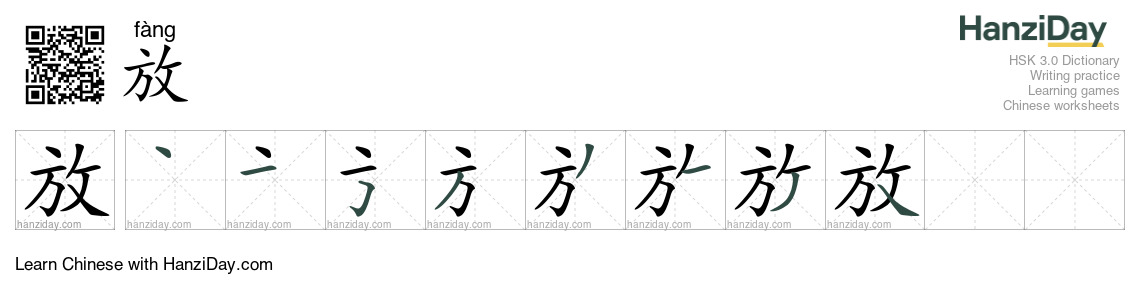
Stroke order
Games & Exercises 9
Find Hanzi
Find Hanzi is a playful exercise for learning Chinese. Spot characters, boost attention, download PDF, and enjoy studying Chinese through games!
Find Radical
Practice Chinese radicals online: choose the Hanzi containing the target component, use optional pinyin hints, and create printable PDF exercises.
Tone Trainer
Learn Mandarin tones online with the Chinese Tone Trainer. Practice tone recognition, pronunciation, and exercises for beginners and advanced learners.
Hanzi Connect
Match Hanzi with pinyin or identify words by sound. Use your own vocabulary or HSK 3.0/YCT levels. Play online after sign-in; printable PDFs with answers are for PRO.
Lost Stroke
Play online: find the missing stroke or radical, restore Chinese characters in order, and create printable PDF worksheets with pinyin and answers.
Calligraphy
Create calligraphy and custom Chinese character coloring pages with pinyin, stroke order, outline styles, and writing grids. Download a print-ready PDF for class or home.
Memo
Flip cards to match Chinese characters or pair Hanzi with Pinyin. Build a custom HSK 3.0 or YCT deck, play online, and create printable PDF cards.
Sudoku
Play Hanzi Sudoku online with 4×4, 6×6, or 9×9 grids, four difficulty levels, custom characters, and HSK 3.0/YCT sets. Create printable PDFs with answers.
Writing trainer
Practice Chinese character writing online with correct stroke order, outlines, a 3–2–1 preview, mistake-based hints, pinyin, and focused Hanzi review.





Examples of use 39
今
天
是
五
四
青
年
节
。
我
听
说
今
天
十
四
到
二
十
八
岁
的
青
年
放
半
天
假
,
今
天
你
有
假
吗
?
Today is May Fourth Youth Day. I heard that young people between the ages of fourteen and twenty-eight have half a day off today. Do you have a holiday today?
你
的
手
机
本
来
放
在
哪
儿
?
Where did you put your mobile phone?
你
的
钱
包
本
来
放
在
哪
儿
?
Where did (you) put your wallet originally?
今
天
的
菜
有
点
儿
咸
,
是
不
是
盐
放
多
了
?
Today's food is a little salty. Is there too much salt?
当
机
会
到
来
时
,
千
万
不
要
放
手
,
有
什
么
想
做
的
事
就
马
上
去
做
吧
。
When the opportunity comes, don't let go. Do what you want to do right away.
小
云
,
妈
妈
叫
你
放
学
不
要
立
马
走
。
Xiaoyun, your mother told you not to leave immediately after school.
你
做
菜
放
太
多
油
了
!
You put too much oil in your cooking!
等
比
赛
结
束
了
,
我
们
一
起
去
吃
个
饭
,
放
松
放
松
吧
。
When the game is over, let's have a meal together and relax.
进
入
大
学
后
,
我
觉
得
自
己
就
像
是
一
只
解
放
了
的
小
鸟
。
After entering the university, I felt like a liberated bird.
可
以
回
收
的
东
西
请
放
在
那
里
。
Please put things that can be recycled there.
虽
然
后
面
的
题
我
都
会
,
但
是
考
试
时
间
太
少
了
,
没
时
间
写
了
,
只
好
都
放
弃
了
。
Although I can do the following questions, there is too little time for the exam and I have no time to write, so I have to give up.
没
想
到
这
两
个
颜
色
放
在
一
起
怪
好
看
的
。
I didn't expect these two colours to look so unusually good together.
我
一
会
儿
要
去
接
我
的
外
孙
女
放
学
了
。
I'm going to pick up my granddaughter from school later.
我
们
的
画
被
妈
妈
放
在
了
客
厅
里
。
Our picture was put in the living room by my mother.
你
的
可
乐
里
要
放
冰
块
吗
?
Do you want ice in your coke?
我
已
经
定
了
早
上
七
点
的
闹
钟
,
放
心
吧
。
I have set the alarm clock for seven in the morning. Don't worry.
有
的
花
喜
干
,
就
别
多
浇
水
;
有
的
花
喜
欢
潮
湿
的
环
境
,
就
别
放
在
太
阳
地
里
。
Some flowers like to dry, don't water more; Some flowers like humid environment, so don't put them in the sun.
我
买
了
一
面
镜
子
,
放
在
我
的
房
间
里
。
I bought a mirror and put it in my room.
放
学
后
,
学
校
里
有
点
冷
清
。
After school, the school is a little deserted.
对
不
起
,
我
今
天
放
学
后
没
空
。
Sorry, I'm not free after school today.
我
们
学
校
课
外
活
动
多
,
每
个
人
放
学
后
都
很
忙
。
There are many extracurricular activities in our school, and everyone is busy after school.
小
朋
友
,
你
一
个
人
上
学
,
你
妈
妈
放
心
吗
?
Children, you go to school alone, does your mother rest assured?
姐
姐
打
排
球
打
得
很
好
,
她
在
学
校
放
学
后
常
常
上
排
球
课
。
My sister plays volleyball very well. She often has volleyball lessons after school.
由
于
家
里
老
人
突
然
生
病
,
我
只
好
放
弃
出
国
。
I had to give up going abroad due to an old family member suddenly falling ill.
把
几
条
沙
丁
鱼
的
天
敌
鲇
鱼
放
进
装
鱼
的
设
备
中
。
Put a few catfish, the natural enemy of sardines, into the fish loading equipment.
她
隐
隐
约
约
觉
得
:
自
己
该
完
全
放
手
了
。
She vaguely felt that it was time for her to let go completely.
你
把
钥
匙
放
哪
儿
了
?
Where have you put the key?
放
学
后
,
学
校
里
冷
冷
清
清
。
After school, the school is deserted.
放
心
吧
,
我
一
定
请
客
。
Don't worry, I'll treat you.
放
学
后
,
我
们
在
什
么
地
方
见
?
Where shall we meet after school?
放
学
to dismiss students at the end of the school day
放
爆
竹
to set off firecrackers
放
牧
to graze (livestock) | to herd (livestock)
放
电
electrical discharge | (coll.) to lure | to entice
妈
妈
把
礼
物
放
进
袜
子
里
。
Mother put the gifts into stockings.
放
风
筝
to fly a kite
放
烟
花
set off fireworks
放
箭
to shoot an arrow
放
牛
to pasture cattle, to graze cattle, to herd cows
Learn 放 (fàng) in context
放 appears here with its available localized meaning and tone-marked pinyin fàng. Listen to the pronunciation and review any examples, illustrations, or lexical links shown for this entry.
Use the sections available on this page to compare characters, components, radicals, related words, matching pronunciation, synonyms, or antonyms. HanziDay shows only the information supported by this entry.
放 in HSK 3.0 Level 3
HanziDay organizes HSK 3.0 vocabulary around the new three-stage, nine-level framework. This entry belongs to Level 3; open the level list to study it alongside other vocabulary from the same stage.
Practice the stroke order for 放
Use the stroke animation to follow the writing order, then practice the sequence with the interactive writing tool. After signing in, you can also create a printable worksheet from this entry within your current allowance.