


门
Learn 开 — HSK 3.0 Level 1
开
Translation
- (v.) open; switch on; be on; drive; have (a meeting); write out; to prescribe
- (m.) carat, karat (measurement of purity of gold)
- (v.) open up, reclaim; (of flowers) open out; come loose; run, set up; lift (a ban, restriction)
- (v.) to pay (wages); to fire (sb.); (of water) to be boiled; to divide into
- (v.) used after a verb to indicate separation or departure, the beginning of an action, spreading, capacity, resignation or popularity
Radical
Simplified
开
Traditional
開
Strokes count
4

Words with 开 51
Same pronunciation 2
Similar pronunciation 16
Synonyms 13
Antonyms 13
Writing and worksheets
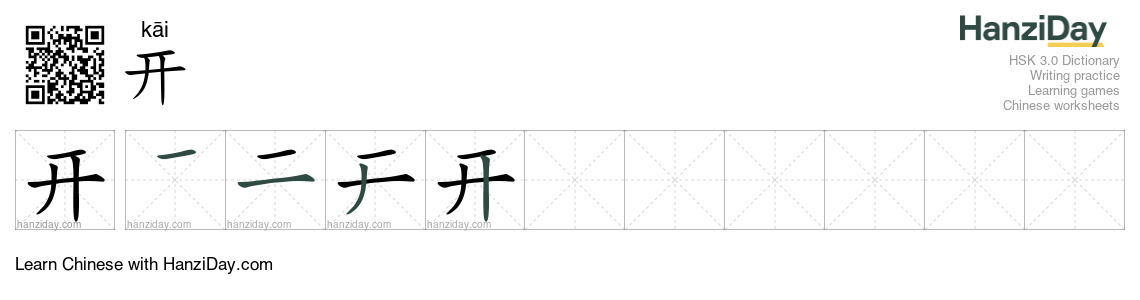
Stroke order
Games & Exercises 9
Find Hanzi
Find Hanzi is a playful exercise for learning Chinese. Spot characters, boost attention, download PDF, and enjoy studying Chinese through games!
Find Radical
Practice Chinese radicals online: choose the Hanzi containing the target component, use optional pinyin hints, and create printable PDF exercises.
Tone Trainer
Learn Mandarin tones online with the Chinese Tone Trainer. Practice tone recognition, pronunciation, and exercises for beginners and advanced learners.
Hanzi Connect
Match Hanzi with pinyin or identify words by sound. Use your own vocabulary or HSK 3.0/YCT levels. Play online after sign-in; printable PDFs with answers are for PRO.
Lost Stroke
Play online: find the missing stroke or radical, restore Chinese characters in order, and create printable PDF worksheets with pinyin and answers.
Calligraphy
Create calligraphy and custom Chinese character coloring pages with pinyin, stroke order, outline styles, and writing grids. Download a print-ready PDF for class or home.
Memo
Flip cards to match Chinese characters or pair Hanzi with Pinyin. Build a custom HSK 3.0 or YCT deck, play online, and create printable PDF cards.
Sudoku
Play Hanzi Sudoku online with 4×4, 6×6, or 9×9 grids, four difficulty levels, custom characters, and HSK 3.0/YCT sets. Create printable PDFs with answers.
Writing trainer
Practice Chinese character writing online with correct stroke order, outlines, a 3–2–1 preview, mistake-based hints, pinyin, and focused Hanzi review.









Examples of use 55
茶
馆
每
天
八
点
开
门
。
The tea house opens at eight o'clock everyday.↵
科
学
馆
每
天
八
点
不
开
门
。
The Science Museum is closed at eight every day.
爸
爸
教
我
骑
车
,
开
始
的
时
候
我
很
紧
张
。
My father taught me to ride a bike. I was very nervous at first.
刚
搜
索
了
一
下
,
离
不
开
手
机
也
是
一
种
精
神
病
。
I just searched, and it is also a kind of mental illness to be inseparable from mobile phones.
今
天
老
张
开
会
的
时
候
不
停
地
看
手
机
,
可
能
有
什
么
重
要
的
事
情
吧
。
Today, Lao Zhang kept looking at his mobile phone during the meeting. Maybe there is something important.
由
于
一
半
的
人
都
没
有
来
,
我
们
今
天
的
会
开
不
了
了
。
As half of the people didn't come, we couldn't hold the meeting today.
他
们
快
要
离
开
中
国
了
,
今
晚
我
们
请
他
们
吃
饭
跟
他
们
告
别
吧
。
They are leaving China soon. Let's invite them to dinner tonight and say goodbye to them.
我
太
吃
惊
了
!
我
同
学
竟
然
会
开
飞
机
!
I'm so surprised! My classmate can fly planes!
一
边
开
车
一
边
打
电
话
很
危
险
。
It's dangerous to make a phone call while driving.
大
家
开
始
在
附
近
挖
掘
。
Everyone started digging nearby.
今
天
全
校
师
生
都
在
体
育
馆
里
开
大
会
。
Today, all the teachers and students have a meeting in the gymnasium.
它
开
始
用
锋
利
的
牙
齿
咬
缠
绕
着
大
象
的
网
和
绳
子
。
It began to bite the net and rope wrapped around the elephant with its sharp teeth.
建
伟
在
大
学
的
一
座
公
寓
楼
里
开
了
一
家
书
店
,
顺
便
卖
点
儿
文
具
、
电
池
、
小
日
用
品
等
。
Jianwei opened a bookstore in an apartment building of the university, selling stationery, batteries and small daily necessities by the way.
做
事
要
冷
静
,
开
始
前
仔
细
地
整
理
一
下
工
作
的
重
点
,
然
后
再
开
始
做
。
Do things calmly, carefully sort out the key points of the work before starting, and then start doing it.
刚
开
始
的
时
候
at the very beginning
你
得
打
开
你
的
手
提
包
。
You have to open your handbag.
家
长
会
在
学
校
的
体
育
馆
开
。
The parents' meeting is held in the school gymnasium.
他
开
车
的
速
度
很
快
。
The speed at which he drives is very fast.
女
儿
拿
起
礼
物
开
心
地
说
:
妈
妈
,
这
是
送
你
的
。
My daughter picked up the gift and said happily, Mom, this is for you.
这
是
我
早
上
开
会
记
下
的
。
This is what I wrote down at the meeting this morning.
演
出
开
始
时
人
们
认
为
很
有
魅
力
,
但
是
糟
糕
的
结
局
会
给
人
留
下
难
以
忘
记
的
坏
印
象
。
At the beginning of the performance, people think it is attractive, but the bad ending will leave an unforgettable bad impression.
例
如
,
做
节
目
时
,
与
开
幕
式
相
比
,
我
们
宁
可
把
更
多
的
精
力
集
中
在
闭
幕
式
上
,
这
样
可
以
加
强
观
众
对
节
目
的
印
象
。
For example, when doing a program, we would rather focus more on the closing ceremony than the opening ceremony, which can enhance the audience's impression of the program.
音
乐
会
几
点
开
始
?
What time does the concert start?
下
午
三
点
我
们
要
开
会
。
We have a meeting at three o'clock in the afternoon.
这
里
有
点
黑
,
我
们
开
电
灯
吧
。
It's a little dark here. Let's turn on the lights.
汽
车
会
在
上
午
十
点
离
开
旅
馆
。
The bus will leave the hotel at ten in the morning.
车
子
开
得
慢
一
点
,
小
心
一
点
。
Drive slowly and carefully.
一
部
电
影
,
开
始
虽
然
剧
情
平
平
常
常
,
如
果
最
后
半
个
小
时
能
使
我
们
感
动
,
我
们
依
然
会
向
别
人
推
荐
它
。
Although the plot of a movie is ordinary at first, if the last half hour can move us, we will still recommend it to others.
弟
弟
明
年
六
岁
了
,
要
开
始
读
书
了
。
My brother will be six years old next year and will start going to school.
对
不
起
,
我
赶
着
开
会
,
现
在
没
时
间
跟
你
聊
天
。
Sorry, I'm in a hurry for a meeting. I don't have time to chat with you now.
听
说
他
从
四
岁
就
开
始
学
打
羽
毛
球
,
已
经
练
了
二
十
多
年
了
。
It is said that he has been learning to play badminton since he was four years old and has been practicing it for more than 20 years.
我
很
开
心
能
认
识
这
样
一
个
家
庭
。
I am very happy to get to know a family like this.
你
一
年
以
前
开
始
学
习
汉
语
了
吗
?
Did you start studying Mandarin a year beforehand?
我
舍
不
得
好
朋
友
离
开
。
I can't bear to leave my best friend.
从
昨
晚
开
始
,
我
就
一
直
难
受
得
很
,
头
疼
得
厉
害
。
Since last night, I have been suffering very much and have a terrible headache.
快
去
学
校
开
家
长
会
。
Go to the school and have a parent-teacher meeting.
老
师
们
今
天
下
午
要
开
会
。
The teachers will have a meeting this afternoon.
你
会
开
车
吗
?
Can you drive?
哥
哥
是
兽
医
,
他
开
了
一
家
宠
物
医
院
。
My brother is a veterinarian. He runs a pet hospital.
听
说
新
开
了
一
家
海
洋
公
园
,
我
们
去
看
看
,
怎
么
样
?
I heard that a new ocean park has been opened. How about we go and have a look?
马
路
对
面
新
开
了
一
家
照
相
馆
。
A new photo studio has opened across the road.
你
在
爷
爷
家
玩
得
开
心
吗
?
Did you have a good time at Grandpa's house?
学
校
门
口
新
开
了
一
家
文
具
店
。
A new stationery store has opened at the school gate.
他
上
午
去
学
开
车
了
。
He went to learn to drive this morning.
“
精
诚
所
至
,
金
石
为
开
”
这
一
成
语
也
便
由
此
流
传
下
来
。
The idiom "Where you go sincerely, the stone opens" has been handed down from this.
哥
哥
开
车
太
快
使
我
担
心
。
My brother drives too fast, which worries me.
开
车
要
小
心
。
Drive carefully.
他
一
下
子
打
开
门
。
He opened the door at once.
一
月
初
,
春
运
就
开
始
了
。
At the beginning of January, Spring Festival travel rush started.
说
干
就
干
,
索
性
这
礼
拜
就
开
始
。
Just do it, just start this week.
他
轻
轻
地
推
开
了
门
,
发
现
房
间
里
没
有
人
。
He gently pushed open the door and found no one in the room.
我
们
每
天
一
起
床
就
打
开
手
机
。
We turn on our cell phones as soon as we get up every day.
别
说
话
了
,
开
始
上
课
了
。
Stop talking and start the class.
请
把
灯
打
开
。
Please turn on the light.
你
在
开
玩
笑
吗
?
Are you joking?
Learn 开 (kāi) in context
开 appears here with its available localized meaning and tone-marked pinyin kāi. Listen to the pronunciation and review any examples, illustrations, or lexical links shown for this entry.
Use the sections available on this page to compare characters, components, radicals, related words, matching pronunciation, synonyms, or antonyms. HanziDay shows only the information supported by this entry.
开 in HSK 3.0 Level 1
HanziDay organizes HSK 3.0 vocabulary around the new three-stage, nine-level framework. This entry belongs to Level 1; open the level list to study it alongside other vocabulary from the same stage.
Practice the stroke order for 开
Use the stroke animation to follow the writing order, then practice the sequence with the interactive writing tool. After signing in, you can also create a printable worksheet from this entry within your current allowance.