


Learn 到 — HSK 3.0 Level 1
到
TOP-50
Frequency
The ranking is based on data from open sources.
HSK 3.0 · Level 1
Translation
- (v.) arrive, get to, reach; go to, leave for
- (adj./v.) considerate or thoughtful; used after a verb indicating an action's result
Radical
Simplified
到
Traditional
到
Strokes count
8

Words with 到 25
Same pronunciation 11
Similar pronunciation 22
Synonyms 31
Writing and worksheets
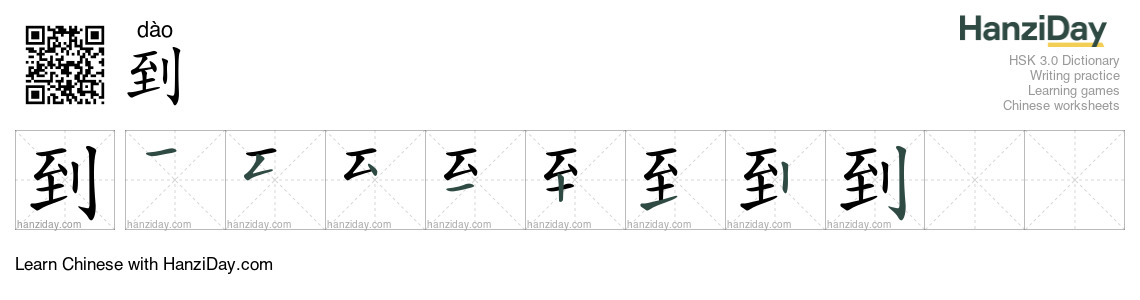
Stroke order
Games & Exercises 9
Find Hanzi
Find Hanzi is a playful exercise for learning Chinese. Spot characters, boost attention, download PDF, and enjoy studying Chinese through games!
Find Radical
Practice Chinese radicals online: choose the Hanzi containing the target component, use optional pinyin hints, and create printable PDF exercises.
Tone Trainer
Learn Mandarin tones online with the Chinese Tone Trainer. Practice tone recognition, pronunciation, and exercises for beginners and advanced learners.
Hanzi Connect
Match Hanzi with pinyin or identify words by sound. Use your own vocabulary or HSK 3.0/YCT levels. Play online after sign-in; printable PDFs with answers are for PRO.
Lost Stroke
Play online: find the missing stroke or radical, restore Chinese characters in order, and create printable PDF worksheets with pinyin and answers.
Calligraphy
Create calligraphy and custom Chinese character coloring pages with pinyin, stroke order, outline styles, and writing grids. Download a print-ready PDF for class or home.
Memo
Flip cards to match Chinese characters or pair Hanzi with Pinyin. Build a custom HSK 3.0 or YCT deck, play online, and create printable PDF cards.
Sudoku
Play Hanzi Sudoku online with 4×4, 6×6, or 9×9 grids, four difficulty levels, custom characters, and HSK 3.0/YCT sets. Create printable PDFs with answers.
Writing trainer
Practice Chinese character writing online with correct stroke order, outlines, a 3–2–1 preview, mistake-based hints, pinyin, and focused Hanzi review.









Examples of use 86
据
说
,
曾
经
有
一
位
很
有
个
性
、
极
爱
冒
险
的
大
导
演
到
南
美
丛
林
拍
有
关
古
代
印
加
文
明
的
纪
录
片
。
It is said that there was once a great director with great personality and adventure who went to the jungles of South America to make a documentary about ancient Inca civilization.
今
天
是
五
四
青
年
节
。
我
听
说
今
天
十
四
到
二
十
八
岁
的
青
年
放
半
天
假
,
今
天
你
有
假
吗
?
Today is May Fourth Youth Day. I heard that young people between the ages of fourteen and twenty-eight have half a day off today. Do you have a holiday today?
这
家
店
的
营
业
时
间
是
早
上
八
点
到
晚
上
六
点
。
This shop is open from eight in the morning to six in the evening.
到
月
底
了
,
爸
爸
又
要
写
报
告
了
,
他
又
得
加
班
了
。
At the end of the month, Dad has to write a report again, and he has to work overtime again.
爸
爸
到
家
的
时
候
,
我
们
早
就
睡
着
了
。
By the time Dad got home, we were already asleep.
爸
爸
是
个
工
作
狂
,
明
天
都
工
作
到
很
晚
。
Dad is a workaholic and will work late tomorrow.
当
我
遇
到
困
难
时
,
我
最
想
的
人
是
爸
爸
妈
妈
。
When I encounter problems, the people I want most are Dad and Mum.
可
是
,
经
过
测
验
计
算
发
现
,
以
大
树
输
送
管
道
的
尺
寸
产
生
的
毛
细
作
用
,
根
本
无
法
把
水
分
送
到
几
十
米
高
的
地
方
。
However, after testing and calculation, it was found that the capillary effect produced by the size of the big tree transportation pipeline could not send water to places tens of meters high at all.
如
果
您
在
本
商
店
购
买
超
过
三
百
元
的
商
品
,
就
可
以
得
到
一
个
精
美
的
购
物
袋
,
多
买
多
得
。
If you buy more than 300 yuan's worth of goods in this shop, you can get a beautiful shopping bag, and you can get more if you buy more.
我
买
不
到
车
票
,
只
能
坐
船
回
家
了
。
I can't get a ticket, so I have to go home by boat.
一
年
前
,
我
第
一
次
来
到
中
国
,
当
时
我
一
句
汉
语
也
不
会
说
。
A year ago, when I first came to China, I couldn't even speak a word of Mandarin.
不
好
意
思
,
我
拿
不
到
上
面
的
东
西
,
你
能
帮
我
拿
一
下
吗
?
Sorry, I can't get the things on it. Can you hold them for me?
如
果
不
是
女
儿
反
驳
,
我
还
意
识
不
到
,
我
们
自
己
的
做
法
和
对
孩
子
的
要
求
实
行
的
是
两
套
标
准
,
那
便
是
对
自
己
宽
容
,
对
孩
子
严
厉
。
If it weren't for my daughter's rebuttal, I still didn't realize that our own practices and requirements for children are two sets of standards, that is, we are tolerant of ourselves and strict with children.
你
敢
不
敢
一
个
人
到
山
里
去
?
Do you dare to go to the mountains alone?
当
机
会
到
来
时
,
千
万
不
要
放
手
,
有
什
么
想
做
的
事
就
马
上
去
做
吧
。
When the opportunity comes, don't let go. Do what you want to do right away.
有
人
纳
闷
儿
,
猫
为
什
么
能
快
速
跳
跃
起
来
,
瞄
准
都
不
用
,
一
下
就
能
拍
到
苍
蝇
?
Some people wonder why cats can jump up quickly without aiming, and they can shoot flies at once.
到
期
限
造
不
出
箭
,
他
就
活
该
受
罚
了
。
If he can't make an arrow by the deadline, he deserves to be punished.
我
可
以
乘
大
象
不
注
意
,
进
到
大
象
鼻
子
里
去
。
I can take the elephant without paying attention and go into the elephant's nose.
这
山
上
的
好
风
景
别
处
是
看
不
到
的
。
The beautiful scenery on this mountain can't be seen elsewhere.
回
家
的
快
乐
和
被
亲
情
包
围
的
幸
福
感
染
了
我
,
我
也
恨
不
得
马
上
飞
到
父
母
跟
前
,
与
他
们
团
圆
。
The happiness of going home and being surrounded by family infected me, and I couldn't wait to fly to my parents immediately to reunite with them.
看
到
大
象
悲
惨
的
样
子
,
老
鼠
不
忍
下
手
。
Seeing the elephant's miserable appearance, the mouse couldn't bear to start.
一
个
人
的
信
用
很
重
要
,
你
不
可
以
说
到
做
不
到
。
A person's credit is very important, you can't say you can't do it.
要
是
你
先
到
了
饭
店
,
就
先
点
菜
吧
。
If you arrive at the restaurant first, order first.
这
个
茶
是
要
出
口
到
很
多
国
家
的
。
This tea is to be exported to many countries.
给
大
卫
上
过
课
的
老
师
们
普
遍
反
映
他
的
表
现
很
好
,
只
是
偶
尔
会
迟
到
。
The teachers who taught David generally reported that he performed well, but occasionally he was late.
请
大
家
把
作
文
上
载
到
这
个
网
站
上
。
Please upload your composition to this website.
姐
姐
下
个
月
要
去
大
学
报
到
了
。
My sister will report to the university next month.
请
大
家
到
会
议
室
集
合
。
Please gather in the conference room.
新
年
到
了
,
人
们
都
回
家
过
年
,
大
人
给
孩
子
发
红
包
,
买
新
衣
。
When the New Year comes, people go home for the New Year. Adults give red envelopes to their children and buy new clothes.
今
天
早
上
我
是
第
一
个
到
教
室
的
。
This morning I was the first to arrive at the classroom.
济
南
的
泉
水
,
历
史
悠
久
,
最
早
的
文
字
记
载
可
以
推
到
3
0
0
0
多
年
前
。
The spring water in Jinan has a long history, and the earliest written records can be pushed back to more than 3,000 years ago.
通
过
老
人
的
介
绍
,
鲍
全
从
龙
王
那
儿
求
到
了
治
病
救
人
的
白
玉
壶
。
Through the introduction of the old man, Bao Quan asked the Dragon King for a white jade pot to cure diseases and save people.
你
能
解
释
一
下
迟
到
的
原
因
吗
?
Can you explain the reason why you are late?
如
果
你
想
买
到
他
们
的
面
包
,
就
要
早
一
点
去
。
If you want to buy their bread, you should go early.
你
跟
我
打
招
呼
的
时
候
,
我
没
注
意
到
你
,
当
时
正
在
接
电
话
。
When you greeted me, I didn't notice you. I was answering the phone.
成
功
的
教
育
就
是
让
每
个
人
都
能
找
到
自
己
生
活
的
方
向
。
Successful education is to enable everyone to find their own direction in life.
你
耐
心
点
儿
!
这
个
电
影
得
看
到
底
,
才
能
知
道
那
件
事
情
的
原
因
。
Be patient! The reason for that will not be known until the end of the film.
没
想
到
这
两
个
颜
色
放
在
一
起
怪
好
看
的
。
I didn't expect these two colours to look so unusually good together.
哪
里
都
找
不
到
我
的
手
机
了
。
I can't find my phone anywhere.
这
是
我
们
网
站
的
网
址
,
在
上
面
你
可
以
看
到
更
多
的
东
西
。
This is the URL of our website. You can see more things on it.
当
工
作
很
多
的
时
候
,
我
们
一
定
要
找
到
工
作
的
重
点
,
先
把
重
点
工
作
完
成
。
When there is a lot of work, we must find the key points of the work and finish the important parts first.
虽
然
遇
到
很
多
困
难
,
但
我
一
定
会
坚
持
到
底
,
因
为
这
是
我
的
梦
想
。
Although I have encountered many difficulties, I will stick to the end, because this is my dream.
我
们
可
以
把
书
邮
寄
到
你
的
家
。
We can mail the book to your home.
我
的
钥
匙
掉
了
,
你
看
到
了
吗
I've lost my key. Have you seen it?
没
想
到
那
里
的
景
色
那
么
美
!
I didn't expect the scenery there to be so beautiful!
上
海
的
马
路
上
到
处
都
是
路
灯
,
The streets of Shanghai are full of street lamps,
今
天
你
是
最
后
一
个
到
学
校
的
!
You are the last one to arrive at school today!
他
是
一
个
很
自
信
的
人
,
相
信
自
己
可
以
做
到
。
He is a very confident person and believes he can do it.
你
的
客
厅
里
怎
么
到
处
是
书
啊
?
Why are there books all over your living room?
他
用
了
全
身
的
力
气
,
才
把
我
的
行
李
全
部
搬
到
宿
舍
。
He used all his strength to move all my suitcases to the dormitory.
给
他
上
过
课
的
老
师
们
普
遍
反
映
他
的
表
现
很
好
,
只
是
偶
尔
会
迟
到
。
Teachers who gave him lessons generally reported that he performed well, only occasionally being late.
工
作
的
时
候
,
经
常
写
几
十
个
字
,
就
到
院
中
去
转
转
,
看
看
这
棵
,
看
看
那
朵
。
When he works, he often writes dozens of words, then goes around the courtyard and looks at this tree and that flower.
我
今
天
得
到
了
一
个
来
自
国
外
的
礼
物
。
I got a gift from abroad today.
我
找
不
到
我
的
手
套
了
。
I can't find my gloves.
那
个
明
星
这
两
年
很
火
,
我
经
常
在
电
视
上
看
到
他
。
That celebrity has been very popular in the past two years. I often see him on TV.
衣
服
我
已
经
收
到
了
,
今
天
都
穿
上
了
呢
。
I've received the clothes. I'm wearing them today.
实
践
证
明
,
第
二
种
人
得
到
的
总
是
比
第
一
种
人
更
多
。
Practice has proved that the second kind of people always get more than the first kind of people.
春
运
到
了
,
站
台
上
人
很
多
。
Spring Festival travel rush arrived, and there were many people on the platform.
他
有
很
多
证
书
,
所
以
他
很
快
找
到
了
工
作
。
He had many certificates, so he found a job quickly.
一
个
被
通
缉
了
1
5
年
的
罪
犯
,
今
天
还
应
该
为
当
初
触
犯
法
律
的
行
为
受
到
惩
罚
吗
?
Should a criminal who has been wanted for 15 years still be punished for breaking the law today?
我
一
个
人
在
家
,
经
常
感
到
孤
单
。
I am at home alone and often feel lonely.
詹
森
一
到
欧
洲
环
境
保
护
署
交
通
部
工
作
,
就
接
到
了
研
究
如
何
解
决
城
市
拥
堵
问
题
的
任
务
。
As soon as Jason came to work in the European Environmental Protection Agency's transport department, he was given the task of studying how to solve the problem of urban congestion.
年
度
考
核
,
我
和
小
林
的
敬
业
精
神
、
兢
兢
业
业
的
工
作
态
度
受
到
了
表
扬
,
经
济
上
也
得
到
了
丰
厚
的
回
报
。
In the annual assessment, Kobayashi and I were praised for our professionalism and conscientious working attitude, and we also got rich returns economically.
外
面
好
热
,
快
到
这
里
来
凉
快
一
下
。
It's hot outside. Come here and cool off.
由
于
人
们
在
一
周
内
的
营
养
摄
入
和
饮
食
模
式
会
影
响
到
他
们
的
体
重
变
化
,
因
此
节
食
者
的
体
重
会
在
一
周
内
上
下
波
动
。
Because people's nutrient intake and diet patterns will affect their weight changes during the week, dieters' weight will fluctuate up and down during the week.
当
消
费
者
走
到
相
应
货
架
时
,
仪
器
会
发
出
提
示
音
,
以
免
消
费
者
错
过
商
品
。
When the consumer walks to the corresponding shelf, the instrument will sound a prompt to avoid the consumer missing the goods.
什
么
时
候
你
会
觉
得
到
无
聊
呢
?
When do you feel bored?
你
看
到
自
己
婴
儿
时
期
的
一
张
照
片
,
你
能
认
出
自
己
吗
?
You see a picture of yourself as a baby. Can you recognize yourself?
你
找
到
王
老
师
了
吗
?
Have you found Miss Wang?
他
到
了
办
公
室
我
就
告
诉
他
。
I'll tell him as soon as he gets to the office.
找
到
了
。
I found it.
夏
天
到
了
,
天
气
自
然
就
热
了
。
When summer comes, the weather will naturally get hot.
我
太
激
动
了
!
我
终
于
申
请
到
奖
学
金
了
。
I'm so excited! I finally earned a scholarship.
我
到
了
,
你
到
了
吗
?
I have arrived. Have you arrived?
这
里
一
年
到
头
都
是
夏
季
。
It is summer here all the year round.
到
网
球
场
怎
么
走
?
How can I get to the tennis court?
旅
游
作
为
经
济
型
产
业
受
到
重
视
。
Tourism, as an economic industry, is valued.
到
家
perfect | excellent | brought to the utmost degree
感
到
to feel; to sense; to perceive
看
到
to see
我
到
中
国
来
是
为
了
学
习
汉
语
。
I'm in China to learn Chinese.
大
概
多
长
时
间
能
到
那
儿
?
Approximately, how long does it take to get there?
哪
路
公
交
车
到
火
车
站
?
Which bus goes to the railway station?
从
北
京
到
上
海
from Beijing to Shanghai
你
到
哪
儿
?
Where are you going?
我
找
到
了
。
I found it.
Learn 到 (dào) in context
到 appears here with its available localized meaning and tone-marked pinyin dào. Listen to the pronunciation and review any examples, illustrations, or lexical links shown for this entry.
Use the sections available on this page to compare characters, components, radicals, related words, matching pronunciation, synonyms, or antonyms. HanziDay shows only the information supported by this entry.
到 in HSK 3.0 Level 1
HanziDay organizes HSK 3.0 vocabulary around the new three-stage, nine-level framework. This entry belongs to Level 1; open the level list to study it alongside other vocabulary from the same stage.
Practice the stroke order for 到
Use the stroke animation to follow the writing order, then practice the sequence with the interactive writing tool. After signing in, you can also create a printable worksheet from this entry within your current allowance.