


郁
Learn 都 — HSK 3.0 Level 1
都
Translation
- (adv.) all, both, without exception
- (n.) capital, metropolis; city noted for a certain product
- (adv.) indicating the cause (used before 是); even; already
Radical
Simplified
都
Traditional
都
Strokes count
10
Words with 都 5
Same pronunciation 3
Similar pronunciation 17
Synonyms 13
Writing and worksheets
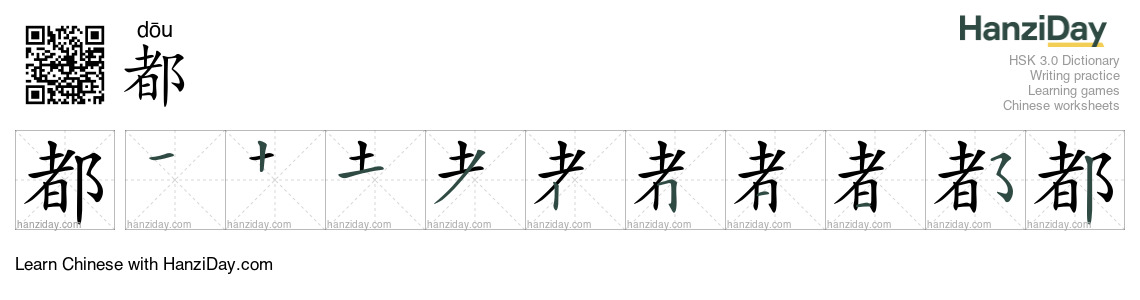
Stroke order
Games & Exercises 9
Find Hanzi
Find Hanzi is a playful exercise for learning Chinese. Spot characters, boost attention, download PDF, and enjoy studying Chinese through games!
Find Radical
Practice Chinese radicals online: choose the Hanzi containing the target component, use optional pinyin hints, and create printable PDF exercises.
Tone Trainer
Learn Mandarin tones online with the Chinese Tone Trainer. Practice tone recognition, pronunciation, and exercises for beginners and advanced learners.
Hanzi Connect
Match Hanzi with pinyin or identify words by sound. Use your own vocabulary or HSK 3.0/YCT levels. Play online after sign-in; printable PDFs with answers are for PRO.
Lost Stroke
Play online: find the missing stroke or radical, restore Chinese characters in order, and create printable PDF worksheets with pinyin and answers.
Calligraphy
Create calligraphy and custom Chinese character coloring pages with pinyin, stroke order, outline styles, and writing grids. Download a print-ready PDF for class or home.
Memo
Flip cards to match Chinese characters or pair Hanzi with Pinyin. Build a custom HSK 3.0 or YCT deck, play online, and create printable PDF cards.
Sudoku
Play Hanzi Sudoku online with 4×4, 6×6, or 9×9 grids, four difficulty levels, custom characters, and HSK 3.0/YCT sets. Create printable PDFs with answers.
Writing trainer
Practice Chinese character writing online with correct stroke order, outlines, a 3–2–1 preview, mistake-based hints, pinyin, and focused Hanzi review.









Examples of use 82
所
以
,
鸟
儿
非
常
爱
惜
羽
毛
,
每
天
都
会
花
很
长
时
间
来
保
养
自
己
的
“
羽
衣
”
。
Therefore, birds cherish feathers very much and spend a long time maintaining their "feather clothes" every day.
我
本
来
以
为
这
次
做
的
菜
不
好
吃
,
相
反
,
大
家
竟
然
都
吃
完
了
。
I thought the food I cooked this time wasn't delicious, on the contrary, everyone actually finished eating it.
虽
然
这
件
事
发
生
在
上
个
世
纪
,
但
是
人
们
永
远
都
不
能
忘
记
那
段
历
史
。
Although this happened in the last century, people can never forget that history.
翟
峰
和
妻
子
都
是
铁
路
工
人
,
工
作
稳
定
、
待
遇
不
错
。
Zhai Feng and his wife are both railway workers, with stable jobs and good pay.
对
不
起
,
我
最
近
很
忙
,
都
没
有
什
么
时
间
去
看
你
。
Sorry, I've been so busy recently that I don't have much time to see you.
不
谢
!
这
都
是
我
应
该
做
的
!
No thanks! This is what I should do!
不
管
忙
不
忙
,
他
每
天
都
要
锻
炼
一
个
小
时
。
Regardless of whether he is busy or not, he will exercise for an hour every day.
我
平
时
喝
咖
啡
什
么
都
不
加
。
I usually drink coffee without adding anything.
每
个
人
都
想
当
一
个
富
人
,
但
其
实
富
人
也
并
不
那
么
快
乐
。
Everyone wants to be a rich person, but in reality, rich people are not even that happy.
每
个
人
都
有
自
己
的
看
法
,
大
家
的
看
法
不
一
定
一
样
。
Everyone has their own views, and everyone's views are not necessarily the same.
你
家
厨
房
真
干
净
,
你
是
不
是
每
天
都
打
扫
?
Your kitchen is really clean. Do you clean it every day?
她
自
己
讲
着
讲
着
就
笑
起
来
了
,
我
们
都
不
明
白
她
为
什
么
笑
。
As she was talking, she laughed. None of us understood why she laughed.
有
人
纳
闷
儿
,
猫
为
什
么
能
快
速
跳
跃
起
来
,
瞄
准
都
不
用
,
一
下
就
能
拍
到
苍
蝇
?
Some people wonder why cats can jump up quickly without aiming, and they can shoot flies at once.
你
们
呀
,
都
让
手
机
给
绑
架
了
,
这
么
过
日
子
,
不
受
罪
吗
?
You have been kidnapped by mobile phones. Don't you suffer if you live like this?
无
论
你
怎
么
选
择
,
都
不
太
可
能
选
一
份
称
心
如
意
的
工
作
安
安
稳
稳
一
辈
子
。
No matter how you choose, it is unlikely that you will choose a satisfactory job and stay stable for a lifetime.
由
于
意
见
不
一
样
,
所
以
两
位
老
板
都
不
高
兴
。
Both bosses are unhappy because of their different opinions.
无
论
明
天
天
气
好
不
好
,
我
都
要
去
看
你
。
Whether the weather is fine or not tomorrow, I will go to see you.
无
论
药
的
味
道
苦
不
苦
,
病
人
都
得
吃
完
。
No matter whether the taste of the medicine is bitter or not, the patient has to finish it.
由
于
一
半
的
人
都
没
有
来
,
我
们
今
天
的
会
开
不
了
了
。
As half of the people didn't come, we couldn't hold the meeting today.
不
管
我
穿
这
双
鞋
合
适
不
合
适
,
我
都
要
买
。
Whether these shoes fit me or not, I will buy them.
这
次
考
试
我
的
成
绩
不
高
,
都
怪
我
太
不
仔
细
了
,
把
师
和
帅
都
写
错
了
。
My grade for this exam wasn't high, which was due to my carelessness. I wrote both teacher and handsome wrong.
我
喝
咖
啡
或
者
茶
都
可
以
。
Both coffee and tea are fine for me to drink.
山
西
人
喜
欢
吃
酸
,
这
在
全
中
国
都
是
有
名
的
。
People from Shanxi like sour food. This is well known all over China.
每
天
晚
上
妈
妈
都
为
我
们
准
备
好
吃
的
晚
饭
。
Mother prepares a delicious dinner for us every night.
班
上
同
学
这
个
学
期
的
进
步
都
很
大
。
All the students in the class have made great progress this term.
今
天
全
校
师
生
都
在
体
育
馆
里
开
大
会
。
Today, all the teachers and students have a meeting in the gymnasium.
大
家
都
认
为
这
里
很
干
净
。
Everybody thinks it's very clean here.
新
年
到
了
,
人
们
都
回
家
过
年
,
大
人
给
孩
子
发
红
包
,
买
新
衣
。
When the New Year comes, people go home for the New Year. Adults give red envelopes to their children and buy new clothes.
春
节
过
后
,
大
家
的
体
重
都
加
重
了
。
After the Spring Festival, everyone put on weight.
由
于
这
个
大
学
越
来
越
有
名
,
中
国
学
生
和
外
国
留
学
生
的
数
量
都
在
增
加
。
As the university becomes more and more famous, the number of Chinese students and foreign students is increasing.
小
猫
和
小
狗
都
是
她
的
。
Both the kitten and puppy are hers.
有
会
员
卡
的
话
,
买
任
何
东
西
都
可
以
打
折
。
If you have a membership card, you can buy anything at a discount.
一
连
三
天
,
他
们
都
很
顺
利
地
实
现
了
原
定
的
计
划
。
For three days in a row, they all realized their original plan smoothly.
家
里
所
有
的
书
我
都
看
过
了
。
I have read all the books at home.
虽
然
后
面
的
题
我
都
会
,
但
是
考
试
时
间
太
少
了
,
没
时
间
写
了
,
只
好
都
放
弃
了
。
Although I can do the following questions, there is too little time for the exam and I have no time to write, so I have to give up.
妈
妈
把
全
部
的
时
间
都
花
在
照
顾
三
个
孩
子
上
了
。
Mother spent all her time taking care of three children.
成
功
的
教
育
就
是
让
每
个
人
都
能
找
到
自
己
生
活
的
方
向
。
Successful education is to enable everyone to find their own direction in life.
从
2
0
世
纪
8
0
年
代
起
,
比
尔
•
盖
茨
每
年
都
要
进
行
两
次
为
期
一
周
的
“
闭
关
”
。
Since 1980s, Bill Gates has conducted two one-week "retreat" every year.
我
的
全
家
都
住
在
中
国
。
My whole family lives in China.
我
的
一
家
人
都
住
在
上
海
。
My family all live in Shanghai.
哪
里
都
找
不
到
我
的
手
机
了
。
I can't find my phone anywhere.
他
的
父
母
因
为
生
病
都
没
了
工
作
,
他
家
现
在
的
生
活
很
困
难
。
His parents have lost their jobs because of illness, and his family's life is very difficult now.
印
度
和
马
来
西
亚
都
是
亚
洲
的
国
家
。
India and Malaysia are both Asian countries.
很
多
游
客
在
马
来
西
亚
度
假
以
后
,
都
对
马
来
西
亚
有
很
好
的
印
象
。
Many tourists have a good impression of Malaysia after their holidays in Malaysia.
请
报
名
参
加
活
动
的
同
学
们
都
来
填
一
下
这
张
表
格
。
Please can all the students who have signed up for this activity fill out this form.
那
个
骗
子
对
你
说
的
都
是
假
话
,
你
可
千
万
别
相
信
啊
!
What that liar told you is a lie. Don't believe it!
我
每
天
都
做
六
十
分
钟
的
作
业
。
I do my homework for sixty minutes every day.
很
多
中
国
的
传
统
游
戏
都
很
有
趣
。
Many traditional Chinese games are very interesting.
我
的
收
件
箱
里
什
么
都
没
有
。
There's nothing in my inbox.
她
的
听
力
和
口
语
都
很
好
,
但
是
写
字
不
太
好
。
She is good at listening and speaking, but she is not very good at writing.
在
中
国
的
北
方
,
冬
天
的
时
候
每
家
都
有
暖
气
。
In the north of China, every family has heating in winter.
这
次
的
行
程
都
安
排
好
了
吗
?
Have you arranged all the trips this time?
家
里
什
么
馅
儿
的
月
饼
都
有
。
There are moon cakes with any stuffing at home.
你
们
都
对
音
乐
会
感
兴
趣
?
Are you all interested in concerts?
正
常
来
说
,
他
每
周
三
都
会
去
图
书
馆
。
Normally, he goes to the library every Wednesday.
他
每
天
回
来
都
很
累
。
He is tired everyday when he gets back.
我
这
个
学
期
课
太
多
了
,
每
天
都
非
常
忙
。
I have too many classes this semester, and I am very busy every day.
我
们
一
家
人
都
很
好
,
谢
谢
!
Our whole family is very well, thank you!
衣
服
我
已
经
收
到
了
,
今
天
都
穿
上
了
呢
。
I've received the clothes. I'm wearing them today.
学
校
每
年
都
会
举
办
中
国
文
化
节
。
The school holds Chinese Culture Festival every year.
我
有
三
个
外
国
朋
友
,
他
们
都
会
说
中
文
。
I have three foreign friends, all of whom speak Chinese.
我
每
天
都
有
体
育
课
。
I have PE class every day.
今
天
真
冷
,
我
都
要
穿
外
套
了
。
It's so cold today that I have to put on my coat.
别
假
装
正
经
,
我
知
道
你
们
都
在
玩
儿
手
机
。
Don't pretend to be serious, I know you are all playing with mobile phones.
每
年
我
都
回
老
家
过
年
。
Every year I go back to my hometown for the New Year.
无
论
明
天
天
气
好
不
好
,
我
都
要
去
公
园
。
Whether the weather is fine or not tomorrow, I will go to the park.
她
们
都
是
新
老
师
。
h v j g c g chjhjkj
他
每
年
都
回
一
次
国
。
He goes back to England once a year.
我
们
的
班
都
是
根
据
学
员
的
具
体
情
况
设
置
的
。
Our classes are set up according to the specific situation of students.
我
们
都
有
汉
语
课
。
We all have Chinese lessons.
炎
热
的
夏
天
,
踢
完
一
场
球
赛
,
每
个
队
员
都
已
经
是
汗
如
雨
下
。
In the hot summer, after playing a ball game, every player was already sweating profusely.
前
边
都
是
新
教
室
。
The front are all new classrooms.
他
每
周
都
洗
车
。
he washes his car every week.
任
何
事
情
他
都
必
须
知
道
。
He has to know everything.
刚
才
我
说
的
事
情
都
是
真
的
。
What I have said just now is all true.
三
个
人
都
是
学
生
。
The three people are all students.
随
便
什
么
都
行
。
Anything will do.
两
只
手
都
把
着
方
向
盘
。
both hands are holding the steering-wheel
叫
我
干
什
么
都
行
。
Whatever I am assigned to do, I will do that.
像
校
长
这
样
的
人
,
到
哪
里
都
很
受
欢
迎
。
People like the headmaster are popular no matter where they go.
你
都
读
过
哪
些
书
?
What books have you read?
在
以
前
的
工
作
岗
位
上
,
我
都
没
有
遇
到
过
这
样
的
问
题
。
In my previous places of work, I have never encountered such a problem.
Learn 都 (dōu) in context
都 appears here with its available localized meaning and tone-marked pinyin dōu. Listen to the pronunciation and review any examples, illustrations, or lexical links shown for this entry.
Use the sections available on this page to compare characters, components, radicals, related words, matching pronunciation, synonyms, or antonyms. HanziDay shows only the information supported by this entry.
都 in HSK 3.0 Level 1
HanziDay organizes HSK 3.0 vocabulary around the new three-stage, nine-level framework. This entry belongs to Level 1; open the level list to study it alongside other vocabulary from the same stage.
Practice the stroke order for 都
Use the stroke animation to follow the writing order, then practice the sequence with the interactive writing tool. After signing in, you can also create a printable worksheet from this entry within your current allowance.