


午
生 : Give Birth, Grow, or Raw
生 (shēng) can mean “to give birth, grow, arise, or ignite; it can also mean raw, uncooked, unfamiliar, a student, or a professional role” in Chinese.
生
TOP-50
Frequency
The ranking is based on data from open sources.
HSK 3.0 · Level 4
HSK 3.0 · Levels 7–9
Translation
- (v.) have a baby, give birth to; grow; come into existence; beget; light (fire)
- (n.) The lead (refers to the main male role in Beijing opera. This role has numerous subtypes)
- (adj.) new, unfamiliar, strange
- (adj./adv.) raw; uncooked; unprocessed; unfamiliar; just, simply; very
- (radical.) life
- (char.) scholar; pupil, student; people taking up certain jobs as their occupation
Radical
Simplified
生
Traditional
生
Strokes count
5
Words with 生 73
Same pronunciation 10
Similar pronunciation 16
Synonyms 9
Antonyms 2
Writing and worksheets
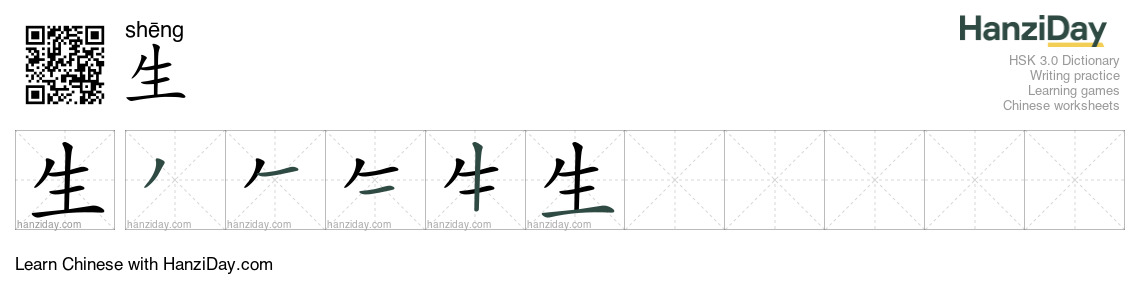
Stroke order
Games & Exercises 9
Find Hanzi
Find Hanzi is a playful exercise for learning Chinese. Spot characters, boost attention, download PDF, and enjoy studying Chinese through games!
Find Radical
Practice Chinese radicals online: choose the Hanzi containing the target component, use optional pinyin hints, and create printable PDF exercises.
Tone Trainer
Learn Mandarin tones online with the Chinese Tone Trainer. Practice tone recognition, pronunciation, and exercises for beginners and advanced learners.
Hanzi Connect
Match Hanzi with pinyin or identify words by sound. Use your own vocabulary or HSK 3.0/YCT levels. Play online after sign-in; printable PDFs with answers are for PRO.
Lost Stroke
Play online: find the missing stroke or radical, restore Chinese characters in order, and create printable PDF worksheets with pinyin and answers.
Calligraphy
Create calligraphy and custom Chinese character coloring pages with pinyin, stroke order, outline styles, and writing grids. Download a print-ready PDF for class or home.
Memo
Flip cards to match Chinese characters or pair Hanzi with Pinyin. Build a custom HSK 3.0 or YCT deck, play online, and create printable PDF cards.
Sudoku
Play Hanzi Sudoku online with 4×4, 6×6, or 9×9 grids, four difficulty levels, custom characters, and HSK 3.0/YCT sets. Create printable PDFs with answers.
Writing trainer
Practice Chinese character writing online with correct stroke order, outlines, a 3–2–1 preview, mistake-based hints, pinyin, and focused Hanzi review.




Examples of use 91
生
日
(n.) birthday
出
生
(v.) be born
产
生
(v.) bring forth, produce, arise
生
长
(v.) (of plants) to grow; (of a person) to be born and brought up
奶
奶
八
十
岁
生
日
的
时
候
,
亲
朋
好
友
都
来
了
。
On Grandma's eightieth birthday, all her relatives and friends came.
我
们
班
有
八
个
男
生
。
There are eight boys in our class.
弟
弟
过
生
日
,
爸
爸
妈
妈
给
他
买
了
很
多
礼
物
,
姐
姐
吃
醋
了
。
My brother had a birthday, and my parents bought him many gifts. My sister was jealous.
他
的
爸
爸
妈
妈
最
近
没
了
工
作
,
他
家
的
生
活
有
点
困
难
,
我
们
帮
他
们
一
下
。
His parents have lost their jobs recently, and life in his family is a bit difficult. Let's help them.
可
是
,
经
过
测
验
计
算
发
现
,
以
大
树
输
送
管
道
的
尺
寸
产
生
的
毛
细
作
用
,
根
本
无
法
把
水
分
送
到
几
十
米
高
的
地
方
。
However, after testing and calculation, it was found that the capillary effect produced by the size of the big tree transportation pipeline could not send water to places tens of meters high at all.
虽
然
这
件
事
发
生
在
上
个
世
纪
,
但
是
人
们
永
远
都
不
能
忘
记
那
段
历
史
。
Although this happened in the last century, people can never forget that history.
医
生
说
我
不
能
吃
米
饭
。
The doctor said I can't eat rice.
试
想
,
这
样
的
商
店
怎
么
能
不
生
意
兴
隆
呢
!
Just think, how can such a shop not do well!
如
果
突
然
被
闹
钟
叫
醒
,
将
在
心
理
上
使
人
产
生
心
慌
、
情
绪
低
落
、
感
觉
没
睡
醒
等
不
适
。
If you are suddenly woken up by the alarm clock, it will make people feel flustered, depressed and uncomfortable.
他
生
病
了
,
是
不
是
?
He is ill, isn't he?
公
园
里
有
太
多
花
粉
了
,
他
不
能
去
,
他
去
的
话
会
生
病
的
。
There is too much pollen in the park. He can't go. If he goes, he will get sick.
我
不
会
因
为
这
件
事
生
气
的
,
我
早
就
原
谅
你
了
。
I won't be angry about it. I forgave you long ago.
我
已
经
严
格
按
照
医
生
的
要
求
吃
药
了
,
但
是
效
果
不
太
好
。
I have taken the medicine strictly according to the doctor's requirements, but the effect is not very good.
只
有
不
断
提
升
自
己
的
决
策
能
力
,
才
能
真
正
为
自
己
的
人
生
做
主
。
Only by constantly improving one's decision-making ability can one truly make decisions for one's own life.
部
分
留
学
生
寒
假
不
回
国
,
他
们
打
算
在
中
国
过
春
节
。
Some overseas students don't return home during winter vacation. They plan to spend the Spring Festival in China.
他
们
不
仅
要
观
色
、
闻
香
、
尝
味
、
赏
形
,
而
且
还
要
求
食
物
具
有
养
生
方
面
的
特
色
。
They not only want to watch the color, smell the fragrance, taste the taste and appreciate the shape, but also require the food to have the characteristics of keeping in good health.
对
不
起
,
我
们
不
能
在
一
起
,
你
无
法
给
我
我
想
要
的
生
活
。
Sorry, we can't be together, you are unable to give me the life I want.
如
果
你
能
节
约
钱
,
不
随
便
在
淘
宝
上
买
东
西
,
你
的
生
活
费
一
定
是
够
用
的
。
If you can save money and not buy things casually on Taobao, your living expenses will be enough.
我
喜
欢
去
不
同
的
地
方
旅
游
,
了
解
当
地
人
的
生
活
。
I like to travel to different places and learn about the life of local people.
一
家
人
高
高
兴
兴
地
生
火
做
饭
,
饱
饱
地
吃
了
顿
团
圆
饭
。
The family happily made a fire to cook and had a full reunion dinner.
从
前
,
大
概
在
距
今
两
千
五
百
多
年
前
的
春
秋
时
期
,
有
一
个
人
叫
子
路
,
他
是
孔
子
最
年
长
的
学
生
。
Once upon a time, in the Spring and Autumn Period about 2,500 years ago, there was a man named Zilu, who was the oldest student of Confucius.
一
天
,
他
让
士
兵
们
去
找
一
头
大
象
和
一
些
出
生
时
眼
睛
就
瞎
了
的
人
回
来
。
One day, he asked the soldiers to find an elephant and some people who were blind at birth.
当
大
导
演
进
一
步
询
问
原
因
时
,
当
地
人
的
回
答
令
他
受
益
终
生
。
When the director asked further why, the local people's answers benefited him all his life.
今
天
全
校
师
生
都
在
体
育
馆
里
开
大
会
。
Today, all the teachers and students have a meeting in the gymnasium.
我
长
大
了
,
我
是
个
大
学
生
了
。
I have grown up, and I am a college student.
昆
虫
这
样
的
小
动
物
,
一
秒
钟
之
内
接
收
的
信
息
量
,
比
人
类
等
体
型
大
的
生
物
多
得
多
。
Small animals like insects receive much more information in one second than large creatures like humans.
这
里
的
留
学
生
大
约
有
三
百
个
。
There are approximately three hundred foreign exchange students here.
留
学
生
的
宿
舍
面
积
大
约
是
二
十
五
平
方
米
左
右
。
The dormitory area for overseas students is about 25 square meters.
由
于
这
个
大
学
越
来
越
有
名
,
中
国
学
生
和
外
国
留
学
生
的
数
量
都
在
增
加
。
As the university becomes more and more famous, the number of Chinese students and foreign students is increasing.
这
个
黄
鱼
是
野
生
的
,
很
贵
。
This yellow croaker is wild and expensive.
你
现
在
适
应
中
国
的
生
活
了
吗
?
Have you adapted to life in China now?
今
天
是
奶
奶
的
生
日
,
你
们
会
请
哪
些
亲
戚
来
参
加
她
的
生
日
聚
会
呢
?
Today is Grandma's birthday. Which relatives will you invite to her birthday party?
今
天
在
餐
厅
过
生
日
的
小
朋
友
可
以
获
得
一
个
生
日
蛋
糕
。
Children who are celebrating their birthday in the restaurant today can get a birthday cake.
今
天
我
们
学
习
的
内
容
是
第
十
一
课
的
生
词
和
语
法
。
The content we are learning today is the new words and grammar from Lesson 11.
成
功
的
教
育
就
是
让
每
个
人
都
能
找
到
自
己
生
活
的
方
向
。
Successful education is to enable everyone to find their own direction in life.
后
天
是
妈
妈
的
生
日
。
The day after tomorrow is mom's birthday.
人
的
一
生
中
,
究
竟
什
么
是
最
重
要
的
?
What is the most important thing in a person's life?
你
在
中
国
的
生
活
怎
么
样
?
How is your life in China?
我
家
小
区
的
旁
边
就
有
一
家
诊
所
,
看
医
生
很
方
便
。
There is a clinic next to my community, so it is very convenient to see a doctor.
他
的
父
母
因
为
生
病
都
没
了
工
作
,
他
家
现
在
的
生
活
很
困
难
。
His parents have lost their jobs because of illness, and his family's life is very difficult now.
他
们
要
体
验
真
正
的
乡
村
生
活
。
They want to experience real country life.
我
想
体
验
一
下
那
里
的
生
活
。
I want to experience the life there.
奶
奶
说
,
现
在
的
生
活
比
以
前
的
生
活
好
多
了
。
Grandma said that life is much better now than before.
老
鼠
是
山
神
的
宠
物
,
它
厌
倦
了
宠
物
的
生
活
,
也
很
厌
恶
宠
物
这
个
角
色
。
Mouse is the pet of mountain god. It is tired of pet life and hates the role of pet.
亚
洲
有
很
多
野
生
动
物
园
,
是
了
解
动
物
很
好
的
方
式
。
There are many safari parks in Asia, which is a good way to know animals.
人
民
的
快
乐
生
活
是
我
们
工
作
的
重
心
。
The happy life of the people is the focus of our work.
京
剧
是
一
种
优
美
的
传
统
艺
术
,
很
多
外
国
留
学
生
对
它
十
分
感
兴
趣
。
Peking Opera is a beautiful traditional art, and many foreign students are very interested in it.
随
着
中
国
经
济
的
发
展
,
越
来
越
多
留
学
生
选
择
来
中
国
留
学
。
With the development of China's economy, more and more overseas students choose to study in China.
我
是
在
这
家
医
院
出
生
的
。
I was born in this hospital.
明
天
是
妈
妈
的
生
日
。
Tomorrow is mom's birthday.
给
花
换
盆
剪
枝
施
肥
的
活
儿
他
越
做
越
熟
练
,
花
生
病
长
虫
他
也
知
道
如
何
应
付
了
。
He became more and more skilled in changing pots, pruning and fertilizing flowers, and he knew how to deal with sick and worms.
我
的
学
校
总
共
有
六
百
名
学
生
。
There are six hundred students in my school.
那
天
是
她
的
生
日
。
It was her birthday.
女
生
要
穿
一
双
白
色
的
长
袜
。
Girls should wear a pair of white stockings.
我
们
明
天
上
午
九
点
在
野
生
动
物
园
门
口
上
车
。
We'll take the bus at the gate of the safari park at nine tomorrow morning.
周
日
,
我
按
小
学
生
的
作
息
时
间
七
点
起
床
。
On Sunday, I get up at seven o'clock according to the schedule of primary school students.
你
们
班
有
多
少
个
学
生
?
How many students does your class have?
你
们
学
校
有
多
少
个
学
生
?
How many students does your school have?
作
为
一
个
中
学
生
As a high school student↵
我
是
一
个
小
学
生
I am a pupil
今
天
下
午
我
朋
友
家
有
一
个
生
日
派
对
。
There is a birthday party at my friend's house this afternoon.
由
于
家
里
老
人
突
然
生
病
,
我
只
好
放
弃
出
国
。
I had to give up going abroad due to an old family member suddenly falling ill.
她
和
其
他
志
愿
者
利
用
午
休
、
周
末
等
空
闲
时
间
给
学
生
们
指
导
和
培
训
。
She and other volunteers use their free time such as lunch break and weekend to guide and train the students.
因
为
哥
哥
还
没
回
家
,
所
以
妈
妈
很
生
气
。
Mother is very angry because my brother hasn't come home yet.
如
果
我
们
忘
了
给
妈
妈
过
生
日
,
妈
妈
会
伤
心
的
!
Mother will be sad if we forget to celebrate her birthday!
在
生
活
中
我
们
需
要
自
信
,
别
总
是
担
心
自
己
会
失
败
。
We need self-confidence in life, and don't always worry about losing.
由
于
连
年
的
战
争
,
家
里
生
活
非
常
困
难
。
Life at home is very difficult because of years of war.
明
天
我
要
去
朋
友
家
过
生
日
。
I'm going to my friend's house for my birthday tomorrow.
今
天
我
过
生
日
,
我
请
客
!
It's my birthday. It's my treat!
我
今
天
看
了
两
位
医
生
。
I saw two doctors today.
最
近
,
老
师
在
使
用
网
络
上
课
,
学
生
也
在
使
用
网
络
学
习
。
Recently, teachers use the internet for classes, and students also use the internet for learning.
我
们
给
他
唱
了
生
日
歌
。
We sang him a birthday song.
这
个
周
末
妹
妹
要
过
三
岁
生
日
了
。
My sister will have her third birthday this weekend.
请
你
详
细
地
跟
我
说
说
发
生
了
什
么
。
Please tell me in detail what happened.
发
生
什
么
事
了
?
What happened?
在
中
国
生
活
有
什
么
困
难
吗
?
Have you had any difficulties with life in China?
班
上
有
一
位
同
学
对
花
粉
过
敏
,
一
位
对
面
粉
过
敏
,
另
一
位
对
花
生
过
敏
,
还
有
一
位
对
尘
土
过
敏
。
其
他
人
都
没
有
什
么
过
敏
。
One student in the class is allergic to pollen, one is allergic to flour, another is allergic to peanuts, and another is allergic to dust. No one else has any allergies.
院
子
是
十
分
理
想
的
室
外
生
活
空
间
。
The courtyard is an ideal outdoor living space.
她
是
医
生
。
She is a doctor.
他
是
小
学
生
。
He is a pupil.
这
是
生
活
的
真
理
。
This is the truth of life.
我
弟
弟
是
小
学
生
。
My little brother is a primary school student.
她
早
睡
早
起
,
经
常
锻
炼
,
生
活
方
式
非
常
健
康
。
She goes to bed early and gets up early, exercises regularly, and has a very healthy lifestyle.
作
为
医
生
As a doctor
寄
生
虫
parasite
生
火
to make a fire; to light a fire
生
词
new word (in textbook) | word that is unfamiliar or not yet studied | CL:組|组[zu3],個|个[ge4]
Learn 生 (shēng) in context
生 appears here with its available localized meaning and tone-marked pinyin shēng. Listen to the pronunciation and review any examples, illustrations, or lexical links shown for this entry.
Use the sections available on this page to compare characters, components, radicals, related words, matching pronunciation, synonyms, or antonyms. HanziDay shows only the information supported by this entry.
生 in HSK 3.0 Level 4
HanziDay organizes HSK 3.0 vocabulary around the new three-stage, nine-level framework. This entry belongs to Level 4; open the level list to study it alongside other vocabulary from the same stage.
Practice the stroke order for 生
Use the stroke animation to follow the writing order, then practice the sequence with the interactive writing tool. After signing in, you can also create a printable worksheet from this entry within your current allowance.