


白
自 — Self, From, or Naturally
自 (zì) can mean oneself, from and since, or naturally and of its own accord in Mandarin Chinese.
自
TOP-50
Frequency
The ranking is based on data from open sources.
HSK 3.0 · Level 4
Translation
- (char.) self, oneself
- (radical.) self
- (prep./adv.) since, from; naturally, certainly
Radical
Simplified
自
Traditional
自
Strokes count
6

Words with 自 56
Same pronunciation 9
Similar pronunciation 54
Synonyms 5
Antonyms 2
Writing and worksheets
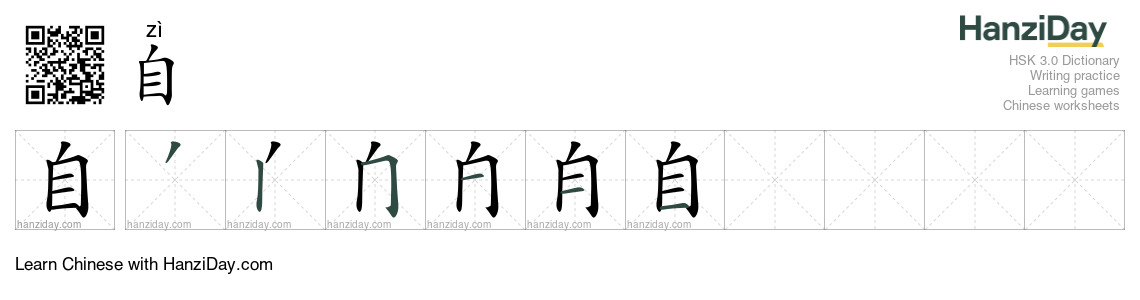
Stroke order
Games & Exercises 9
Find Hanzi
Find Hanzi is a playful exercise for learning Chinese. Spot characters, boost attention, download PDF, and enjoy studying Chinese through games!
Find Radical
Practice Chinese radicals online: choose the Hanzi containing the target component, use optional pinyin hints, and create printable PDF exercises.
Tone Trainer
Learn Mandarin tones online with the Chinese Tone Trainer. Practice tone recognition, pronunciation, and exercises for beginners and advanced learners.
Hanzi Connect
Match Hanzi with pinyin or identify words by sound. Use your own vocabulary or HSK 3.0/YCT levels. Play online after sign-in; printable PDFs with answers are for PRO.
Lost Stroke
Play online: find the missing stroke or radical, restore Chinese characters in order, and create printable PDF worksheets with pinyin and answers.
Calligraphy
Create calligraphy and custom Chinese character coloring pages with pinyin, stroke order, outline styles, and writing grids. Download a print-ready PDF for class or home.
Memo
Flip cards to match Chinese characters or pair Hanzi with Pinyin. Build a custom HSK 3.0 or YCT deck, play online, and create printable PDF cards.
Sudoku
Play Hanzi Sudoku online with 4×4, 6×6, or 9×9 grids, four difficulty levels, custom characters, and HSK 3.0/YCT sets. Create printable PDFs with answers.
Writing trainer
Practice Chinese character writing online with correct stroke order, outlines, a 3–2–1 preview, mistake-based hints, pinyin, and focused Hanzi review.




Examples of use 46
自
己
(pro.) oneself
自
费
(adj.) at one's own expense
所
以
,
鸟
儿
非
常
爱
惜
羽
毛
,
每
天
都
会
花
很
长
时
间
来
保
养
自
己
的
“
羽
衣
”
。
Therefore, birds cherish feathers very much and spend a long time maintaining their "feather clothes" every day.
我
自
己
来
做
吧
,
我
不
喜
欢
欠
人
情
。
I'll do it myself. I don't like to owe people.
每
个
人
都
有
自
己
的
看
法
,
大
家
的
看
法
不
一
定
一
样
。
Everyone has their own views, and everyone's views are not necessarily the same.
她
自
己
讲
着
讲
着
就
笑
起
来
了
,
我
们
都
不
明
白
她
为
什
么
笑
。
As she was talking, she laughed. None of us understood why she laughed.
如
果
不
是
女
儿
反
驳
,
我
还
意
识
不
到
,
我
们
自
己
的
做
法
和
对
孩
子
的
要
求
实
行
的
是
两
套
标
准
,
那
便
是
对
自
己
宽
容
,
对
孩
子
严
厉
。
If it weren't for my daughter's rebuttal, I still didn't realize that our own practices and requirements for children are two sets of standards, that is, we are tolerant of ourselves and strict with children.
在
面
试
的
时
候
千
万
不
能
害
羞
,
应
该
努
力
表
现
出
自
己
的
优
点
。
Don't be shy during the interview, you should try your best to show your strengths.
只
有
不
断
提
升
自
己
的
决
策
能
力
,
才
能
真
正
为
自
己
的
人
生
做
主
。
Only by constantly improving one's decision-making ability can one truly make decisions for one's own life.
周
瑜
觉
得
自
己
很
有
才
,
却
总
比
不
过
诸
葛
亮
,
心
里
一
直
不
服
气
。
Zhou Yu felt that he was very talented, but he was always unconvinced.
可
除
非
是
那
些
好
种
易
活
、
自
己
会
奋
斗
的
花
草
,
否
则
他
是
不
养
的
。
But unless it is those flowers and plants that are easy to live and struggle for themselves, he will not raise them.
可
除
非
是
那
些
好
种
易
活
、
自
己
会
奋
斗
的
花
草
,
否
则
他
是
不
养
的
。
But unless it is those flowers and plants that are easy to live and struggle for themselves, he will not raise them.
猴
子
们
似
乎
只
弄
懂
了
主
人
前
面
说
的
一
个
“
三
”
,
觉
得
自
己
吃
了
亏
。
Monkeys seem to have only understood a "three" mentioned by their masters and feel that they have suffered losses.
一
个
已
经
拥
有
巨
大
幸
福
的
人
,
应
该
原
谅
和
理
解
那
些
伤
害
过
自
己
的
人
。
A person who already has great happiness should forgive and understand those who have hurt himself.
进
入
大
学
后
,
我
觉
得
自
己
就
像
是
一
只
解
放
了
的
小
鸟
。
After entering the university, I felt like a liberated bird.
那
里
的
风
景
太
美
了
,
你
一
定
要
亲
自
去
看
一
看
。
The scenery there is so beautiful that you must go and see it for yourself.
成
功
的
教
育
就
是
让
每
个
人
都
能
找
到
自
己
生
活
的
方
向
。
Successful education is to enable everyone to find their own direction in life.
你
要
在
信
里
讲
讲
自
己
的
近
况
。
You need to talk about your own recent situation in the letter.
他
的
中
文
学
好
了
,
他
的
自
信
心
也
有
了
。
His Chinese is better, and his self-confidence is better.
听
见
他
这
么
说
自
己
,
她
的
心
都
凉
了
。
Her heart was cold when she heard him say so about herself.
我
怀
疑
是
他
把
我
的
自
行
车
骑
走
了
。
I suspect that he rode my bike away.
我
有
自
己
的
房
间
。
I have my own room.
她
清
空
了
自
己
的
电
脑
。
She emptied her computer.
他
是
一
个
很
自
信
的
人
,
相
信
自
己
可
以
做
到
。
He is a very confident person and believes he can do it.
女
儿
却
是
一
脸
的
疑
惑
,
反
问
道
:
“
你
们
不
是
也
有
时
候
说
,
哪
个
朋
友
好
相
处
,
哪
个
朋
友
很
自
私
吗
?
The daughter was puzzled and asked, "don't you sometimes say which friend is easy to get along with and which friend is selfish?
我
们
应
该
以
那
些
敢
说
真
话
的
人
为
镜
子
,
这
样
才
能
及
时
发
现
自
己
的
缺
点
。
We should take those who dare to tell the truth as mirrors, so as to find our shortcomings in time.
保
护
森
林
就
是
在
保
护
地
球
,
保
护
我
们
自
己
的
家
。
To protect the forest is to protect the earth and our own home.
我
今
天
得
到
了
一
个
来
自
国
外
的
礼
物
。
I got a gift from abroad today.
他
是
一
个
来
自
中
国
的
老
师
。
He is a teacher from China.
郝
琳
硕
觉
得
自
己
的
收
获
远
多
于
给
孩
子
们
的
。
Hao Linshuo feels that his gains are far more than those for children.
你
别
烦
我
了
,
我
想
自
己
一
个
人
。
Don't bother me, I want to be alone.
我
努
力
使
自
己
的
口
气
缓
和
下
来
。
I tried to soften my tone.
你
会
自
己
给
自
己
理
发
吗
?
Can you cut your own hair?
在
生
活
中
我
们
需
要
自
信
,
别
总
是
担
心
自
己
会
失
败
。
We need self-confidence in life, and don't always worry about losing.
你
看
到
自
己
婴
儿
时
期
的
一
张
照
片
,
你
能
认
出
自
己
吗
?
You see a picture of yourself as a baby. Can you recognize yourself?
首
先
,
我
来
自
我
介
绍
一
下
。
First of all, let me introduce myself.
我
相
信
老
师
,
也
相
信
自
己
!
I believe in teachers and myself!
她
隐
隐
约
约
觉
得
:
自
己
该
完
全
放
手
了
。
She vaguely felt that it was time for her to let go completely.
夏
天
到
了
,
天
气
自
然
就
热
了
。
When summer comes, the weather will naturally get hot.
人
类
自
身
也
饱
受
污
染
的
危
害
。
Human beings themselves suffer from pollution.
他
是
这
样
陈
述
自
己
的
见
解
的
。
This is how he stated his views.
赫
拉
克
利
特
把
自
我
比
喻
为
一
条
河
。
Heraclitus compared himself to a river.
自
学
self-study | to study on one's own
自
我
介
绍
self-introduction | to introduce oneself
自
习
室
self-revision room; self-study room
自
吹
preen oneself, boast of
Learn 自 (zì) in context
自 appears here with its available localized meaning and tone-marked pinyin zì. Listen to the pronunciation and review any examples, illustrations, or lexical links shown for this entry.
Use the sections available on this page to compare characters, components, radicals, related words, matching pronunciation, synonyms, or antonyms. HanziDay shows only the information supported by this entry.
自 in HSK 3.0 Level 4
HanziDay organizes HSK 3.0 vocabulary around the new three-stage, nine-level framework. This entry belongs to Level 4; open the level list to study it alongside other vocabulary from the same stage.
Practice the stroke order for 自
Use the stroke animation to follow the writing order, then practice the sequence with the interactive writing tool. After signing in, you can also create a printable worksheet from this entry within your current allowance.