


Learn 子 — HSK 3.0 Level 3
Meaning of 子 (zi): (char.) son, child; person; learned or virtuous man; viscount; (lit.) you; young; subsidiary
子
TOP-50
Frequency
The ranking is based on data from open sources.
HSK 3.0 · Level 3
Translation
- (char.) son, child; person; learned or virtuous man; viscount; (lit.) you; young; subsidiary
- (radical.) child, son
- (n./m.) young animal, egg; seed; sth small and hard; (spoken) copper coin; measure word for sth long and thin
Simplified
子
Traditional
子
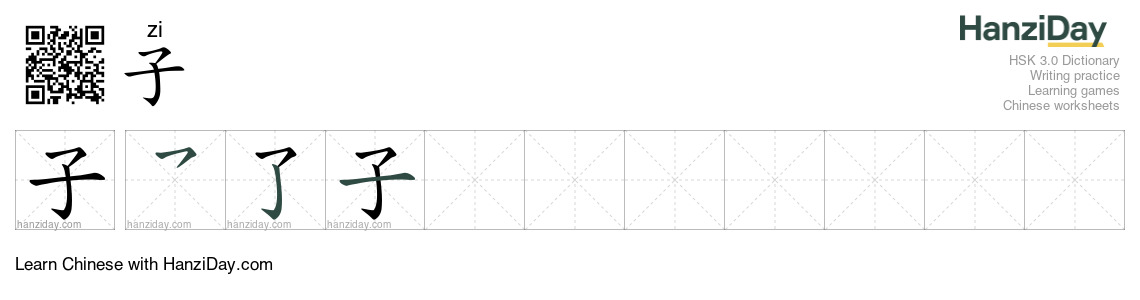
Strokes count
3
Words with 子 127
Same pronunciation 1
Similar pronunciation 62
Writing and worksheets
Stroke order
Games & Exercises 9
Find Hanzi
Find Hanzi is a playful exercise for learning Chinese. Spot characters, boost attention, download PDF, and enjoy studying Chinese through games!
Find Radical
Practice Chinese radicals online: choose the Hanzi containing the target component, use optional pinyin hints, and create printable PDF exercises.
Tone Trainer
Learn Mandarin tones online with the Chinese Tone Trainer. Practice tone recognition, pronunciation, and exercises for beginners and advanced learners.
Hanzi Connect
Match Hanzi with pinyin or identify words by sound. Use your own vocabulary or HSK 3.0/YCT levels. Play online after sign-in; printable PDFs with answers are for PRO.
Lost Stroke
Play online: find the missing stroke or radical, restore Chinese characters in order, and create printable PDF worksheets with pinyin and answers.
Calligraphy
Create calligraphy and custom Chinese character coloring pages with pinyin, stroke order, outline styles, and writing grids. Download a print-ready PDF for class or home.
Memo
Flip cards to match Chinese characters or pair Hanzi with Pinyin. Build a custom HSK 3.0 or YCT deck, play online, and create printable PDF cards.
Sudoku
Play Hanzi Sudoku online with 4×4, 6×6, or 9×9 grids, four difficulty levels, custom characters, and HSK 3.0/YCT sets. Create printable PDFs with answers.
Writing trainer
Practice Chinese character writing online with correct stroke order, outlines, a 3–2–1 preview, mistake-based hints, pinyin, and focused Hanzi review.




Examples of use 99
兔
子
的
尾
巴
短
短
的
,
很
可
爱
。
The rabbit's tail is so short, it's cute.
我
爱
吃
饺
子
。
I love dumplings.
爷
爷
虽
然
八
十
多
了
,
可
是
他
因
为
常
常
运
动
,
早
睡
早
起
,
身
子
可
好
呢
!
Although Grandpa is over 80 years old, he goes to bed early and gets up early because he often exercises.
那
么
多
人
,
弟
弟
一
下
子
就
把
爸
爸
找
出
来
了
,
弟
弟
的
眼
力
真
好
!
So many people, my brother found out my father at once, and my brother's eyesight is really good!
杯
子
在
桌
子
里
。
(phr.) The cup is inside the table (or desk).
我
的
杯
子
在
哪
儿
呢
?
Where is my cup?
杯
子
里
的
水
快
满
了
。
The glass is almost full.
这
个
杯
子
五
块
钱
。
This cup is five kuai.
这
个
杯
子
是
你
的
吗
?
Is this your cup?
杯
子
里
还
有
茶
吗
?
Is there any tea in the cup?
桌
子
上
边
有
一
本
书
。
There is a book on the desk.
桌
子
上
有
一
本
最
新
的
中
文
杂
志
。
There is a new Chinese magazine on the desk.
翟
峰
和
妻
子
都
是
铁
路
工
人
,
工
作
稳
定
、
待
遇
不
错
。
Zhai Feng and his wife are both railway workers, with stable jobs and good pay.
那
个
人
有
很
多
钱
,
可
以
穿
很
贵
的
皮
毛
,
有
很
多
金
子
,
可
是
不
会
写
字
。
That man has a lot of money, can wear expensive fur, has a lot of gold, but can't write.
我
脑
子
里
总
想
着
这
件
事
,
怎
么
也
睡
不
着
。
I always think about it in my mind, and I can't sleep.
在
其
他
粮
食
不
足
的
情
况
下
,
用
橡
子
喂
猴
子
倒
是
个
办
法
。
In other cases of food shortage, feeding monkeys with acorns is a way.
如
果
不
是
女
儿
反
驳
,
我
还
意
识
不
到
,
我
们
自
己
的
做
法
和
对
孩
子
的
要
求
实
行
的
是
两
套
标
准
,
那
便
是
对
自
己
宽
容
,
对
孩
子
严
厉
。
If it weren't for my daughter's rebuttal, I still didn't realize that our own practices and requirements for children are two sets of standards, that is, we are tolerant of ourselves and strict with children.
无
论
你
怎
么
选
择
,
都
不
太
可
能
选
一
份
称
心
如
意
的
工
作
安
安
稳
稳
一
辈
子
。
No matter how you choose, it is unlikely that you will choose a satisfactory job and stay stable for a lifetime.
这
是
你
的
手
术
单
子
,
但
是
你
不
要
做
手
术
,
这
个
单
子
可
以
拿
走
。
This is your operation list, but you don't want to do the operation. This list can be taken away.
最
近
我
的
朋
友
不
但
失
去
了
工
作
,
还
和
妻
子
离
了
婚
,
日
子
真
是
太
苦
了
。
Recently, my friend not only lost his job, but also divorced his wife. Life is really hard.
我
不
会
包
饺
子
,
怎
么
办
?
I can't make dumplings. What should I do?
妈
妈
在
院
子
里
种
了
很
多
蔬
菜
。
Mother grows a lot of vegetables in the yard.
你
吃
过
饺
子
吗
?
Have you ever eaten dumplings?
我
最
喜
欢
吃
鸡
腿
了
!
我
可
以
一
下
子
吃
三
个
!
I like chicken legs best! I can eat three at once!
在
吃
药
之
前
,
应
该
好
好
读
一
下
盒
子
里
的
说
明
。
You should read the instructions in the box carefully before taking the medicine.
昨
天
我
吃
了
一
个
梨
子
。
I ate a pear yesterday.
我
早
饭
喜
欢
吃
包
子
。
I like steamed buns for breakfast.
我
吃
了
一
些
饺
子
。
I ate some dumplings.
这
个
大
房
子
一
共
有
六
间
房
间
。
There are six rooms in this big house.
影
子
一
会
儿
大
,
一
会
儿
小
。
Shadows are big and small.
请
你
讲
讲
你
在
大
学
里
的
日
子
,
好
吗
?
Would you please tell me something about your days in college?
这
条
裤
子
有
点
儿
大
,
有
没
有
小
一
号
的
?
This pair of trousers is a bit big. Do you have a smaller size?
房
子
的
后
面
有
很
多
山
,
高
高
低
低
一
大
片
。
There are many mountains behind the house, high and low.
新
年
到
了
,
人
们
都
回
家
过
年
,
大
人
给
孩
子
发
红
包
,
买
新
衣
。
When the New Year comes, people go home for the New Year. Adults give red envelopes to their children and buy new clothes.
我
的
书
很
多
,
你
有
大
点
儿
的
盒
子
吗
?
I have a lot of books. Do you have a bigger box?
有
的
人
家
喜
欢
种
草
、
养
花
、
种
竹
子
,
有
的
人
家
则
喜
欢
用
大
盆
养
金
鱼
。
Some people like to plant grass, flowers and bamboo, while others like to raise goldfish in big pots.
这
双
袜
子
是
谁
的
?
Whose socks are these?
我
的
房
子
可
以
给
你
免
费
住
。
My house can give you free living.
别
动
,
你
的
身
上
有
个
小
虫
子
。
Don't move, you have a little bug on your body.
科
学
研
究
证
明
,
女
孩
子
对
衣
服
颜
色
的
选
择
往
往
与
她
们
的
性
格
有
关
。
Scientific research has proven that girls' choice of clothing colour is often related to their personality.
妈
妈
把
全
部
的
时
间
都
花
在
照
顾
三
个
孩
子
上
了
。
Mother spent all her time taking care of three children.
快
把
你
的
脏
鞋
子
洗
干
净
。
Quickly wash your dirty shoes.
他
的
儿
子
一
岁
,
不
会
写
字
。
His son is one years old, can't write characters.
姐
姐
在
用
平
板
电
脑
看
电
子
书
,
弟
弟
在
白
板
上
画
画
,
我
们
的
狗
在
地
板
上
睡
觉
。
My sister is reading e-books on her tablet, my brother is drawing on the whiteboard, and our dog is sleeping on the floor.
那
个
骗
子
对
你
说
的
都
是
假
话
,
你
可
千
万
别
相
信
啊
!
What that liar told you is a lie. Don't believe it!
妈
妈
的
勺
子
。
Mom's spoon.
那
些
饺
子
都
是
妈
妈
包
的
。
Those dumplings are made by my mother.
房
子
的
后
面
有
很
多
山
,
高
高
低
低
,
连
成
一
片
。
There are many mountains behind the house, which are high and low.
我
最
喜
欢
的
水
果
是
桃
子
。
My favorite fruit is peach.
这
里
是
房
子
的
阳
面
,
采
光
好
。
This is the sunny side of the house, with good lighting.
树
上
的
果
子
成
熟
了
。
The fruit on the tree is ripe.
你
肚
子
疼
的
时
候
,
喝
点
热
水
,
可
能
管
用
。
When you have a stomachache, drink some hot water, which may help.
近
年
来
,
市
场
上
出
现
了
一
种
新
的
电
子
产
品
,
名
为
“
光
闹
钟
”
。
In recent years, a new electronic product named "Light Alarm Clock" has appeared in the market.
世
界
上
没
有
完
全
相
同
的
叶
子
。
There are no completely identical leaves in the world.
请
你
从
这
些
句
子
中
选
择
你
认
为
正
确
的
一
个
。
Please choose the sentence among these that you think is the most correct.
你
的
书
包
为
什
么
是
这
个
样
子
的
?
Why is your schoolbag like this?
房
子
的
东
边
是
饭
厅
,
南
边
是
客
厅
。
To the east of the house is the dining room and to the south is the living room.
我
们
应
该
以
那
些
敢
说
真
话
的
人
为
镜
子
,
这
样
才
能
及
时
发
现
自
己
的
缺
点
。
We should take those who dare to tell the truth as mirrors, so as to find our shortcomings in time.
我
买
了
一
面
镜
子
,
放
在
我
的
房
间
里
。
I bought a mirror and put it in my room.
他
的
样
子
多
好
笑
。
How funny he looks.
我
的
桌
子
是
白
色
的
。
My desk is white.
她
喜
欢
在
下
雨
的
日
子
在
书
店
里
看
书
。
She likes reading in the bookstore on rainy days.
我
的
脑
子
里
想
的
都
是
我
的
作
业
。
All I can think about is my homework.
这
是
我
家
的
房
子
。
This is my house.
我
需
要
买
几
双
新
的
袜
子
。
I need to buy some new pairs of socks.
这
个
帽
子
有
点
儿
旧
。
This hat is a bit old.
车
子
开
得
慢
一
点
,
小
心
一
点
。
Drive slowly and carefully.
我
带
了
很
多
饺
子
回
来
。
I brought back a lot of dumplings.
他
儿
子
在
学
校
上
小
班
。
His son is in a small class at school.
她
儿
子
好
吗
?
Is her son well?
翟
峰
和
妻
子
没
有
积
蓄
,
卖
房
卖
车
买
下
了
一
艘
二
手
船
,
翟
峰
叫
它
“
彩
虹
号
”
。
Zhai Feng and his wife had no savings, so they sold their houses and cars and bought a second-hand boat. Zhai Feng called it "Rainbow".
这
个
盘
子
十
元
一
个
。
This plate costs ten yuan each.
我
们
家
有
三
个
孩
子
,
两
个
男
孩
,
一
个
女
孩
。
There are three children in our family, two boys and one girl.
我
有
三
个
勺
子
,
其
中
一
个
是
木
勺
子
,
I have three spoons, one of which is a wooden spoon.
五
个
子
女
Five children
他
和
她
有
两
个
子
女
。
He and she have two children.
一
个
肉
包
子
三
块
。
A meat bun costs three yuan.
一
个
孩
子
在
哭
。
A child is crying.
小
狗
在
椅
子
下
。
The puppy is under the chair.
这
个
句
子
怎
么
表
达
更
好
?
How to express this sentence better?
一
套
校
服
里
有
衬
衫
、
裤
子
、
外
套
、
袜
子
和
皮
鞋
。
There are shirts, trousers, coats, socks and leather shoes in a school uniform.
他
对
新
房
子
很
满
意
。
He is very satisfied with his new house.
猴
子
有
时
候
很
聪
明
,
有
时
候
很
笨
。
Monkeys are sometimes clever and sometimes stupid.
我
学
会
包
饺
子
了
。
I learned to make dumplings.
他
一
下
子
打
开
门
。
He opened the door at once.
下
周
您
来
看
房
子
?
没
问
题
!
Will you come to see the house next week? No problem!
我
感
冒
了
,
嗓
子
坏
了
,
说
不
出
话
了
。
I have a cold, my throat is broken, and I can't speak.
这
条
裤
子
太
长
了
。
These trousers are too long.
请
给
我
妈
妈
来
一
把
叉
子
。
please give my mum a fork
桌
子
下
有
一
只
猫
。
There is a cat under the table.
小
猫
在
桌
子
下
。
The kitten is under the table.
书
包
在
桌
子
上
边
。
The schoolbag is on the table.
桌
子
下
有
什
么
?
What's under the table?
她
有
时
拿
起
剪
刀
给
它
们
剪
剪
叶
子
。
She sometimes picks up scissors and cuts their leaves.
我
们
只
想
无
忧
无
虑
地
过
日
子
。
We just want to live carefree.
小
孩
子
喜
欢
快
乐
地
学
习
。
Children like to learn happily
鼻
子
在
这
儿
。
The nose is here.
怎
么
包
饺
子
?
How to make dumplings?
怎
样
包
饺
子
?
How to make dumplings?
Learn 子 (zi) in context
子 appears here with its available localized meaning and tone-marked pinyin zi. Listen to the pronunciation and review any examples, illustrations, or lexical links shown for this entry.
Use the sections available on this page to compare characters, components, radicals, related words, matching pronunciation, synonyms, or antonyms. HanziDay shows only the information supported by this entry.
子 in HSK 3.0 Level 3
HanziDay organizes HSK 3.0 vocabulary around the new three-stage, nine-level framework. This entry belongs to Level 3; open the level list to study it alongside other vocabulary from the same stage.
Practice the stroke order for 子
Use the stroke animation to follow the writing order, then practice the sequence with the interactive writing tool. After signing in, you can also create a printable worksheet from this entry within your current allowance.