碰
钉
子
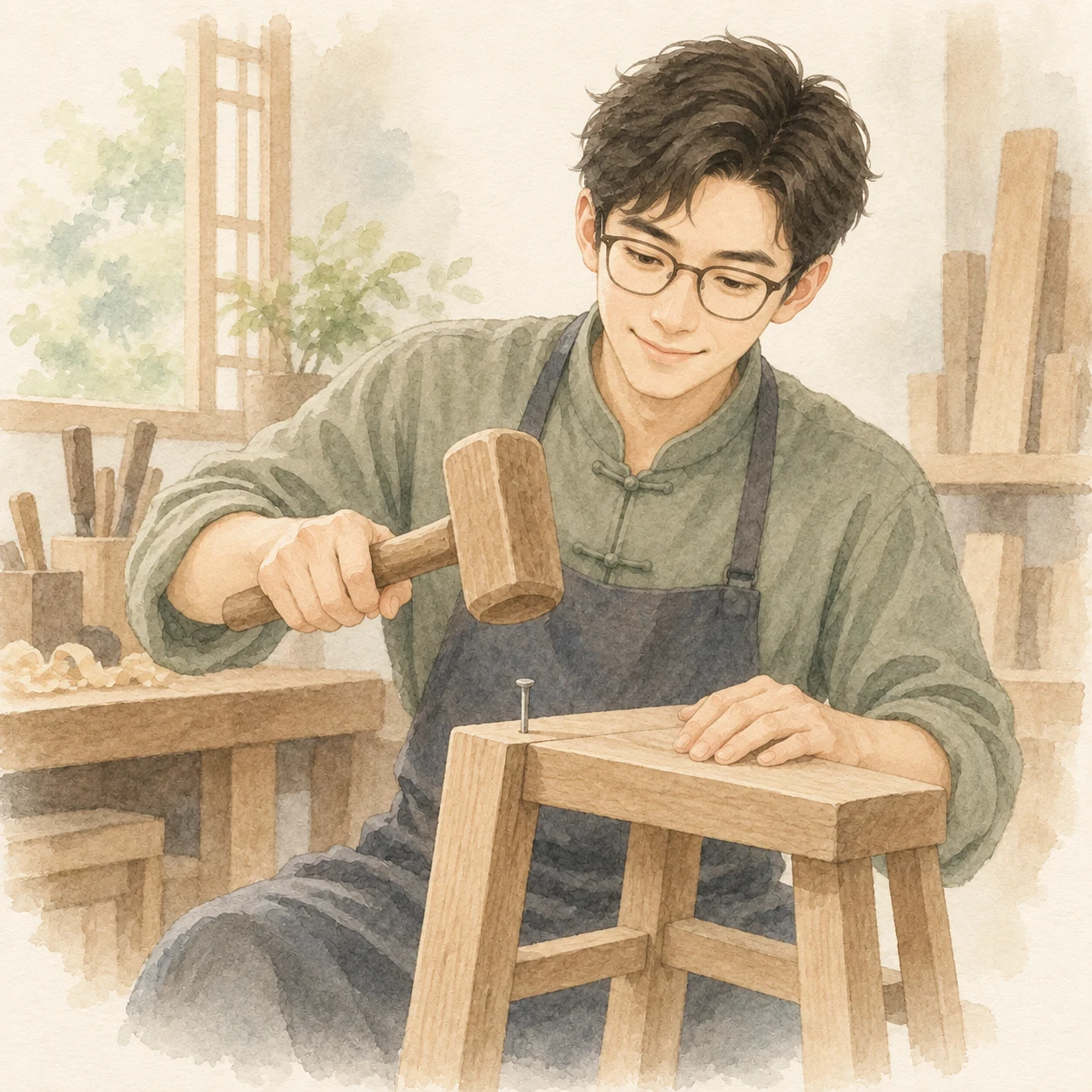
(phr.) bump one's head against a nail, get snubbed, meet rejection
Same pronunciation
9
定
(char.) stated, fixed, stipulated | (v./adv.) be stable or calm; to fix, to decide, to order; certainly, surely | (char.) fixed, settled, established
订
(v.) bind, staple | (v.) book, reserve (seats, etc.); order, subscribe to (newspaper, etc.) | (v.) to make, draw up; pass judgment on; to revise
啶
idine (chemistry)
碇
variant of 碇[ding4]
腚
buttocks | butt
萣
see 茄萣[Qie2 ding4]
铤
ingot
锭
(weaving) spindle | ingot | pressed cake of medicine etc | classifier for: gold and silver ingots, ink sticks
饤
display food for show only | sacrifice
Similar pronunciation
16
顶
(n./v./m.) peak, top; reject, turn down; be equal or equivalent to; measure word for hats | (v.) to carry on the head; push from below or behind, prop up; to gore/butt; bear, stand; go against; to retort; to substitute; to transfer the ownership
丁
(n.) cube (small); man, population (used in ancient Chinese); person engaged in manual work; fourth, the 4th of the 10 heavenly Stems | (char.) Ding (a surname) | (onomat.) (lit.) clang (sound of chopping wood, plucking the strings of a musical instrument, etc.)
盯
(v.) fix one's eyes on, stare at
仃
used in 伶仃[ling2 ding1]
叮
(v.) (of tiny insects such as mosquitoes) to sting, to bite; to make sure by repeating what one says
帄
patch (for mending clothes)
玎
jingling | tinkling
町
(used in place names)
疔
boil | carbuncle
耵
used in 耵聹|耵聍[ding1 ning2] | Taiwan pr. [ding3]
虰
see 虰蛵[ding1 xing2]
酊
tincture (loanword)
酊
used in 酩酊[ming3 ding3]
钉
(n.) nail | (v.) follow somebody closely, to urge | (v.) to nail; to sew on (button, etc.)
靪
to cobble | to patch
鼎
(n.) ancient Chinese cooking vessel with three (or four) legs | (char.) big, great; throne | (radical.) tripod, tripod caldron
Synonyms
48
去
(v.) go; go in order to do; (after a verb) indicating motion away from the speaker or a change in location | (char.) depart from; be lost; be apart (in time or space); last (year), previous; (linguistics) falling tone | (v.) remove; (euphemism) pass away, die; play a part or role (in a play)
完
(v.) finish; come to an end; fail; run out; pay | (char.) whole, intact
走
(v.) walk; leave, go; run; (euphemism) pass away; (of objects) move; reveal; lose the original shape or flavor; visit; do sth in some way | (radical.) run | (radical.) walk
走
路
to walk; to go on foot | to leave; to depart | (informal) to clear off; to beat it | (of sb who gets fired or resigns) to leave the job; to get out
老
(adj.) old, aged; of long standing, old fashioned, outdated; former, original; (of colors) dark; (of vegetable) overgrown; (of food) overcooked | (adv.) often, regularly; for a long time; very | (radical.) old | (char.) old people; experienced; (prefix for) names of animals, plants, surnames
死
(v./adj./adv.) die, be dead; fixed, rigid; impassable; irreconcilable; extreme; to the death, desperately; unyieldingly
香
(adj.) fragrant, sweet-smelling; savory, delicious; having good appetite; (of sleep) sound; popular | (radical.) fragrant | (n.) spice, perfume; incense, joss stick
去
世
(v.) die, pass away
直
(v./adj./adv.) to straighten; straight; vertical; upright; frank; directly; continuously; simply, just
硬
(adj./adv.) hard, tough; (of attitude) strong; (of merchandise) of good quality; (of person) able; forcibly; reluctantly, grudgingly
死
亡
(v./n.) die; death, fatality, demise
移
民
(v./n.) to migrate, to emigrate, to immigrate, to relocate; immigrant, emigrant
除
(v.) divide | (v./prep.) to remove, get rid of; except, besides
善
(adj.) good and honest, kind-hearted | (char.) philanthropic; good; friendly; familiar; be adept in; make a success of; be likely to
故
(char.) old, past; things of the past; old friend, acquaintance; cause; incident, event | (v./adv./conj.) (of someone) pass away, depart this life; intentionally; therefore
消
(v.) disappear; eliminate, remove; pass the time in a leisurely way; take, need
老
大
(n.) old age; eldest child in a family; leader of a group; boss
踹
(v.) kick, trample, tread on
逝
世
(v.) die, pass away
上
岸
to go ashore; to climb ashore | (fig.) to achieve a stable and secure life after a period of struggle (e.g. to get a government job, be admitted to a desirable university, or finally pay off one's debts)
上
西
天
(Buddhism) to go to the Western Paradise | (fig.) to die
下
世
to die | future incarnation | next life | to be born | to come into the world | future generation
不
在
not to be present | to be out | (euphemism) to pass away | to be deceased
亡
(char.) flee, escape, run away; die, pass away; (lit.) lose, be gone; perish, fall; dead, deceased
亡
故
to die | to pass away
仙
逝
to die | to depart this mortal coil
作
古
to die | to pass away
冇
to not have (Cantonese) (Mandarin equivalent: 沒有|没有[mei2 you3])
升
天
lit. to ascend to heaven | to die
回
老
家
to go back to one's roots | to return to one's native place | by ext. to join one's ancestors (i.e. to die)
钉 appears here with its available localized meaning and tone-marked pinyin dìng. Listen to the pronunciation and review any examples, illustrations, or lexical links shown for this entry.
Use the sections available on this page to compare characters, components, radicals, related words, matching pronunciation, synonyms, or antonyms. HanziDay shows only the information supported by this entry.
钉 in HSK 3.0 Levels 7–9
HanziDay organizes HSK 3.0 vocabulary around the new three-stage, nine-level framework. This entry belongs to Levels 7–9; open the level list to study it alongside other vocabulary from the same stage.
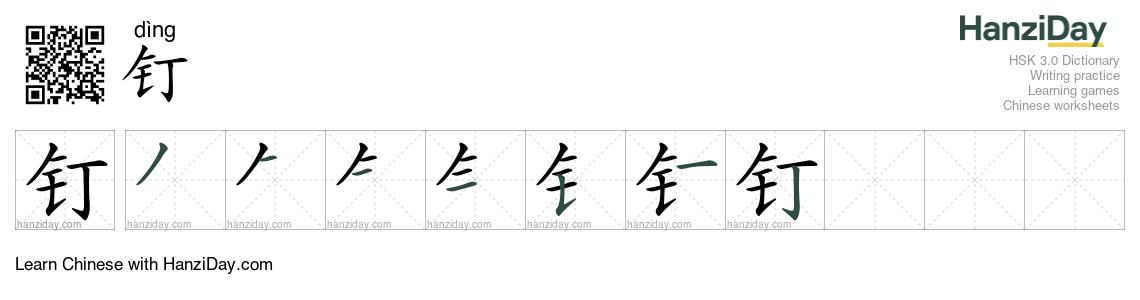
Practice the stroke order for 钉
Use the stroke animation to follow the writing order, then practice the sequence with the interactive writing tool. After signing in, you can also create a printable worksheet from this entry within your current allowance.