


跟
Learn 很 — HSK 3.0 Level 1
很
Translation
- (adv.) very, quite
Radical
Simplified
很
Traditional
很
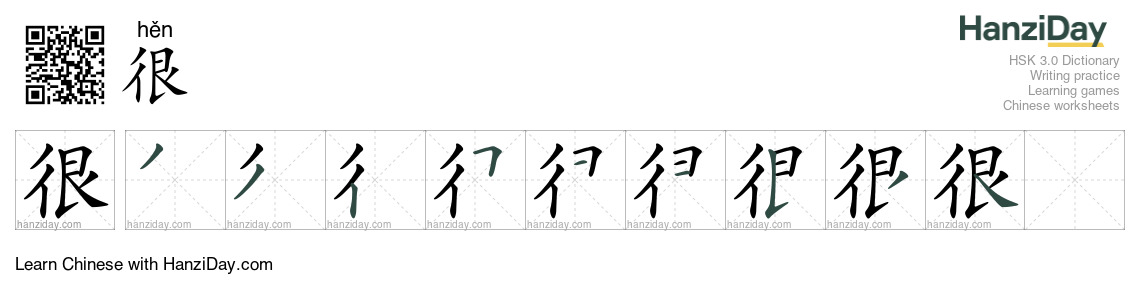
Strokes count
9
Same pronunciation 3
Similar pronunciation 3
Synonyms 50
Antonyms 2
Writing and worksheets
Stroke order
Games & Exercises 9
Find Hanzi
Find Hanzi is a playful exercise for learning Chinese. Spot characters, boost attention, download PDF, and enjoy studying Chinese through games!
Find Radical
Practice Chinese radicals online: choose the Hanzi containing the target component, use optional pinyin hints, and create printable PDF exercises.
Tone Trainer
Learn Mandarin tones online with the Chinese Tone Trainer. Practice tone recognition, pronunciation, and exercises for beginners and advanced learners.
Hanzi Connect
Match Hanzi with pinyin or identify words by sound. Use your own vocabulary or HSK 3.0/YCT levels. Play online after sign-in; printable PDFs with answers are for PRO.
Lost Stroke
Play online: find the missing stroke or radical, restore Chinese characters in order, and create printable PDF worksheets with pinyin and answers.
Calligraphy
Create calligraphy and custom Chinese character coloring pages with pinyin, stroke order, outline styles, and writing grids. Download a print-ready PDF for class or home.
Memo
Flip cards to match Chinese characters or pair Hanzi with Pinyin. Build a custom HSK 3.0 or YCT deck, play online, and create printable PDF cards.
Sudoku
Play Hanzi Sudoku online with 4×4, 6×6, or 9×9 grids, four difficulty levels, custom characters, and HSK 3.0/YCT sets. Create printable PDFs with answers.
Writing trainer
Practice Chinese character writing online with correct stroke order, outlines, a 3–2–1 preview, mistake-based hints, pinyin, and focused Hanzi review.









Examples of use 206
亲
爱
的
母
亲
和
父
亲
,
我
很
想
你
们
。
Dear mother and father, I miss you very much.
我
的
妹
妹
很
爱
笑
。
My little sister smiles a lot.
兔
子
的
尾
巴
短
短
的
,
很
可
爱
。
The rabbit's tail is so short, it's cute.
她
骄
傲
地
说
:
尽
管
我
的
家
很
小
,
但
这
里
是
全
世
界
最
温
暖
的
地
方
,
因
为
有
家
人
的
爱
。
She proudly said: Although my home is small, it is the warmest place in the world because of the love of my family.
他
很
有
爱
心
,
她
对
他
动
心
了
。
He is very loving, and she is tempted by him.
据
说
,
曾
经
有
一
位
很
有
个
性
、
极
爱
冒
险
的
大
导
演
到
南
美
丛
林
拍
有
关
古
代
印
加
文
明
的
纪
录
片
。
It is said that there was once a great director with great personality and adventure who went to the jungles of South America to make a documentary about ancient Inca civilization.
老
舍
很
有
爱
心
,
更
懂
得
快
乐
要
分
享
。
Lao She is very caring and knows how to share happiness.
所
以
,
鸟
儿
非
常
爱
惜
羽
毛
,
每
天
都
会
花
很
长
时
间
来
保
养
自
己
的
“
羽
衣
”
。
Therefore, birds cherish feathers very much and spend a long time maintaining their "feather clothes" every day.
我
很
喜
欢
小
动
物
,
我
觉
得
小
动
物
很
可
爱
。
I like small animals very much. I think small animals are cute.
弟
弟
过
生
日
,
爸
爸
妈
妈
给
他
买
了
很
多
礼
物
,
姐
姐
吃
醋
了
。
My brother had a birthday, and my parents bought him many gifts. My sister was jealous.
爸
爸
是
个
工
作
狂
,
明
天
都
工
作
到
很
晚
。
Dad is a workaholic and will work late tomorrow.
爸
爸
很
少
与
我
们
亲
近
。
Dad is seldom close to us.
爸
爸
教
我
骑
车
,
开
始
的
时
候
我
很
紧
张
。
My father taught me to ride a bike. I was very nervous at first.
爸
爸
妈
妈
都
很
关
心
我
们
的
学
习
和
身
体
。
Mom and Dad are very concerned about our study and health.
我
很
喜
欢
吃
北
京
烤
鸭
!
I like Beijing roast duck very much!
我
去
过
中
国
的
很
多
地
方
:
西
安
、
桂
林
、
北
京
,
等
等
。
I have been to many places in China: Xi'an, Guilin, Beijing, and so on.
他
怕
万
一
选
错
了
,
要
付
出
很
大
的
时
间
成
本
和
经
济
成
本
。
He is afraid that if he makes a wrong choice, he will pay a lot of time and economic costs.
看
了
这
本
书
以
后
,
我
对
中
国
的
文
化
了
解
了
很
多
。
After reading this book, I learned a lot about Chinese culture.
对
不
起
,
我
最
近
很
忙
,
都
没
有
什
么
时
间
去
看
你
。
Sorry, I've been so busy recently that I don't have much time to see you.
那
个
人
有
很
多
钱
,
可
以
穿
很
贵
的
皮
毛
,
有
很
多
金
子
,
可
是
不
会
写
字
。
That man has a lot of money, can wear expensive fur, has a lot of gold, but can't write.
我
很
讨
厌
脾
气
不
好
的
人
。
I hate people with bad temper.
西
安
真
是
个
好
地
方
,
不
仅
风
景
很
美
,
而
且
人
也
非
常
热
情
。
Xi'an truly is a good place; not only is the scenery beautiful, the people are also extremely enthusiastic.
这
几
天
我
的
身
体
很
不
舒
服
。
I'm not feeling well these days.
妹
妹
的
记
忆
力
很
好
,
看
什
么
都
过
目
不
忘
。
My sister has a good memory and never forgets anything.
周
瑜
觉
得
自
己
很
有
才
,
却
总
比
不
过
诸
葛
亮
,
心
里
一
直
不
服
气
。
Zhou Yu felt that he was very talented, but he was always unconvinced.
在
很
多
人
看
来
,
只
有
年
轻
人
才
会
网
上
购
物
,
其
实
不
少
老
年
人
也
会
。
In the eyes of many people, only young people can shop online, in fact so can many old people.
一
个
人
的
信
用
很
重
要
,
你
不
可
以
说
到
做
不
到
。
A person's credit is very important, you can't say you can't do it.
我
很
喜
欢
吃
法
国
菜
。
I like French food very much.
你
很
喜
欢
吃
法
国
菜
。
You like French food very much.
妈
妈
在
院
子
里
种
了
很
多
蔬
菜
。
Mother grows a lot of vegetables in the yard.
冰
箱
里
有
很
多
吃
的
和
喝
的
,
有
水
果
,
有
牛
奶
,
还
有
菜
。
There are many things to eat and drink in the refrigerator, including fruits, milk and vegetables.
这
个
饭
店
的
菜
的
确
很
好
吃
!
The food in this restaurant is really delicious!
我
的
朋
友
很
喜
欢
喝
奶
茶
!
My friend likes drinking milk tea very much!
这
个
茶
是
要
出
口
到
很
多
国
家
的
。
This tea is to be exported to many countries.
很
多
老
年
人
喜
欢
在
这
里
喝
茶
。
Many old people like to drink tea here.
因
为
很
好
吃
,
所
以
我
喜
欢
吃
牛
肉
。
Because it is tasty, therefore I like eating beef.
学
校
的
午
饭
很
好
吃
。
Lunch at school is delicious.
妹
妹
吃
饭
吃
得
很
慢
。
My sister eats slowly.
这
个
蛋
糕
看
起
来
很
好
吃
。
This cake looks delicious.
我
很
喜
欢
吃
玉
米
。
I like corn very much.
一
边
开
车
一
边
打
电
话
很
危
险
。
It's dangerous to make a phone call while driving.
我
男
朋
友
最
大
的
优
点
就
是
很
热
情
。
The greatest advantage of my boyfriend is that he is very enthusiastic.
给
大
卫
上
过
课
的
老
师
们
普
遍
反
映
他
的
表
现
很
好
,
只
是
偶
尔
会
迟
到
。
The teachers who taught David generally reported that he performed well, but occasionally he was late.
我
对
法
律
很
感
兴
趣
,
长
大
后
我
想
做
一
名
律
师
。
I am very interested in law, and I want to be a lawyer when I grow up.
把
大
衣
脱
下
来
吧
,
房
间
里
很
热
。
Take off your coat. It's very hot in the room.
班
上
同
学
这
个
学
期
的
进
步
都
很
大
。
All the students in the class have made great progress this term.
我
很
想
去
你
们
学
校
参
观
一
下
图
书
馆
,
听
说
那
儿
又
大
又
漂
亮
。
I really want to visit the library in your school. I heard it is big and beautiful.
老
师
说
我
这
个
学
期
进
步
很
大
。
The teacher said that I have made great progress this term.
大
城
市
里
很
热
闹
。
It's very lively in big cities.
大
家
都
认
为
这
里
很
干
净
。
Everybody thinks it's very clean here.
房
子
的
后
面
有
很
多
山
,
高
高
低
低
一
大
片
。
There are many mountains behind the house, high and low.
我
的
书
很
多
,
你
有
大
点
儿
的
盒
子
吗
?
I have a lot of books. Do you have a bigger box?
老
师
给
我
写
了
一
些
大
概
的
建
议
,
我
觉
得
很
有
帮
助
。
The teacher wrote me some general suggestions, which I think is very helpful.
今
天
早
上
的
雾
很
大
。
It was very foggy this morning.
他
的
汉
语
很
好
。
His Mandarin is very good.
他
的
朋
友
很
多
。
He has lots of friends.
这
个
黄
鱼
是
野
生
的
,
很
贵
。
This yellow croaker is wild and expensive.
虽
然
汉
语
的
词
语
很
多
,
但
是
我
们
有
很
多
办
法
来
记
住
它
们
Although there are many words in Mandarin, we have many ways to remember them
花
园
里
有
很
多
五
颜
六
色
的
花
。
There are many colorful flowers in the garden.
花
园
里
有
很
多
漂
亮
的
花
儿
。
There are many beautiful flowers in the garden.
我
对
中
国
的
文
化
和
语
言
很
感
兴
趣
。
I am very interested in Chinese culture and language.
我
的
床
很
舒
服
。
My bed is very comfortable.
你
想
学
理
科
的
话
,
有
很
多
课
程
都
可
以
,
比
如
物
理
,
化
学
,
等
等
。
If you want to study science, there are many courses, such as physics, chemistry and so on.
我
的
朋
友
很
友
好
。
My friend is very friendly.
一
连
三
天
,
他
们
都
很
顺
利
地
实
现
了
原
定
的
计
划
。
For three days in a row, they all realized their original plan smoothly.
你
可
以
去
市
场
看
一
看
,
那
里
有
很
多
好
玩
的
东
西
。
You can go to the market and have a look. There are many interesting things there.
这
家
理
发
店
的
理
发
师
是
很
有
名
的
,
他
们
常
常
给
明
星
理
发
。
The barbers in this barber shop are very famous. They often cut stars' hair.
他
做
事
很
认
真
,
并
且
有
丰
富
的
经
验
,
让
他
负
责
很
合
适
。
He is very serious and has a lot of experience. He is a good person to put in charge.
想
交
个
真
正
的
朋
友
很
困
难
。
It is difficult to make a true friend.
他
真
可
怜
,
已
经
努
力
了
很
多
年
,
但
还
是
没
实
现
他
的
理
想
。
It's really sad for him. He has worked hard for many years, but he still hasn't realised his dreams.
我
家
小
区
的
旁
边
就
有
一
家
诊
所
,
看
医
生
很
方
便
。
There is a clinic next to my community, so it is very convenient to see a doctor.
他
的
父
母
因
为
生
病
都
没
了
工
作
,
他
家
现
在
的
生
活
很
困
难
。
His parents have lost their jobs because of illness, and his family's life is very difficult now.
这
家
旅
行
社
的
价
格
很
合
理
。
The price of this travel agency is very reasonable.
您
介
意
我
安
排
你
们
住
一
家
小
一
点
的
旅
馆
吗
?
那
家
虽
然
小
,
但
是
离
我
们
要
去
的
景
点
很
近
。
Do you mind if I arrange for you to stay in a smaller hotel? Although it is small, it is very close to the scenic spot we are going to.
很
多
游
客
在
马
来
西
亚
度
假
以
后
,
都
对
马
来
西
亚
有
很
好
的
印
象
。
Many tourists have a good impression of Malaysia after their holidays in Malaysia.
当
工
作
很
多
的
时
候
,
我
们
一
定
要
找
到
工
作
的
重
点
,
先
把
重
点
工
作
完
成
。
When there is a lot of work, we must find the key points of the work and finish the important parts first.
他
能
把
什
么
事
都
说
得
让
人
很
明
白
,
他
的
口
才
很
好
。
He can make everything clear, and his eloquence is very good.
虽
然
遇
到
很
多
困
难
,
但
我
一
定
会
坚
持
到
底
,
因
为
这
是
我
的
梦
想
。
Although I have encountered many difficulties, I will stick to the end, because this is my dream.
弟
弟
的
头
发
很
奇
怪
。
My brother's hair is very strange.
小
鱼
的
眼
睛
很
小
。
Small fish have very small eyes.
我
觉
得
你
说
的
很
有
道
理
。
I think what you said is very reasonable.
汉
语
的
语
法
很
容
易
。
The grammar of Chinese is very easy.
离
别
的
时
候
,
我
很
舍
不
得
。
When I left, I was reluctant.
旅
游
的
过
程
中
我
们
认
识
了
很
多
人
。
We met a lot of people in the course of traveling.
很
多
中
国
的
传
统
游
戏
都
很
有
趣
。
Many traditional Chinese games are very interesting.
妈
妈
很
喜
欢
中
国
的
书
画
。
Mother likes Chinese painting and calligraphy very much.
商
店
里
的
东
西
比
外
面
商
店
的
贵
很
多
。
The things in the shop is much more expensive than the shops outside.
印
度
的
人
口
很
多
。
India has a large population.
当
地
的
居
民
都
很
友
好
。
The local residents are very friendly.
当
地
的
人
民
都
很
友
好
。
The local people are very friendly.
窗
外
的
景
色
很
美
。
The scenery outside the window is beautiful.
老
鼠
是
山
神
的
宠
物
,
它
厌
倦
了
宠
物
的
生
活
,
也
很
厌
恶
宠
物
这
个
角
色
。
Mouse is the pet of mountain god. It is tired of pet life and hates the role of pet.
山
上
的
景
色
很
迷
人
。
The scenery on the mountain is charming.
房
子
的
后
面
有
很
多
山
,
高
高
低
低
,
连
成
一
片
。
There are many mountains behind the house, which are high and low.
我
们
的
关
系
很
好
。
Our relationship is very good.
亚
洲
有
很
多
野
生
动
物
园
,
是
了
解
动
物
很
好
的
方
式
。
There are many safari parks in Asia, which is a good way to know animals.
我
的
听
觉
很
好
。
I have good hearing.
这
里
的
海
鲜
很
美
味
。
The seafood here is delicious.
我
的
口
语
很
好
,
九
十
分
。
My spoken English is very good, 90.
她
的
听
力
和
口
语
都
很
好
,
但
是
写
字
不
太
好
。
She is good at listening and speaking, but she is not very good at writing.
在
我
的
脑
海
里
,
父
亲
很
少
与
我
们
亲
近
。
In my mind, my father is rarely close to us.
我
很
喜
欢
新
来
的
美
术
老
师
,
现
在
美
术
课
是
我
最
喜
欢
的
课
了
。
I like the new art teacher very much. Now art class is my favorite class.
中
国
的
文
化
很
有
意
思
。
Chinese culture is very interesting.
王
先
生
的
工
作
很
忙
。
Mr. Wang is very busy with his work.
这
里
的
海
鲜
很
新
鲜
!
The seafood here is very fresh!
中
文
的
语
法
很
难
。
The grammar of Chinese is very difficult.
这
里
的
夏
天
有
很
多
阳
光
。
There is a lot of sunshine here in summer.
他
是
一
个
很
自
信
的
人
,
相
信
自
己
可
以
做
到
。
He is a very confident person and believes he can do it.
他
开
车
的
速
度
很
快
。
The speed at which he drives is very fast.
那
个
演
员
很
受
年
轻
人
的
欢
迎
。
That actor is very popular with young people.
这
家
咖
啡
馆
的
咖
啡
很
好
喝
。
The coffee in this cafe is very delicious.
京
剧
是
一
种
优
美
的
传
统
艺
术
,
很
多
外
国
留
学
生
对
它
十
分
感
兴
趣
。
Peking Opera is a beautiful traditional art, and many foreign students are very interested in it.
女
儿
却
是
一
脸
的
疑
惑
,
反
问
道
:
“
你
们
不
是
也
有
时
候
说
,
哪
个
朋
友
好
相
处
,
哪
个
朋
友
很
自
私
吗
?
The daughter was puzzled and asked, "don't you sometimes say which friend is easy to get along with and which friend is selfish?
这
里
的
海
鲜
汤
虽
然
有
点
贵
,
但
是
很
好
喝
。
The seafood soup here is a little expensive, but it tastes good.
假
期
的
校
园
寂
静
得
很
。
The campus is very quiet during the holidays.
来
中
国
后
,
我
的
中
文
水
平
提
高
得
很
快
!
After coming to China, my Chinese level has improved rapidly!
他
有
很
多
有
意
思
的
想
法
,
所
以
写
作
非
常
好
。
He has many interesting ideas, so his writing is very good.
老
师
的
学
生
来
信
了
,
她
很
高
兴
。
She was glad to hear from the teacher's students.
这
个
地
方
的
雪
山
很
有
名
。
This place is famous for its snow-capped mountains.
我
的
很
多
亲
人
都
在
上
海
。
Many of my relatives are in Shanghai.
我
的
学
校
很
近
。
My school is very close.
当
地
的
人
都
很
乐
于
助
人
。
The local people are very helpful.
这
里
的
冬
天
很
干
燥
。
The winter here is very dry.
给
他
上
过
课
的
老
师
们
普
遍
反
映
他
的
表
现
很
好
,
只
是
偶
尔
会
迟
到
。
Teachers who gave him lessons generally reported that he performed well, only occasionally being late.
他
的
房
间
很
整
齐
。
His room is neat.
演
出
开
始
时
人
们
认
为
很
有
魅
力
,
但
是
糟
糕
的
结
局
会
给
人
留
下
难
以
忘
记
的
坏
印
象
。
At the beginning of the performance, people think it is attractive, but the bad ending will leave an unforgettable bad impression.
姐
姐
的
头
发
很
长
。
My older sister's hair is very long.
你
的
汉
语
水
平
提
高
得
很
快
。
Your Chinese has improved rapidly.
那
个
明
星
这
两
年
很
火
,
我
经
常
在
电
视
上
看
到
他
。
That celebrity has been very popular in the past two years. I often see him on TV.
这
个
电
影
很
流
行
。
This movie is very popular.
他
每
天
回
来
都
很
累
。
He is tired everyday when he gets back.
我
们
一
家
人
都
很
好
,
谢
谢
!
Our whole family is very well, thank you!
很
多
人
拿
着
鲜
花
站
在
门
口
。
Lots of people are standing at the door holding flowers.
球
场
上
有
很
多
学
生
在
玩
球
。
There are many students playing ball on the court.
我
在
中
国
有
很
多
朋
友
。
I have many friends in China.
那
个
地
方
四
季
如
春
,
所
以
很
多
人
喜
欢
去
那
里
度
假
。
That place is like spring all the year round, so many people like to go there for vacation.
老
李
家
今
天
来
了
很
多
人
。
Many people came to Lao Li's family today.
马
路
上
有
很
多
车
。
There are many cars on the road.
我
带
了
很
多
饺
子
回
来
。
I brought back a lot of dumplings.
有
很
多
外
国
人
住
在
上
海
。
There are many foreigners living in Shanghai.
这
条
马
路
上
车
很
多
。
There are many cars on this road.
他
上
个
星
期
买
了
很
多
东
西
。
He bought a lot of things last week.
她
用
了
很
多
时
间
才
做
好
。
It took her a lot of time to finish it.
学
语
言
有
很
多
好
处
。
Learning a language has many advantages.
书
包
里
有
很
多
书
。
There are many books in the schoolbag.
他
来
中
国
后
,
学
了
很
多
中
文
。
He has learned a lot of Chinese since he came to China.
我
们
学
校
课
外
活
动
多
,
每
个
人
放
学
后
都
很
忙
。
There are many extracurricular activities in our school, and everyone is busy after school.
我
在
香
港
有
很
多
朋
友
。
I have many friends in Hong Kong.
春
运
到
了
,
站
台
上
人
很
多
。
Spring Festival travel rush arrived, and there were many people on the platform.
世
界
上
有
很
多
个
国
家
。
There are many countries in the world.
老
师
为
我
们
日
夜
工
作
,
付
出
了
很
多
。
The teacher worked day and night for us and paid a lot.
他
有
很
多
证
书
,
所
以
他
很
快
找
到
了
工
作
。
He had many certificates, so he found a job quickly.
认
识
你
我
也
很
高
兴
。
I'm very pleased to meet you too.
我
今
天
很
高
兴
。
I am very happy today.
他
的
确
很
帅
,
真
是
一
个
帅
哥
!
He is really handsome, he is really a handsome guy!
我
很
开
心
能
认
识
这
样
一
个
家
庭
。
I am very happy to get to know a family like this.
她
在
看
音
乐
节
目
,
这
个
节
目
很
有
意
思
。
She is watching a music program, which is very interesting.
他
很
乐
意
接
受
这
份
工
作
,
工
作
中
更
是
精
益
求
精
。
He is happy to accept this job, and strives for perfection in his work.
他
说
汉
语
说
得
很
流
利
。
He speaks Mandarin very fluently.
其
实
,
学
习
汉
语
很
有
意
思
。
Actually, learning Chinese is very interesting.
学
习
汉
语
其
实
很
有
意
思
。
Learning Chinese is actually very interesting.
这
件
衣
服
很
好
看
,
但
是
太
贵
了
!
This piece of clothes is very nice, but it is too expensive!
姐
姐
打
排
球
打
得
很
好
,
她
在
学
校
放
学
后
常
常
上
排
球
课
。
My sister plays volleyball very well. She often has volleyball lessons after school.
因
为
很
好
玩
,
所
以
我
天
天
踢
足
球
。
Because it is fun, therefore I play football every day.
他
很
好
。
He is well.
你
很
好
。
You are very well.
朋
友
很
好
。
Friends are very nice.
我
很
好
,
你
呢
?
I am well. How about you?
老
师
很
好
。
The teacher is very well.
我
觉
得
这
个
游
戏
很
好
玩
。
I think this game is very interesting.
你
也
很
好
。
You're very well, too.
最
近
我
总
是
觉
得
很
累
,
我
想
去
看
看
中
医
。
Recently, I always feel very tired. I want to see a Chinese medicine practitioner.
这
个
东
西
很
有
用
。
This thing is very useful.
这
篇
小
说
让
我
很
感
动
。
This novel really moved me.
她
很
有
名
!
She's very famous!
他
对
新
房
子
很
满
意
。
He is very satisfied with his new house.
我
认
为
中
医
很
有
用
。
I think Chinese medicine is very useful.
我
丈
夫
很
忙
。
My husband is very busy.
今
天
天
气
很
热
。
Today is very hot.
其
实
做
水
果
饭
很
简
单
。
In fact, cooking fruit rice is very simple.
这
些
天
很
冷
,
要
小
心
身
体
。
It's very cold these days, so take care of your health.
这
个
房
间
很
干
净
。
This room is clean.
他
小
时
候
家
里
很
穷
。
His family was poor when he was young.
从
昨
晚
开
始
,
我
就
一
直
难
受
得
很
,
头
疼
得
厉
害
。
Since last night, I have been suffering very much and have a terrible headache.
她
又
要
英
文
又
要
学
中
文
,
很
忙
。
She needs both English and Chinese, so she is very busy.
她
又
要
学
英
文
又
要
学
中
文
,
很
忙
。
She has to learn both English and Chinese, so she is very busy.
这
个
网
站
很
有
意
思
。
This website is very interesting.
我
很
好
奇
这
是
什
么
东
西
。
I wonder what this is.
最
近
这
里
很
冷
。
It's very cold here recently.↵
这
个
网
站
对
学
习
很
有
帮
助
。
This website is very helpful for learning.
我
很
喜
欢
上
海
这
个
地
方
。
I like Shanghai very much.
我
很
喜
欢
这
个
地
方
。
I like this place very much.
问
题
很
奇
怪
。
The question is very weird.
猴
子
有
时
候
很
聪
明
,
有
时
候
很
笨
。
Monkeys are sometimes clever and sometimes stupid.
春
节
过
得
很
快
。
Spring Festival was spent very fast.
我
觉
得
会
说
中
文
很
酷
。
I think it's cool to speak Chinese.
这
个
包
很
轻
,
里
面
没
什
么
东
西
。
This bag is very light and there is nothing in it.
因
为
哥
哥
还
没
回
家
,
所
以
妈
妈
很
生
气
。
Mother is very angry because my brother hasn't come home yet.
这
张
画
很
难
看
。
This picture is ugly.
我
最
喜
欢
历
史
课
了
,
因
为
我
觉
得
历
史
很
有
意
思
。
I like history best, because I think history is very interesting.
这
位
朋
友
很
会
利
用
“
登
门
槛
效
应
”
来
处
理
问
题
。
This friend is very good at using the "threshold effect" to deal with problems.
我
头
很
疼
,
想
睡
觉
。
I have a headache, I want to sleep.
他
很
高
。
He is very tall.
西
方
人
觉
得
汉
字
很
难
学
。
Westerners find Chinese characters difficult to learn.
绿
色
食
品
很
健
康
。
Green food is healthy.
这
条
路
很
窄
。
This road is very narrow.
Learn 很 (hěn) in context
很 appears here with its available localized meaning and tone-marked pinyin hěn. Listen to the pronunciation and review any examples, illustrations, or lexical links shown for this entry.
Use the sections available on this page to compare characters, components, radicals, related words, matching pronunciation, synonyms, or antonyms. HanziDay shows only the information supported by this entry.
很 in HSK 3.0 Level 1
HanziDay organizes HSK 3.0 vocabulary around the new three-stage, nine-level framework. This entry belongs to Level 1; open the level list to study it alongside other vocabulary from the same stage.
Practice the stroke order for 很
Use the stroke animation to follow the writing order, then practice the sequence with the interactive writing tool. After signing in, you can also create a printable worksheet from this entry within your current allowance.