


种
Learn 和 — HSK 3.0 Level 1
和
TOP-50
Frequency
The ranking is based on data from open sources.
HSK 3.0 · Level 1
HSK 3.0 · Levels 7–9
YCT 1
Translation
- (conj.) and
- (adj./v./n.) harmonious, friendly; to draw or tie, make peace; (referring to) Japan
- (n./prep.) sum; with
- (v.) to mix or blend (after adding a liquid to powders/granules)
- (v.) to mix and make it sticky (after adding a liquid to powders), to knead (a dough)
- (v.) join in the singing; echo what others say
- (v.) to win (a mah-jong or card game)
Simplified
和
Traditional
和
Strokes count
8

Words with 和 22
Same pronunciation 29
Similar pronunciation 24
Synonyms 11
Writing and worksheets
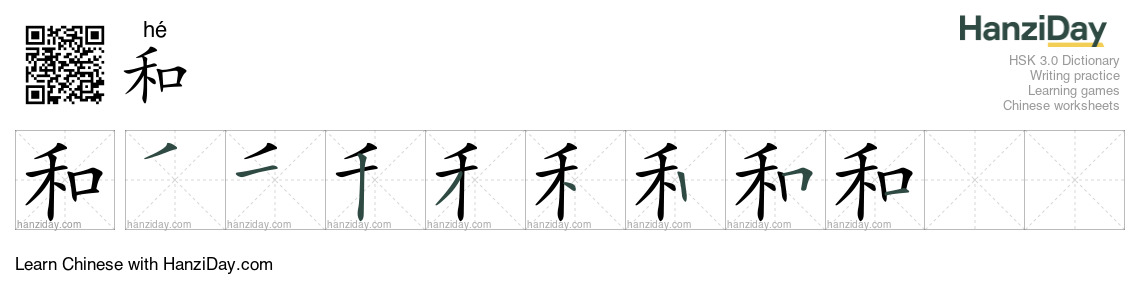
Stroke order
Games & Exercises 9
Find Hanzi
Find Hanzi is a playful exercise for learning Chinese. Spot characters, boost attention, download PDF, and enjoy studying Chinese through games!
Find Radical
Practice Chinese radicals online: choose the Hanzi containing the target component, use optional pinyin hints, and create printable PDF exercises.
Tone Trainer
Learn Mandarin tones online with the Chinese Tone Trainer. Practice tone recognition, pronunciation, and exercises for beginners and advanced learners.
Hanzi Connect
Match Hanzi with pinyin or identify words by sound. Use your own vocabulary or HSK 3.0/YCT levels. Play online after sign-in; printable PDFs with answers are for PRO.
Lost Stroke
Play online: find the missing stroke or radical, restore Chinese characters in order, and create printable PDF worksheets with pinyin and answers.
Calligraphy
Create calligraphy and custom Chinese character coloring pages with pinyin, stroke order, outline styles, and writing grids. Download a print-ready PDF for class or home.
Memo
Flip cards to match Chinese characters or pair Hanzi with Pinyin. Build a custom HSK 3.0 or YCT deck, play online, and create printable PDF cards.
Sudoku
Play Hanzi Sudoku online with 4×4, 6×6, or 9×9 grids, four difficulty levels, custom characters, and HSK 3.0/YCT sets. Create printable PDFs with answers.
Writing trainer
Practice Chinese character writing online with correct stroke order, outlines, a 3–2–1 preview, mistake-based hints, pinyin, and focused Hanzi review.








Examples of use 74
亲
爱
的
母
亲
和
父
亲
,
我
很
想
你
们
。
Dear mother and father, I miss you very much.
我
和
爸
爸
妈
妈
今
天
出
去
看
灯
会
了
。
My parents and I went out to watch the lantern show today.
妈
妈
不
在
家
,
她
和
爸
爸
出
门
了
。
Mum is not home. She and Dad have gone out.
爸
爸
妈
妈
都
很
关
心
我
们
的
学
习
和
身
体
。
Mom and Dad are very concerned about our study and health.
中
国
北
京
有
长
城
,
颐
和
园
和
故
宫
。
Beijing, China has the Great Wall, the Summer Palace and the Forbidden City.
哥
哥
和
妈
妈
一
起
住
在
北
京
。
My brother and mother live together in Beijing.
他
怕
万
一
选
错
了
,
要
付
出
很
大
的
时
间
成
本
和
经
济
成
本
。
He is afraid that if he makes a wrong choice, he will pay a lot of time and economic costs.
翟
峰
和
妻
子
都
是
铁
路
工
人
,
工
作
稳
定
、
待
遇
不
错
。
Zhai Feng and his wife are both railway workers, with stable jobs and good pay.
如
果
不
是
女
儿
反
驳
,
我
还
意
识
不
到
,
我
们
自
己
的
做
法
和
对
孩
子
的
要
求
实
行
的
是
两
套
标
准
,
那
便
是
对
自
己
宽
容
,
对
孩
子
严
厉
。
If it weren't for my daughter's rebuttal, I still didn't realize that our own practices and requirements for children are two sets of standards, that is, we are tolerant of ourselves and strict with children.
和
女
朋
友
分
手
以
后
,
他
一
点
儿
也
不
难
受
。
After breaking up with his girlfriend, he didn't feel bad at all.
回
家
的
快
乐
和
被
亲
情
包
围
的
幸
福
感
染
了
我
,
我
也
恨
不
得
马
上
飞
到
父
母
跟
前
,
与
他
们
团
圆
。
The happiness of going home and being surrounded by family infected me, and I couldn't wait to fly to my parents immediately to reunite with them.
最
近
我
的
朋
友
不
但
失
去
了
工
作
,
还
和
妻
子
离
了
婚
,
日
子
真
是
太
苦
了
。
Recently, my friend not only lost his job, but also divorced his wife. Life is really hard.
这
次
考
试
我
的
成
绩
不
高
,
都
怪
我
太
不
仔
细
了
,
把
师
和
帅
都
写
错
了
。
My grade for this exam wasn't high, which was due to my carelessness. I wrote both teacher and handsome wrong.
多
吃
点
儿
蔬
菜
和
水
果
吧
,
对
皮
肤
有
好
处
。
Eat more vegetables and fruit, it's good for your skin.
冰
箱
里
有
很
多
吃
的
和
喝
的
,
有
水
果
,
有
牛
奶
,
还
有
菜
。
There are many things to eat and drink in the refrigerator, including fruits, milk and vegetables.
我
明
天
要
和
我
在
英
国
的
爷
爷
奶
奶
打
电
话
。
I'm going to call my grandparents in England tomorrow.
一
天
,
他
让
士
兵
们
去
找
一
头
大
象
和
一
些
出
生
时
眼
睛
就
瞎
了
的
人
回
来
。
One day, he asked the soldiers to find an elephant and some people who were blind at birth.
爷
爷
经
历
过
第
二
次
世
界
大
战
,
因
此
他
希
望
世
界
永
远
和
平
。
Grandpa experienced the Second World War, so he hopes that the world will always be peaceful.
一
个
已
经
拥
有
巨
大
幸
福
的
人
,
应
该
原
谅
和
理
解
那
些
伤
害
过
自
己
的
人
。
A person who already has great happiness should forgive and understand those who have hurt himself.
动
物
园
里
有
老
虎
和
大
熊
猫
。
There are tigers and giant pandas in the zoo.
它
开
始
用
锋
利
的
牙
齿
咬
缠
绕
着
大
象
的
网
和
绳
子
。
It began to bite the net and rope wrapped around the elephant with its sharp teeth.
“
大
伙
儿
要
和
睦
相
处
,
对
人
要
宽
容
。
”
"Everyone should live in harmony and be tolerant of people."
由
于
这
个
大
学
越
来
越
有
名
,
中
国
学
生
和
外
国
留
学
生
的
数
量
都
在
增
加
。
As the university becomes more and more famous, the number of Chinese students and foreign students is increasing.
小
猫
和
小
狗
都
是
她
的
。
Both the kitten and puppy are hers.
我
对
中
国
的
文
化
和
语
言
很
感
兴
趣
。
I am very interested in Chinese culture and language.
今
天
我
们
学
习
的
内
容
是
第
十
一
课
的
生
词
和
语
法
。
The content we are learning today is the new words and grammar from Lesson 11.
印
度
和
马
来
西
亚
都
是
亚
洲
的
国
家
。
India and Malaysia are both Asian countries.
哥
哥
和
他
的
女
朋
友
分
手
了
。
My brother broke up with his girlfriend.
我
的
阿
姨
会
说
三
门
外
语
:
英
语
,
法
语
,
和
日
语
。
My aunt can speak three foreign languages: English, French and Japanese.
爷
爷
喜
欢
每
天
早
上
和
朋
友
去
旁
边
的
公
园
走
一
走
。
Grandfather likes to go for a walk every morning with his friends in the park next to his place.↵
今
天
的
最
高
气
温
和
最
低
气
温
是
多
少
?
What are the maximum and minimum temperatures today?
她
的
听
力
和
口
语
都
很
好
,
但
是
写
字
不
太
好
。
She is good at listening and speaking, but she is not very good at writing.
你
和
我
女
儿
一
样
,
斯
斯
文
文
的
,
一
看
就
读
过
书
,
心
眼
儿
好
。
You, like my daughter, are gentle. You have read books and have a good heart.
一
个
偶
然
的
机
会
,
他
发
现
如
果
了
解
汉
字
的
来
源
和
演
变
过
程
,
再
学
习
它
就
变
得
轻
松
、
容
易
。
By chance, he found that if he understood the origin and evolution of Chinese characters, it would be easy to learn them .
节
约
和
浪
费
这
两
个
词
的
意
思
是
相
反
的
。
The words economy and waste have opposite meanings.
我
和
朋
友
见
面
的
时
候
会
握
手
,
表
示
友
好
。
When I meet my friends, I shake hands to show friendship.
这
里
附
近
不
但
有
美
术
展
览
,
而
且
有
电
影
院
和
图
书
馆
。
There is not only an art exhibition nearby here, but also a cinema and library.
下
午
我
和
妈
妈
一
起
去
商
店
买
东
西
了
I went shopping together with mum in the afternoon
翟
峰
和
妻
子
没
有
积
蓄
,
卖
房
卖
车
买
下
了
一
艘
二
手
船
,
翟
峰
叫
它
“
彩
虹
号
”
。
Zhai Feng and his wife had no savings, so they sold their houses and cars and bought a second-hand boat. Zhai Feng called it "Rainbow".
我
有
一
台
钢
琴
,
一
把
小
提
琴
,
一
支
口
琴
,
和
一
个
手
风
琴
。
I have a piano, a violin, a harmonica, and an accordion.
我
想
买
一
个
钢
笔
和
一
个
铅
笔
。
I want to buy a pen and a pencil.
我
有
一
个
哥
哥
和
一
个
姐
姐
。
I have one older brother and one older sister.
他
和
她
有
两
个
子
女
。
He and she have two children.
他
雇
了
2
0
来
个
当
地
人
为
他
带
路
和
搬
运
行
李
。
He hired about 20 locals to lead the way and carry his luggage.
年
度
考
核
,
我
和
小
林
的
敬
业
精
神
、
兢
兢
业
业
的
工
作
态
度
受
到
了
表
扬
,
经
济
上
也
得
到
了
丰
厚
的
回
报
。
In the annual assessment, Kobayashi and I were praised for our professionalism and conscientious working attitude, and we also got rich returns economically.
我
在
学
习
汉
语
和
日
语
。
I'm learning Chinese and Japanese.
我
和
朋
友
明
天
去
学
校
看
书
。
My friend and I will go to school to read tomorrow.
我
和
妈
妈
一
起
看
书
。
Me and mum read books together.
徐
健
和
他
的
队
伍
天
天
在
路
上
忙
碌
着
。
Jian Xu and his team are busy on the road every day.
由
于
人
们
在
一
周
内
的
营
养
摄
入
和
饮
食
模
式
会
影
响
到
他
们
的
体
重
变
化
,
因
此
节
食
者
的
体
重
会
在
一
周
内
上
下
波
动
。
Because people's nutrient intake and diet patterns will affect their weight changes during the week, dieters' weight will fluctuate up and down during the week.
在
和
别
人
对
话
时
,
你
应
该
看
着
别
人
,
这
是
一
种
礼
貌
。
When talking with others, you should look at the other person. This is a way to show courtesy.
欢
迎
你
和
我
们
一
起
踢
足
球
!
You're welcome to play football with us!
我
能
和
你
一
起
跳
舞
吗
?
Can I dance with you?
和
有
禾
和
口
。
The character "and" is made up of "grain" and "mouth".
我
在
学
校
学
中
文
和
法
语
。
I study Chinese and French at school.
我
家
有
一
台
钢
琴
和
一
把
小
提
琴
。
My family has a piano and a violin.
我
要
和
朋
友
打
游
戏
了
。
I'm going to play games with my friends.
我
喜
欢
和
朋
友
一
起
聊
天
。
I like chatting with my friends.
美
洲
分
成
北
美
洲
和
南
美
洲
。
America is divided into North America and South America.
除
此
以
外
,
由
于
人
们
争
先
恐
后
报
考
热
门
专
业
,
以
致
人
才
饱
和
,
就
业
困
难
。
In addition, because people are scrambling to apply for popular majors, talents are saturated and employment is difficult.
他
非
常
想
念
老
家
和
亲
人
。
He misses his hometown and relatives very much.
我
和
你
me and you
哥
哥
和
弟
弟
Brother and Brother
门
口
是
哥
哥
和
姐
姐
。
At the door are my brother and sister.
天
气
预
报
说
明
年
和
后
年
会
更
冷
。
The weather forecast says it will be colder next year and the following year.
我
和
老
公
对
视
一
眼
,
这
么
小
的
孩
子
怎
么
学
会
了
背
后
议
论
人
。
My husband and I looked at each other. How did such a small child learn to talk about people behind his back?
我
努
力
使
自
己
的
口
气
缓
和
下
来
。
I tried to soften my tone.
她
和
其
他
志
愿
者
利
用
午
休
、
周
末
等
空
闲
时
间
给
学
生
们
指
导
和
培
训
。
She and other volunteers use their free time such as lunch break and weekend to guide and train the students.
人
同
时
具
有
了
坚
定
的
意
志
力
和
敏
锐
的
判
断
力
,
这
就
是
成
长
。
People have firm willpower and keen judgment at the same time, which is growth.
你
和
谁
一
起
去
学
校
?
Who do you go to school with?
这
种
状
态
如
果
持
续
数
天
、
数
周
、
数
月
,
将
导
致
高
血
压
、
失
眠
和
一
些
精
神
问
题
等
。
If this state lasts for several days, weeks and months, it will lead to high blood pressure, insomnia and some mental problems.
他
和
我
一
样
,
也
是
十
五
岁
。
He, like me, is fifteen.
我
有
哥
哥
和
妹
妹
。
I have an older brother and younger sister.
一
套
校
服
里
有
衬
衫
、
裤
子
、
外
套
、
袜
子
和
皮
鞋
。
There are shirts, trousers, coats, socks and leather shoes in a school uniform.
Learn 和 (hé) in context
和 appears here with its available localized meaning and tone-marked pinyin hé. Listen to the pronunciation and review any examples, illustrations, or lexical links shown for this entry.
Use the sections available on this page to compare characters, components, radicals, related words, matching pronunciation, synonyms, or antonyms. HanziDay shows only the information supported by this entry.
和 in HSK 3.0 Level 1
HanziDay organizes HSK 3.0 vocabulary around the new three-stage, nine-level framework. This entry belongs to Level 1; open the level list to study it alongside other vocabulary from the same stage.
Practice the stroke order for 和
Use the stroke animation to follow the writing order, then practice the sequence with the interactive writing tool. After signing in, you can also create a printable worksheet from this entry within your current allowance.