


岁
Learn 多 — HSK 3.0 Level 1
多
TOP-100
Frequency
The ranking is based on data from open sources.
HSK 3.0 · Level 1
HSK 3.0 · Level 2
YCT 1
Translation
- (adj./v.) many, much, a lot of, more; be greater in quantity than expected
- (adv.) (in questions) to what extent, how; (exclamatory sentence) how; to an unspecified extent
- (adj.) (used after a number) more than, over; excessive, unnecessary
Radical
Simplified
多
Traditional
多
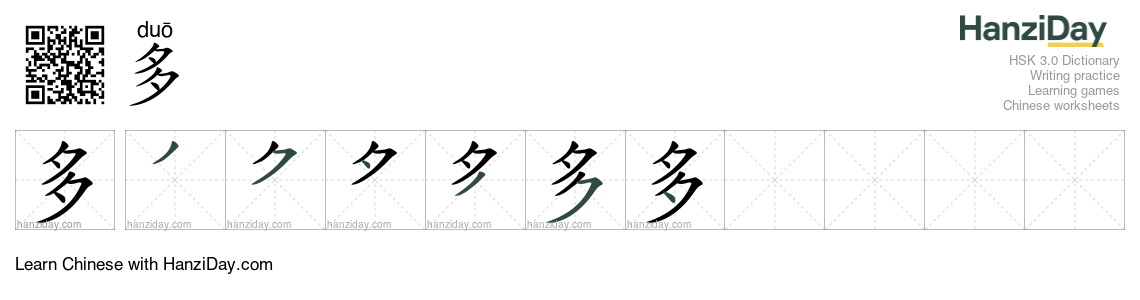
Strokes count
6

Words with 多 25
Same pronunciation 7
Similar pronunciation 27
Synonyms 16
Antonyms 7
Writing and worksheets
Stroke order
Games & Exercises 9
Find Hanzi
Find Hanzi is a playful exercise for learning Chinese. Spot characters, boost attention, download PDF, and enjoy studying Chinese through games!
Find Radical
Practice Chinese radicals online: choose the Hanzi containing the target component, use optional pinyin hints, and create printable PDF exercises.
Tone Trainer
Learn Mandarin tones online with the Chinese Tone Trainer. Practice tone recognition, pronunciation, and exercises for beginners and advanced learners.
Hanzi Connect
Match Hanzi with pinyin or identify words by sound. Use your own vocabulary or HSK 3.0/YCT levels. Play online after sign-in; printable PDFs with answers are for PRO.
Lost Stroke
Play online: find the missing stroke or radical, restore Chinese characters in order, and create printable PDF worksheets with pinyin and answers.
Calligraphy
Create calligraphy and custom Chinese character coloring pages with pinyin, stroke order, outline styles, and writing grids. Download a print-ready PDF for class or home.
Memo
Flip cards to match Chinese characters or pair Hanzi with Pinyin. Build a custom HSK 3.0 or YCT deck, play online, and create printable PDF cards.
Sudoku
Play Hanzi Sudoku online with 4×4, 6×6, or 9×9 grids, four difficulty levels, custom characters, and HSK 3.0/YCT sets. Create printable PDFs with answers.
Writing trainer
Practice Chinese character writing online with correct stroke order, outlines, a 3–2–1 preview, mistake-based hints, pinyin, and focused Hanzi review.








Examples of use 137
爷
爷
虽
然
八
十
多
了
,
可
是
他
因
为
常
常
运
动
,
早
睡
早
起
,
身
子
可
好
呢
!
Although Grandpa is over 80 years old, he goes to bed early and gets up early because he often exercises.
弟
弟
过
生
日
,
爸
爸
妈
妈
给
他
买
了
很
多
礼
物
,
姐
姐
吃
醋
了
。
My brother had a birthday, and my parents bought him many gifts. My sister was jealous.
那
么
多
人
,
弟
弟
一
下
子
就
把
爸
爸
找
出
来
了
,
弟
弟
的
眼
力
真
好
!
So many people, my brother found out my father at once, and my brother's eyesight is really good!
我
去
过
中
国
的
很
多
地
方
:
西
安
、
桂
林
、
北
京
,
等
等
。
I have been to many places in China: Xi'an, Guilin, Beijing, and so on.
北
京
有
名
的
景
点
太
多
了
!
There are too many famous scenic spots in Beijing!
看
了
这
本
书
以
后
,
我
对
中
国
的
文
化
了
解
了
很
多
。
After reading this book, I learned a lot about Chinese culture.
如
果
您
在
本
商
店
购
买
超
过
三
百
元
的
商
品
,
就
可
以
得
到
一
个
精
美
的
购
物
袋
,
多
买
多
得
。
If you buy more than 300 yuan's worth of goods in this shop, you can get a beautiful shopping bag, and you can get more if you buy more.
我
好
多
了
,
不
用
看
大
夫
了
。
I'm much better. I don't need to see a doctor.
那
个
人
有
很
多
钱
,
可
以
穿
很
贵
的
皮
毛
,
有
很
多
金
子
,
可
是
不
会
写
字
。
That man has a lot of money, can wear expensive fur, has a lot of gold, but can't write.
今
天
人
不
多
。
not many people today.
请
大
家
多
吃
一
点
,
不
要
客
气
!
Please eat more, make yourselves at home!
今
天
的
菜
有
点
儿
咸
,
是
不
是
盐
放
多
了
?
Today's food is a little salty. Is there too much salt?
公
园
里
有
太
多
花
粉
了
,
他
不
能
去
,
他
去
的
话
会
生
病
的
。
There is too much pollen in the park. He can't go. If he goes, he will get sick.
今
天
学
的
跳
舞
动
作
有
点
儿
难
,
我
恐
怕
做
得
不
太
标
准
,
在
比
赛
前
我
还
想
多
练
习
练
习
。
The dance moves I learned today are a bit difficult. I'm afraid I didn't do them very well. I want to practice more before the competition.
我
认
识
的
中
文
字
不
多
,
所
以
读
中
文
报
纸
的
话
会
有
点
困
难
。
I don't know many Chinese characters, so it will be a little difficult to read Chinese newspapers.
我
们
学
校
的
作
业
不
多
也
不
少
。
There is neither much nor much homework in our school.
吃
这
么
多
,
难
道
你
不
减
肥
了
?
Eating this much, how are you not losing weight?
这
么
多
天
不
下
雨
,
土
地
都
干
了
。
After so many days without rain, the land has dried up.
鱼
上
岸
后
,
过
不
了
多
久
就
会
死
去
。
After the fish come ashore, it won't be long before they die.
在
很
多
人
看
来
,
只
有
年
轻
人
才
会
网
上
购
物
,
其
实
不
少
老
年
人
也
会
。
In the eyes of many people, only young people can shop online, in fact so can many old people.
不
管
你
说
错
多
少
次
汉
语
,
你
还
是
要
坚
持
多
说
,
因
为
这
是
学
习
口
语
的
正
确
方
法
。
No matter how many times you make mistakes in Chinese, you should persist on speaking, because this is the correct way to learn spoken Chinese.
多
吃
点
儿
蔬
菜
和
水
果
吧
,
对
皮
肤
有
好
处
。
Eat more vegetables and fruit, it's good for your skin.
你
做
菜
放
太
多
油
了
!
You put too much oil in your cooking!
妈
妈
在
院
子
里
种
了
很
多
蔬
菜
。
Mother grows a lot of vegetables in the yard.
冰
箱
里
有
很
多
吃
的
和
喝
的
,
有
水
果
,
有
牛
奶
,
还
有
菜
。
There are many things to eat and drink in the refrigerator, including fruits, milk and vegetables.
这
个
茶
是
要
出
口
到
很
多
国
家
的
。
This tea is to be exported to many countries.
很
多
老
年
人
喜
欢
在
这
里
喝
茶
。
Many old people like to drink tea here.
我
们
要
多
吃
有
营
养
的
食
物
。
We should eat more nutritious food.
小
狗
吃
得
多
。
The puppy eats a lot.
一
路
上
,
翟
峰
一
家
经
历
了
船
身
着
火
、
漏
水
等
大
大
小
小
十
多
次
险
情
。
Along the way, Zhai Feng's family experienced more than ten dangerous situations, such as fire and water leakage.
从
前
,
大
概
在
距
今
两
千
五
百
多
年
前
的
春
秋
时
期
,
有
一
个
人
叫
子
路
,
他
是
孔
子
最
年
长
的
学
生
。
Once upon a time, in the Spring and Autumn Period about 2,500 years ago, there was a man named Zilu, who was the oldest student of Confucius.
会
议
已
经
进
行
了
两
个
多
小
时
,
大
家
还
在
认
真
地
讨
论
这
个
问
题
。
The meeting has been going on for more than two hours, and everyone is still discussing this issue seriously.
他
多
大
了
?
How old is he?
你
妈
妈
今
年
多
大
了
?
How old is your mother this year?
昆
虫
这
样
的
小
动
物
,
一
秒
钟
之
内
接
收
的
信
息
量
,
比
人
类
等
体
型
大
的
生
物
多
得
多
。
Small animals like insects receive much more information in one second than large creatures like humans.
房
子
的
后
面
有
很
多
山
,
高
高
低
低
一
大
片
。
There are many mountains behind the house, high and low.
我
的
书
很
多
,
你
有
大
点
儿
的
盒
子
吗
?
I have a lot of books. Do you have a bigger box?
他
的
朋
友
很
多
。
He has lots of friends.
虽
然
汉
语
的
词
语
很
多
,
但
是
我
们
有
很
多
办
法
来
记
住
它
们
Although there are many words in Mandarin, we have many ways to remember them
花
园
里
有
很
多
五
颜
六
色
的
花
。
There are many colorful flowers in the garden.
花
园
里
有
很
多
漂
亮
的
花
儿
。
There are many beautiful flowers in the garden.
济
南
的
泉
水
,
历
史
悠
久
,
最
早
的
文
字
记
载
可
以
推
到
3
0
0
0
多
年
前
。
The spring water in Jinan has a long history, and the earliest written records can be pushed back to more than 3,000 years ago.
你
想
学
理
科
的
话
,
有
很
多
课
程
都
可
以
,
比
如
物
理
,
化
学
,
等
等
。
If you want to study science, there are many courses, such as physics, chemistry and so on.
你
可
以
去
市
场
看
一
看
,
那
里
有
很
多
好
玩
的
东
西
。
You can go to the market and have a look. There are many interesting things there.
一
般
情
况
下
,
你
花
的
钱
越
多
,
买
的
东
西
也
就
越
好
。
Under normal circumstances, the more money you spend, the better things you buy.
他
真
可
怜
,
已
经
努
力
了
很
多
年
,
但
还
是
没
实
现
他
的
理
想
。
It's really sad for him. He has worked hard for many years, but he still hasn't realised his dreams.
我
的
小
狗
叫
多
多
。
My dog's name is Duo Duo.
很
多
游
客
在
马
来
西
亚
度
假
以
后
,
都
对
马
来
西
亚
有
很
好
的
印
象
。
Many tourists have a good impression of Malaysia after their holidays in Malaysia.
这
是
我
们
网
站
的
网
址
,
在
上
面
你
可
以
看
到
更
多
的
东
西
。
This is the URL of our website. You can see more things on it.
当
工
作
很
多
的
时
候
,
我
们
一
定
要
找
到
工
作
的
重
点
,
先
把
重
点
工
作
完
成
。
When there is a lot of work, we must find the key points of the work and finish the important parts first.
虽
然
遇
到
很
多
困
难
,
但
我
一
定
会
坚
持
到
底
,
因
为
这
是
我
的
梦
想
。
Although I have encountered many difficulties, I will stick to the end, because this is my dream.
旅
游
的
过
程
中
我
们
认
识
了
很
多
人
。
We met a lot of people in the course of traveling.
很
多
中
国
的
传
统
游
戏
都
很
有
趣
。
Many traditional Chinese games are very interesting.
今
天
的
天
气
多
么
好
啊
。
What a fine day it is today.
她
的
电
话
号
码
是
多
少
?
What's her telephone number?
印
度
的
人
口
很
多
。
India has a large population.
奶
奶
说
,
现
在
的
生
活
比
以
前
的
生
活
好
多
了
。
Grandma said that life is much better now than before.
网
站
上
有
更
多
具
体
的
信
息
。
There are more specific information on the website.
如
果
你
想
要
更
多
的
信
息
,
可
以
上
我
们
的
网
站
。
If you want more information, you can go to our website.
今
天
的
最
高
气
温
和
最
低
气
温
是
多
少
?
What are the maximum and minimum temperatures today?
房
子
的
后
面
有
很
多
山
,
高
高
低
低
,
连
成
一
片
。
There are many mountains behind the house, which are high and low.
亚
洲
有
很
多
野
生
动
物
园
,
是
了
解
动
物
很
好
的
方
式
。
There are many safari parks in Asia, which is a good way to know animals.
你
们
学
校
的
学
费
是
多
少
?
How much is the tuition fee in your school?
如
果
租
一
个
星
期
的
话
,
要
多
少
钱
?
How much will it cost if it is rented for one week?
老
鼠
发
觉
它
对
山
神
的
承
诺
是
多
么
草
率
。
The mouse realized how hasty his promise to the mountain god was.
这
里
的
夏
天
有
很
多
阳
光
。
There is a lot of sunshine here in summer.
京
剧
是
一
种
优
美
的
传
统
艺
术
,
很
多
外
国
留
学
生
对
它
十
分
感
兴
趣
。
Peking Opera is a beautiful traditional art, and many foreign students are very interested in it.
随
着
中
国
经
济
的
发
展
,
越
来
越
多
留
学
生
选
择
来
中
国
留
学
。
With the development of China's economy, more and more overseas students choose to study in China.
他
有
很
多
有
意
思
的
想
法
,
所
以
写
作
非
常
好
。
He has many interesting ideas, so his writing is very good.
有
的
花
喜
干
,
就
别
多
浇
水
;
有
的
花
喜
欢
潮
湿
的
环
境
,
就
别
放
在
太
阳
地
里
。
Some flowers like to dry, don't water more; Some flowers like humid environment, so don't put them in the sun.
我
的
很
多
亲
人
都
在
上
海
。
Many of my relatives are in Shanghai.
从
你
的
日
程
表
上
就
可
以
看
出
你
有
多
忙
了
。
I can tell how busy you are from your schedule.
他
的
样
子
多
好
笑
。
How funny he looks.
例
如
,
做
节
目
时
,
与
开
幕
式
相
比
,
我
们
宁
可
把
更
多
的
精
力
集
中
在
闭
幕
式
上
,
这
样
可
以
加
强
观
众
对
节
目
的
印
象
。
For example, when doing a program, we would rather focus more on the closing ceremony than the opening ceremony, which can enhance the audience's impression of the program.
你
的
手
表
多
少
钱
?
How much did your watch cost?
那
件
白
色
的
衣
服
多
少
钱
?
How much is that white dress?
你
朋
友
的
手
机
号
是
多
少
?
What's your friend's cell phone number?
今
天
的
天
气
是
多
云
。
Today's weather is cloudy.
我
这
个
学
期
课
太
多
了
,
每
天
都
非
常
忙
。
I have too many classes this semester, and I am very busy every day.
你
们
班
有
多
少
个
学
生
?
How many students does your class have?
你
们
学
校
有
多
少
个
学
生
?
How many students does your school have?
很
多
人
拿
着
鲜
花
站
在
门
口
。
Lots of people are standing at the door holding flowers.
球
场
上
有
很
多
学
生
在
玩
球
。
There are many students playing ball on the court.
你
们
唱
了
多
久
?
How long have you been singing?
多
喝
果
汁
。
Drink plenty of juice.
水
太
多
了
!
Too much water!
房
间
里
比
外
面
暖
和
多
了
。
It's much warmer in the room than outside.
那
些
回
忆
是
多
么
美
好
啊
!
Those memories are so beautiful!
你
们
家
距
离
学
校
多
远
?
How far is your home from school?
你
写
字
太
马
虎
了
,
看
,
错
了
那
么
多
。
You are too careless in writing. Look, there are so many mistakes.
听
说
他
从
四
岁
就
开
始
学
打
羽
毛
球
,
已
经
练
了
二
十
多
年
了
。
It is said that he has been learning to play badminton since he was four years old and has been practicing it for more than 20 years.
我
在
中
国
有
很
多
朋
友
。
I have many friends in China.
船
上
的
士
兵
奋
力
敲
鼓
,
齐
声
高
喊
,
声
音
能
多
响
亮
就
多
响
亮
。
The soldiers on board beat the drums hard and shouted in unison as loudly as they could.
你
要
是
在
这
里
该
有
多
好
啊
!
It would be good if you were here!
那
个
地
方
四
季
如
春
,
所
以
很
多
人
喜
欢
去
那
里
度
假
。
That place is like spring all the year round, so many people like to go there for vacation.
他
奶
奶
有
一
百
多
岁
。
His grandmother is over one hundred years old.
老
李
家
今
天
来
了
很
多
人
。
Many people came to Lao Li's family today.
马
路
上
有
很
多
车
。
There are many cars on the road.
你
中
文
学
了
多
久
了
?
How long have you been learning Chinese?
我
带
了
很
多
饺
子
回
来
。
I brought back a lot of dumplings.
你
要
在
这
儿
多
好
!
It would be so good if you were here.↵
您
年
纪
多
大
?
How old are you?
有
很
多
外
国
人
住
在
上
海
。
There are many foreigners living in Shanghai.
走
路
去
图
书
馆
,
最
多
十
五
分
钟
。
It takes fifteen minutes to walk to the library at most.
这
条
马
路
上
车
很
多
。
There are many cars on this road.
他
上
个
星
期
买
了
很
多
东
西
。
He bought a lot of things last week.
她
用
了
很
多
时
间
才
做
好
。
It took her a lot of time to finish it.
学
语
言
有
很
多
好
处
。
Learning a language has many advantages.
请
问
,
一
光
年
是
多
少
年
?
Excuse me, how many years is a light year?
花
园
里
有
许
多
玫
瑰
花
。
There are many roses in the garden.
多
做
户
外
运
动
对
身
体
好
。
Doing more outdoor sports is good for your health.
书
包
里
有
很
多
书
。
There are many books in the schoolbag.
他
来
中
国
后
,
学
了
很
多
中
文
。
He has learned a lot of Chinese since he came to China.
我
要
是
会
飞
多
好
!
If only I could fly!
我
们
学
校
课
外
活
动
多
,
每
个
人
放
学
后
都
很
忙
。
There are many extracurricular activities in our school, and everyone is busy after school.
我
在
香
港
有
很
多
朋
友
。
I have many friends in Hong Kong.
这
些
苹
果
差
不
多
二
十
块
钱
。
These apples cost almost twenty dollars.
实
践
证
明
,
第
二
种
人
得
到
的
总
是
比
第
一
种
人
更
多
。
Practice has proved that the second kind of people always get more than the first kind of people.
春
运
到
了
,
站
台
上
人
很
多
。
Spring Festival travel rush arrived, and there were many people on the platform.
郝
琳
硕
觉
得
自
己
的
收
获
远
多
于
给
孩
子
们
的
。
Hao Linshuo feels that his gains are far more than those for children.
太
多
了
!
Too many!
要
过
节
了
,
马
路
上
人
慢
慢
多
了
起
来
。
It's time for the holidays, and there are more people on the road.
世
界
上
有
很
多
个
国
家
。
There are many countries in the world.
我
们
去
问
问
售
货
员
这
个
多
少
钱
。
Let's ask the salesman how much it costs.
老
师
为
我
们
日
夜
工
作
,
付
出
了
很
多
。
The teacher worked day and night for us and paid a lot.
他
有
很
多
证
书
,
所
以
他
很
快
找
到
了
工
作
。
He had many certificates, so he found a job quickly.
要
对
付
感
冒
,
你
得
好
好
休
息
,
多
喝
热
水
。
To deal with a cold, you have to have a good rest and drink plenty of hot water.
这
双
皮
鞋
多
少
钱
?
How much are these shoes?
这
个
地
方
夏
天
多
雨
。
This place is rainy in summer.
今
天
上
午
是
多
云
,
下
午
会
下
雨
。
It is cloudy this morning and it will rain in the afternoon.
太
多
too much; too many
现
在
银
行
人
很
多
,
你
需
要
等
很
长
时
间
。
Nowadays there are so many people in the bank that you have to wait a long time.
很
多
many, much, a great number of, a lot
多
了
(compared to what is expected or intended) has become greater in quantity; (after numerals) plus, more than
吃
多
了
overeat, eat too much
更
多
more
多
喝
水
drink a lot water, increase water intake
Learn 多 (duō) in context
多 appears here with its available localized meaning and tone-marked pinyin duō. Listen to the pronunciation and review any examples, illustrations, or lexical links shown for this entry.
Use the sections available on this page to compare characters, components, radicals, related words, matching pronunciation, synonyms, or antonyms. HanziDay shows only the information supported by this entry.
多 in HSK 3.0 Level 1
HanziDay organizes HSK 3.0 vocabulary around the new three-stage, nine-level framework. This entry belongs to Level 1; open the level list to study it alongside other vocabulary from the same stage.
Practice the stroke order for 多
Use the stroke animation to follow the writing order, then practice the sequence with the interactive writing tool. After signing in, you can also create a printable worksheet from this entry within your current allowance.