


诗
时 : Time, Hour, or Occasion
时 (shí) can mean “time, an hour, a fixed moment, a period, or grammatical tense; it can also mean often or sometimes” in Chinese.
时
TOP-50
Frequency
The ranking is based on data from open sources.
HSK 3.0 · Level 2
HSK 3.0 · Level 6
Translation
- (n./m.) time, years; fixed time; (grammar) tense; hour
- (adv.) frequently; sometimes, occasionally
- (char.) season; a period of time; current, present; momentary
Radical
Simplified
时
Traditional
時
Strokes count
7

Words with 时 50
Same pronunciation 23
Similar pronunciation 86
Writing and worksheets
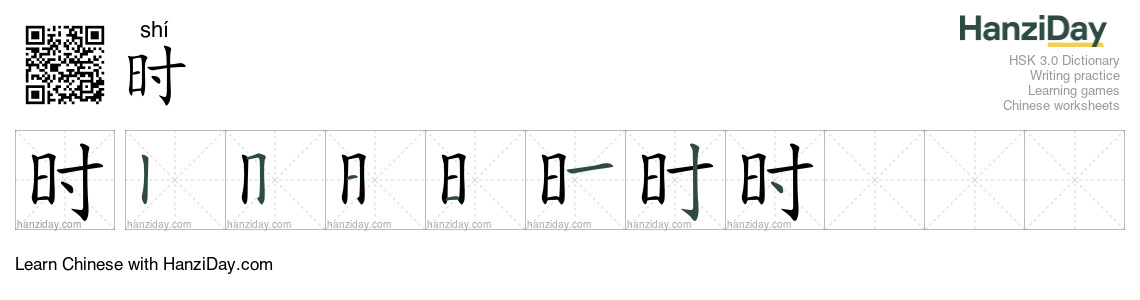
Stroke order
Games & Exercises 9
Find Hanzi
Find Hanzi is a playful exercise for learning Chinese. Spot characters, boost attention, download PDF, and enjoy studying Chinese through games!
Find Radical
Practice Chinese radicals online: choose the Hanzi containing the target component, use optional pinyin hints, and create printable PDF exercises.
Tone Trainer
Learn Mandarin tones online with the Chinese Tone Trainer. Practice tone recognition, pronunciation, and exercises for beginners and advanced learners.
Hanzi Connect
Match Hanzi with pinyin or identify words by sound. Use your own vocabulary or HSK 3.0/YCT levels. Play online after sign-in; printable PDFs with answers are for PRO.
Lost Stroke
Play online: find the missing stroke or radical, restore Chinese characters in order, and create printable PDF worksheets with pinyin and answers.
Calligraphy
Create calligraphy and custom Chinese character coloring pages with pinyin, stroke order, outline styles, and writing grids. Download a print-ready PDF for class or home.
Memo
Flip cards to match Chinese characters or pair Hanzi with Pinyin. Build a custom HSK 3.0 or YCT deck, play online, and create printable PDF cards.
Sudoku
Play Hanzi Sudoku online with 4×4, 6×6, or 9×9 grids, four difficulty levels, custom characters, and HSK 3.0/YCT sets. Create printable PDFs with answers.
Writing trainer
Practice Chinese character writing online with correct stroke order, outlines, a 3–2–1 preview, mistake-based hints, pinyin, and focused Hanzi review.









Examples of use 84
及
时
(adv.) in time, timely, without delay
同
时
(n.) at the same time
准
时
(adj.) punctual, on time
所
以
,
鸟
儿
非
常
爱
惜
羽
毛
,
每
天
都
会
花
很
长
时
间
来
保
养
自
己
的
“
羽
衣
”
。
Therefore, birds cherish feathers very much and spend a long time maintaining their "feather clothes" every day.
奶
奶
八
十
岁
生
日
的
时
候
,
亲
朋
好
友
都
来
了
。
On Grandma's eightieth birthday, all her relatives and friends came.
这
家
店
的
营
业
时
间
是
早
上
八
点
到
晚
上
六
点
。
This shop is open from eight in the morning to six in the evening.
爸
爸
到
家
的
时
候
,
我
们
早
就
睡
着
了
。
By the time Dad got home, we were already asleep.
爸
爸
教
我
骑
车
,
开
始
的
时
候
我
很
紧
张
。
My father taught me to ride a bike. I was very nervous at first.
当
我
遇
到
困
难
时
,
我
最
想
的
人
是
爸
爸
妈
妈
。
When I encounter problems, the people I want most are Dad and Mum.
究
竟
什
么
时
候
去
北
京
比
较
好
呢
?
When exactly is it best to go to Beijing?
他
怕
万
一
选
错
了
,
要
付
出
很
大
的
时
间
成
本
和
经
济
成
本
。
He is afraid that if he makes a wrong choice, he will pay a lot of time and economic costs.
对
不
起
,
我
最
近
很
忙
,
都
没
有
什
么
时
间
去
看
你
。
Sorry, I've been so busy recently that I don't have much time to see you.
不
管
忙
不
忙
,
他
每
天
都
要
锻
炼
一
个
小
时
。
Regardless of whether he is busy or not, he will exercise for an hour every day.
一
年
前
,
我
第
一
次
来
到
中
国
,
当
时
我
一
句
汉
语
也
不
会
说
。
A year ago, when I first came to China, I couldn't even speak a word of Mandarin.
我
平
时
喝
咖
啡
什
么
都
不
加
。
I usually drink coffee without adding anything.
当
机
会
到
来
时
,
千
万
不
要
放
手
,
有
什
么
想
做
的
事
就
马
上
去
做
吧
。
When the opportunity comes, don't let go. Do what you want to do right away.
在
面
试
的
时
候
千
万
不
能
害
羞
,
应
该
努
力
表
现
出
自
己
的
优
点
。
Don't be shy during the interview, you should try your best to show your strengths.
进
入
美
国
的
时
候
,
有
一
些
东
西
是
不
能
带
的
。
When you enter America, there are some things you can't take with you.
我
吃
饭
时
不
喜
欢
喝
酸
奶
,
我
来
一
杯
茶
吧
。
I don't like yogurt when I eat. I'll have a cup of tea.
今
天
老
张
开
会
的
时
候
不
停
地
看
手
机
,
可
能
有
什
么
重
要
的
事
情
吧
。
Today, Lao Zhang kept looking at his mobile phone during the meeting. Maybe there is something important.
春
节
的
时
候
,
中
国
人
会
吃
汤
圆
。
Chinese people eat sweet round dumplings during the Spring Festival.
从
前
,
大
概
在
距
今
两
千
五
百
多
年
前
的
春
秋
时
期
,
有
一
个
人
叫
子
路
,
他
是
孔
子
最
年
长
的
学
生
。
Once upon a time, in the Spring and Autumn Period about 2,500 years ago, there was a man named Zilu, who was the oldest student of Confucius.
一
天
,
他
让
士
兵
们
去
找
一
头
大
象
和
一
些
出
生
时
眼
睛
就
瞎
了
的
人
回
来
。
One day, he asked the soldiers to find an elephant and some people who were blind at birth.
当
大
导
演
进
一
步
询
问
原
因
时
,
当
地
人
的
回
答
令
他
受
益
终
生
。
When the director asked further why, the local people's answers benefited him all his life.
会
议
已
经
进
行
了
两
个
多
小
时
,
大
家
还
在
认
真
地
讨
论
这
个
问
题
。
The meeting has been going on for more than two hours, and everyone is still discussing this issue seriously.
请
大
家
严
格
按
照
老
师
的
要
求
按
时
完
成
作
业
,
这
对
提
高
汉
语
水
平
有
帮
助
。
Please finish your homework on time in strict accordance with the teacher's requirements, this would help to improve your Chinese.
他
高
兴
的
时
候
,
就
哈
哈
大
笑
。
When he is happy, he laughs.
在
中
国
的
时
候
,
你
要
是
需
要
帮
助
,
就
可
以
去
你
们
国
家
的
大
使
馆
。
When you are in China, if you need help, you can go to your country's embassy.
听
说
您
孙
子
已
经
读
大
学
了
,
时
间
过
得
真
快
啊
!
I heard that your grandson has gone to college. How time flies!
最
冷
的
时
候
。
The coldest time.
当
他
的
琴
声
雄
壮
豪
迈
的
时
候
,
打
柴
人
说
:
“
这
旋
律
表
达
了
高
山
的
雄
伟
壮
观
。
When his music was majestic and heroic, the woodcutter said, "This melody expresses the majesty of the mountains.
你
跟
我
打
招
呼
的
时
候
,
我
没
注
意
到
你
,
当
时
正
在
接
电
话
。
When you greeted me, I didn't notice you. I was answering the phone.
虽
然
后
面
的
题
我
都
会
,
但
是
考
试
时
间
太
少
了
,
没
时
间
写
了
,
只
好
都
放
弃
了
。
Although I can do the following questions, there is too little time for the exam and I have no time to write, so I have to give up.
妈
妈
把
全
部
的
时
间
都
花
在
照
顾
三
个
孩
子
上
了
。
Mother spent all her time taking care of three children.
你
什
么
时
候
还
我
的
钱
?
When will you pay me back?
你
是
什
么
时
候
来
中
国
的
?
When did you come to China?
当
工
作
很
多
的
时
候
,
我
们
一
定
要
找
到
工
作
的
重
点
,
先
把
重
点
工
作
完
成
。
When there is a lot of work, we must find the key points of the work and finish the important parts first.
离
别
的
时
候
,
我
很
舍
不
得
。
When I left, I was reluctant.
刚
开
始
的
时
候
at the very beginning
在
中
国
的
北
方
,
冬
天
的
时
候
每
家
都
有
暖
气
。
In the north of China, every family has heating in winter.
你
肚
子
疼
的
时
候
,
喝
点
热
水
,
可
能
管
用
。
When you have a stomachache, drink some hot water, which may help.
你
是
什
么
时
候
去
中
国
的
?
When did you go to China?
导
游
让
游
客
休
息
的
时
候
,
一
部
分
人
会
在
车
上
睡
觉
,
另
一
部
分
人
会
下
车
活
动
一
下
儿
。
When the tour guide gives tourists a rest, some people will sleep in the car, while others will get off the bus for a while.
女
儿
却
是
一
脸
的
疑
惑
,
反
问
道
:
“
你
们
不
是
也
有
时
候
说
,
哪
个
朋
友
好
相
处
,
哪
个
朋
友
很
自
私
吗
?
The daughter was puzzled and asked, "don't you sometimes say which friend is easy to get along with and which friend is selfish?
我
们
应
该
以
那
些
敢
说
真
话
的
人
为
镜
子
,
这
样
才
能
及
时
发
现
自
己
的
缺
点
。
We should take those who dare to tell the truth as mirrors, so as to find our shortcomings in time.
表
演
时
,
福
根
的
蝴
蝶
舞
得
了
舞
蹈
组
的
冠
军
。
During the performance, Fogen's butterfly dance won the championship of the dance group.
小
时
候
我
特
别
喜
欢
看
天
上
的
云
,
我
觉
得
有
的
云
像
花
儿
,
有
的
云
像
小
狗
,
非
常
有
意
思
。
When I was a child, I especially liked to look at the clouds in the sky. I think some clouds are like flowers and some clouds are like puppies, which is very interesting.
我
和
朋
友
见
面
的
时
候
会
握
手
,
表
示
友
好
。
When I meet my friends, I shake hands to show friendship.
演
出
开
始
时
人
们
认
为
很
有
魅
力
,
但
是
糟
糕
的
结
局
会
给
人
留
下
难
以
忘
记
的
坏
印
象
。
At the beginning of the performance, people think it is attractive, but the bad ending will leave an unforgettable bad impression.
工
作
的
时
候
,
经
常
写
几
十
个
字
,
就
到
院
中
去
转
转
,
看
看
这
棵
,
看
看
那
朵
。
When he works, he often writes dozens of words, then goes around the courtyard and looks at this tree and that flower.
例
如
,
做
节
目
时
,
与
开
幕
式
相
比
,
我
们
宁
可
把
更
多
的
精
力
集
中
在
闭
幕
式
上
,
这
样
可
以
加
强
观
众
对
节
目
的
印
象
。
For example, when doing a program, we would rather focus more on the closing ceremony than the opening ceremony, which can enhance the audience's impression of the program.
周
日
,
我
按
小
学
生
的
作
息
时
间
七
点
起
床
。
On Sunday, I get up at seven o'clock according to the schedule of primary school students.
一
部
电
影
,
开
始
虽
然
剧
情
平
平
常
常
,
如
果
最
后
半
个
小
时
能
使
我
们
感
动
,
我
们
依
然
会
向
别
人
推
荐
它
。
Although the plot of a movie is ordinary at first, if the last half hour can move us, we will still recommend it to others.
对
不
起
,
我
赶
着
开
会
,
现
在
没
时
间
跟
你
聊
天
。
Sorry, I'm in a hurry for a meeting. I don't have time to chat with you now.
她
用
了
很
多
时
间
才
做
好
。
It took her a lot of time to finish it.
他
受
伤
时
,
一
个
人
在
山
上
,
好
在
后
来
救
护
车
来
了
,
他
得
救
了
。
When he was injured, he was alone in the mountains. Fortunately, the ambulance came and he was saved.
我
们
做
作
业
做
了
两
个
小
时
了
,
我
们
休
息
一
下
吧
。
We have been doing our homework for two hours. Let's have a rest.
我
每
天
上
学
要
一
个
小
时
。
It takes me an hour to go to school every day.
三
个
小
时
快
乐
减
一
个
小
时
无
聊
等
于
两
个
小
时
快
乐
,
也
就
是
说
,
我
愉
快
地
度
过
了
两
个
小
时
。
Three hours of happiness minus one hour of boredom equals two hours of happiness, that is to say, I spent two hours happily.
我
们
飞
了
十
个
小
时
。
We flew for ten hours.
在
和
别
人
对
话
时
,
你
应
该
看
着
别
人
,
这
是
一
种
礼
貌
。
When talking with others, you should look at the other person. This is a way to show courtesy.
她
和
其
他
志
愿
者
利
用
午
休
、
周
末
等
空
闲
时
间
给
学
生
们
指
导
和
培
训
。
She and other volunteers use their free time such as lunch break and weekend to guide and train the students.
人
同
时
具
有
了
坚
定
的
意
志
力
和
敏
锐
的
判
断
力
,
这
就
是
成
长
。
People have firm willpower and keen judgment at the same time, which is growth.
他
小
时
候
家
里
很
穷
。
His family was poor when he was young.
猴
子
有
时
候
很
聪
明
,
有
时
候
很
笨
。
Monkeys are sometimes clever and sometimes stupid.
明
天
什
么
时
候
会
下
雨
?
When is it going to rain tomorrow?
当
消
费
者
走
到
相
应
货
架
时
,
仪
器
会
发
出
提
示
音
,
以
免
消
费
者
错
过
商
品
。
When the consumer walks to the corresponding shelf, the instrument will sound a prompt to avoid the consumer missing the goods.
什
么
时
候
你
会
觉
得
到
无
聊
呢
?
When do you feel bored?
你
哪
天
有
时
间
就
哪
天
来
我
家
吧
。
Come to my place whenever you have time.
有
时
赶
上
狂
风
暴
雨
,
情
况
紧
急
,
他
就
得
劳
驾
全
家
人
抢
救
花
草
。
Sometimes, when he catches up with the storm and the situation is urgent, he has to bother the whole family to rescue the flowers and plants.
你
看
到
自
己
婴
儿
时
期
的
一
张
照
片
,
你
能
认
出
自
己
吗
?
You see a picture of yourself as a baby. Can you recognize yourself?
考
试
时
一
定
要
仔
细
,
把
题
目
看
清
楚
。
You must be careful in the exam and read the questions clearly.
你
明
天
什
么
时
候
来
?
When will you come tomorrow?
我
顿
时
改
变
了
主
意
。
I suddenly changed my mind.
进
去
时
,
我
要
出
示
什
么
东
西
吗
?
Shall I show you anything when I go in?
等
待
今
年
1
1
月
的
北
风
,
北
风
南
下
之
时
,
他
们
将
再
次
出
发
。
Waiting for the north wind in November this year, when the north wind goes south, they will set off again.
这
个
任
务
时
间
比
较
紧
张
,
年
底
前
就
要
完
成
。
This timeline of this task is relatively tight and will need to be completed before the end of the year.
我
平
时
一
般
走
路
去
上
班
。
I usually walk to work.
有
时
候
上
班
前
打
扮
一
下
,
也
是
一
种
礼
貌
。
Sometimes to dress up before a little before you go to work is a kind of courtesy
我
每
天
晚
上
看
半
个
小
时
书
。
I read for half an hour every night.
她
有
时
拿
起
剪
刀
给
它
们
剪
剪
叶
子
。
She sometimes picks up scissors and cuts their leaves.
在
中
国
,
结
婚
时
常
用
红
色
,
因
为
它
代
表
喜
庆
。
In China, red is often used when getting married, because it represents happiness.
古
时
antiquity
时
过
境
迁
things change with the passage of time (idiom)
Learn 时 (shí) in context
时 appears here with its available localized meaning and tone-marked pinyin shí. Listen to the pronunciation and review any examples, illustrations, or lexical links shown for this entry.
Use the sections available on this page to compare characters, components, radicals, related words, matching pronunciation, synonyms, or antonyms. HanziDay shows only the information supported by this entry.
时 in HSK 3.0 Level 2
HanziDay organizes HSK 3.0 vocabulary around the new three-stage, nine-level framework. This entry belongs to Level 2; open the level list to study it alongside other vocabulary from the same stage.
Practice the stroke order for 时
Use the stroke animation to follow the writing order, then practice the sequence with the interactive writing tool. After signing in, you can also create a printable worksheet from this entry within your current allowance.