


千
Learn 十 — HSK 3.0 Level 1
十
Translation
- (num.) ten, 10
- (radical.) ten
- (char.) topmost
Simplified
十
Traditional
十
Strokes count
2
Words with 十 3
Same pronunciation 23
Similar pronunciation 86
Antonyms 1
Writing and worksheets
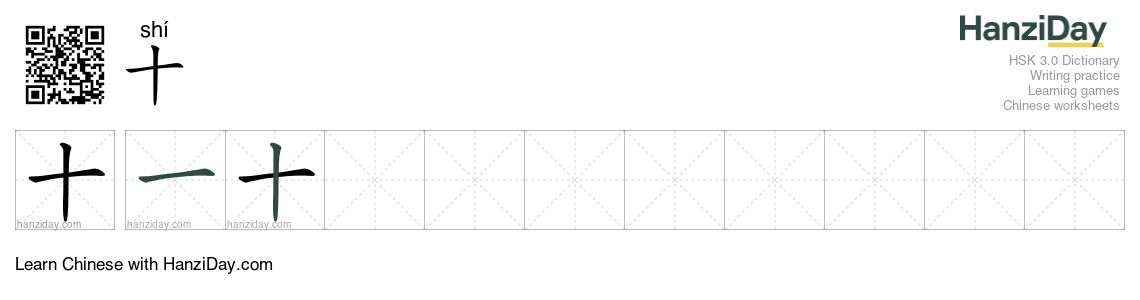
Stroke order
Games & Exercises 9
Find Hanzi
Find Hanzi is a playful exercise for learning Chinese. Spot characters, boost attention, download PDF, and enjoy studying Chinese through games!
Find Radical
Practice Chinese radicals online: choose the Hanzi containing the target component, use optional pinyin hints, and create printable PDF exercises.
Tone Trainer
Learn Mandarin tones online with the Chinese Tone Trainer. Practice tone recognition, pronunciation, and exercises for beginners and advanced learners.
Hanzi Connect
Match Hanzi with pinyin or identify words by sound. Use your own vocabulary or HSK 3.0/YCT levels. Play online after sign-in; printable PDFs with answers are for PRO.
Lost Stroke
Play online: find the missing stroke or radical, restore Chinese characters in order, and create printable PDF worksheets with pinyin and answers.
Calligraphy
Create calligraphy and custom Chinese character coloring pages with pinyin, stroke order, outline styles, and writing grids. Download a print-ready PDF for class or home.
Memo
Flip cards to match Chinese characters or pair Hanzi with Pinyin. Build a custom HSK 3.0 or YCT deck, play online, and create printable PDF cards.
Sudoku
Play Hanzi Sudoku online with 4×4, 6×6, or 9×9 grids, four difficulty levels, custom characters, and HSK 3.0/YCT sets. Create printable PDFs with answers.
Writing trainer
Practice Chinese character writing online with correct stroke order, outlines, a 3–2–1 preview, mistake-based hints, pinyin, and focused Hanzi review.





Examples of use 57
他
们
八
月
十
七
日
在
吗
?
Are they here on August 17th?
奶
奶
八
十
岁
生
日
的
时
候
,
亲
朋
好
友
都
来
了
。
On Grandma's eightieth birthday, all her relatives and friends came.
奶
奶
今
年
正
好
八
十
岁
。
Granny just turned 80 this year.
今
天
我
满
十
八
岁
了
,
是
个
小
大
人
了
。
Today, I turn eighteen years old, and I am a little adult.
今
天
是
五
四
青
年
节
。
我
听
说
今
天
十
四
到
二
十
八
岁
的
青
年
放
半
天
假
,
今
天
你
有
假
吗
?
Today is May Fourth Youth Day. I heard that young people between the ages of fourteen and twenty-eight have half a day off today. Do you have a holiday today?
我
的
奶
奶
八
十
岁
了
。
My grandmother is eighty years old.
现
在
八
点
二
十
分
。
It's twenty minutes past eight.
今
天
的
最
高
温
度
是
三
十
八
度
。
The highest temperature today is thirty-eight degrees.
一
杯
气
泡
水
八
十
元
。
A glass of bubble water is eighty yuan.
爷
爷
虽
然
八
十
多
了
,
可
是
他
因
为
常
常
运
动
,
早
睡
早
起
,
身
子
可
好
呢
!
Although Grandpa is over 80 years old, he goes to bed early and gets up early because he often exercises.
我
爸
爸
六
十
三
岁
。
My father is sixty-three years old.
可
是
,
经
过
测
验
计
算
发
现
,
以
大
树
输
送
管
道
的
尺
寸
产
生
的
毛
细
作
用
,
根
本
无
法
把
水
分
送
到
几
十
米
高
的
地
方
。
However, after testing and calculation, it was found that the capillary effect produced by the size of the big tree transportation pipeline could not send water to places tens of meters high at all.
我
买
这
本
书
花
了
十
块
。
I spent ten yuan on this book.
一
路
上
,
翟
峰
一
家
经
历
了
船
身
着
火
、
漏
水
等
大
大
小
小
十
多
次
险
情
。
Along the way, Zhai Feng's family experienced more than ten dangerous situations, such as fire and water leakage.
十
个
大
人
Ten adults
你
这
棵
树
已
经
五
十
岁
了
,
年
龄
比
我
还
大
。
This tree of yours is already fifty years old - that's older than me.
休
息
了
十
分
钟
后
,
大
家
继
续
上
课
。
After a ten-minute rest, everyone continued their class.
上
次
的
晚
会
上
,
大
家
都
玩
儿
得
十
分
高
兴
。
At the last party, everyone had a great time.
留
学
生
的
宿
舍
面
积
大
约
是
二
十
五
平
方
米
左
右
。
The dormitory area for overseas students is about 25 square meters.
今
天
我
们
学
习
的
内
容
是
第
十
一
课
的
生
词
和
语
法
。
The content we are learning today is the new words and grammar from Lesson 11.
每
天
要
看
四
十
分
钟
的
书
。
Read books for forty minutes every day.
我
每
天
都
做
六
十
分
钟
的
作
业
。
I do my homework for sixty minutes every day.
我
的
口
语
很
好
,
九
十
分
。
My spoken English is very good, 90.
今
天
的
最
高
温
度
是
三
十
八
度
。
The lowest temperature today is twenty degrees.
他
的
体
重
是
六
十
公
斤
。
His weight is sixty kilos.
京
剧
是
一
种
优
美
的
传
统
艺
术
,
很
多
外
国
留
学
生
对
它
十
分
感
兴
趣
。
Peking Opera is a beautiful traditional art, and many foreign students are very interested in it.
工
作
的
时
候
,
经
常
写
几
十
个
字
,
就
到
院
中
去
转
转
,
看
看
这
棵
,
看
看
那
朵
。
When he works, he often writes dozens of words, then goes around the courtyard and looks at this tree and that flower.
这
条
围
巾
的
价
钱
是
二
十
五
元
。
The price of this scarf is twenty-five yuan.
我
每
天
要
看
四
十
分
钟
的
网
球
节
目
。
I watch forty minutes of tennis every day.
十
点
钟
了
,
哥
哥
还
在
睡
觉
。
It's ten o'clock, and my brother is still sleeping.
我
上
午
十
点
半
要
见
一
个
朋
友
。
I want to see a friend at 10:30 in the morning.
上
午
十
点
ten o'clock in the morning
汽
车
会
在
上
午
十
点
离
开
旅
馆
。
The bus will leave the hotel at ten in the morning.
第
一
班
每
天
上
午
十
点
出
发
。
First flight departs at ten in the morning.
晚
上
十
点
以
后
需
要
挂
电
话
。
After ten in the evening (you) need to hang up the phone.
已
经
十
点
了
,
你
怎
么
还
在
睡
觉
?
It's already ten o'clock. Why are you still sleeping?
现
在
是
六
点
差
十
分
。
It's ten to six.
十
点
了
,
哥
哥
还
在
睡
懒
觉
。
It's ten o'clock, and my brother is still sleeping late.
听
说
他
从
四
岁
就
开
始
学
打
羽
毛
球
,
已
经
练
了
二
十
多
年
了
。
It is said that he has been learning to play badminton since he was four years old and has been practicing it for more than 20 years.
走
路
去
图
书
馆
,
最
多
十
五
分
钟
。
It takes fifteen minutes to walk to the library at most.
这
些
苹
果
差
不
多
二
十
块
钱
。
These apples cost almost twenty dollars.
我
二
十
岁
I'm twenty years old
我
女
儿
十
二
岁
了
。
My daughter is 12 years old.
我
明
年
二
十
一
岁
。
I will be twenty-one next year.
这
个
盘
子
十
元
一
个
。
This plate costs ten yuan each.
三
十
个
人
Thirty people
我
们
飞
了
十
个
小
时
。
We flew for ten hours.
他
和
我
一
样
,
也
是
十
五
岁
。
He, like me, is fifteen.
这
位
作
家
每
天
早
上
都
跑
步
,
他
一
般
会
跑
十
五
公
里
。
The writer runs every morning. He usually runs fifteen kilometers.
爷
爷
几
十
年
来
都
天
天
看
报
。
Grandpa has been reading newspapers every day for decades.
妈
妈
四
十
五
。
Mom is forty-five.
它
那
丰
富
的
色
彩
、
微
甜
的
口
感
,
至
今
仍
让
我
十
分
想
念
。
Its rich colors and slightly sweet taste still make me miss it very much.
你
十
四
岁
,
我
也
十
四
岁
。
You are fourteen and I am fourteen too.
我
十
七
岁
I'm seventeen
三
十
天
Thirty days
院
子
是
十
分
理
想
的
室
外
生
活
空
间
。
The courtyard is an ideal outdoor living space.
我
也
四
十
岁
I'm forty too
Learn 十 (shí) in context
十 appears here with its available localized meaning and tone-marked pinyin shí. Listen to the pronunciation and review any examples, illustrations, or lexical links shown for this entry.
Use the sections available on this page to compare characters, components, radicals, related words, matching pronunciation, synonyms, or antonyms. HanziDay shows only the information supported by this entry.
十 in HSK 3.0 Level 1
HanziDay organizes HSK 3.0 vocabulary around the new three-stage, nine-level framework. This entry belongs to Level 1; open the level list to study it alongside other vocabulary from the same stage.
Practice the stroke order for 十
Use the stroke animation to follow the writing order, then practice the sequence with the interactive writing tool. After signing in, you can also create a printable worksheet from this entry within your current allowance.