


她
Learn 他 — HSK 3.0 Level 1
他
Translation
- (pro.) he, him; another, other; everyone; meaningless mock object
Radical
Simplified
他
Traditional
他
Strokes count
5

Words with 他 4
Same pronunciation 11
Similar pronunciation 21
Synonyms 16
Antonyms 1
Writing and worksheets
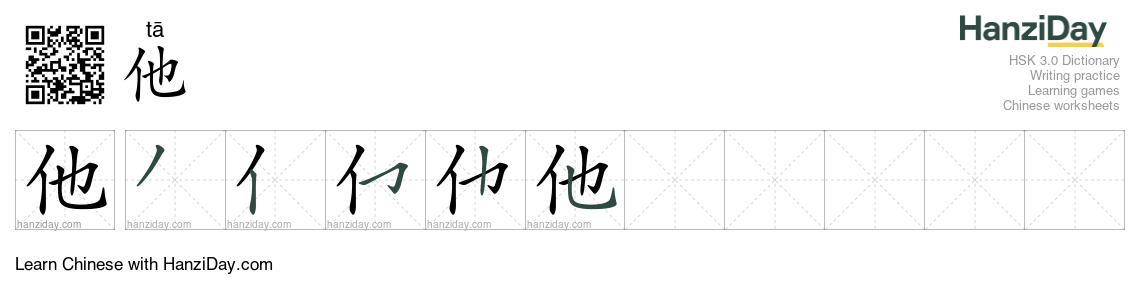
Stroke order
Games & Exercises 9
Find Hanzi
Find Hanzi is a playful exercise for learning Chinese. Spot characters, boost attention, download PDF, and enjoy studying Chinese through games!
Find Radical
Practice Chinese radicals online: choose the Hanzi containing the target component, use optional pinyin hints, and create printable PDF exercises.
Tone Trainer
Learn Mandarin tones online with the Chinese Tone Trainer. Practice tone recognition, pronunciation, and exercises for beginners and advanced learners.
Hanzi Connect
Match Hanzi with pinyin or identify words by sound. Use your own vocabulary or HSK 3.0/YCT levels. Play online after sign-in; printable PDFs with answers are for PRO.
Lost Stroke
Play online: find the missing stroke or radical, restore Chinese characters in order, and create printable PDF worksheets with pinyin and answers.
Calligraphy
Create calligraphy and custom Chinese character coloring pages with pinyin, stroke order, outline styles, and writing grids. Download a print-ready PDF for class or home.
Memo
Flip cards to match Chinese characters or pair Hanzi with Pinyin. Build a custom HSK 3.0 or YCT deck, play online, and create printable PDF cards.
Sudoku
Play Hanzi Sudoku online with 4×4, 6×6, or 9×9 grids, four difficulty levels, custom characters, and HSK 3.0/YCT sets. Create printable PDFs with answers.
Writing trainer
Practice Chinese character writing online with correct stroke order, outlines, a 3–2–1 preview, mistake-based hints, pinyin, and focused Hanzi review.









Examples of use 216
他
很
有
爱
心
,
她
对
他
动
心
了
。
He is very loving, and she is tempted by him.
他
爱
她
,
可
是
她
不
爱
他
。
He loves her, but she doesn't love him.
他
也
八
岁
。
He is also eight years old.
他
们
八
月
十
七
日
在
吗
?
Are they here on August 17th?
八
点
上
课
,
他
九
点
才
起
床
。
Class starts at eight o'clock, and he doesn't get up until nine o'clock.
他
的
猫
八
岁
了
。
His cat is eight years old.
爷
爷
虽
然
八
十
多
了
,
可
是
他
因
为
常
常
运
动
,
早
睡
早
起
,
身
子
可
好
呢
!
Although Grandpa is over 80 years old, he goes to bed early and gets up early because he often exercises.
弟
弟
过
生
日
,
爸
爸
妈
妈
给
他
买
了
很
多
礼
物
,
姐
姐
吃
醋
了
。
My brother had a birthday, and my parents bought him many gifts. My sister was jealous.
到
月
底
了
,
爸
爸
又
要
写
报
告
了
,
他
又
得
加
班
了
。
At the end of the month, Dad has to write a report again, and he has to work overtime again.
弟
弟
求
爸
爸
妈
妈
给
他
买
个
新
的
电
脑
。
My brother begged our parents to buy him a new computer.
他
的
爸
爸
妈
妈
最
近
没
了
工
作
,
他
家
的
生
活
有
点
困
难
,
我
们
帮
他
们
一
下
。
His parents have lost their jobs recently, and life in his family is a bit difficult. Let's help them.
爸
爸
不
在
家
,
他
出
去
了
。
Dad is not at home. He is out.
他
爸
爸
是
个
商
人
。
His father is a businessman.
他
爸
爸
是
警
察
局
长
。
His father is the chief of police.
他
怕
万
一
选
错
了
,
要
付
出
很
大
的
时
间
成
本
和
经
济
成
本
。
He is afraid that if he makes a wrong choice, he will pay a lot of time and economic costs.
但
是
他
遗
憾
地
发
现
,
几
乎
没
有
一
本
英
文
书
能
充
分
解
释
汉
字
的
字
源
。
However, he regretted to find that almost no English book can fully explain the etymology of Chinese characters.
不
管
忙
不
忙
,
他
每
天
都
要
锻
炼
一
个
小
时
。
Regardless of whether he is busy or not, he will exercise for an hour every day.
老
师
跟
我
讲
道
理
,
他
要
我
明
白
为
什
么
不
可
以
这
样
做
。
The teacher reasoned with me. He asked me to understand why I couldn't do this.
他
生
病
了
,
是
不
是
?
He is ill, isn't he?
在
其
他
粮
食
不
足
的
情
况
下
,
用
橡
子
喂
猴
子
倒
是
个
办
法
。
In other cases of food shortage, feeding monkeys with acorns is a way.
公
园
里
有
太
多
花
粉
了
,
他
不
能
去
,
他
去
的
话
会
生
病
的
。
There is too much pollen in the park. He can't go. If he goes, he will get sick.
和
女
朋
友
分
手
以
后
,
他
一
点
儿
也
不
难
受
。
After breaking up with his girlfriend, he didn't feel bad at all.
到
期
限
造
不
出
箭
,
他
就
活
该
受
罚
了
。
If he can't make an arrow by the deadline, he deserves to be punished.
回
家
的
快
乐
和
被
亲
情
包
围
的
幸
福
感
染
了
我
,
我
也
恨
不
得
马
上
飞
到
父
母
跟
前
,
与
他
们
团
圆
。
The happiness of going home and being surrounded by family infected me, and I couldn't wait to fly to my parents immediately to reunite with them.
因
为
他
爸
妈
是
不
同
国
家
的
人
,
所
以
他
会
说
两
种
不
同
的
语
言
Because his parents are from different countries, he can speak two different languages
部
分
留
学
生
寒
假
不
回
国
,
他
们
打
算
在
中
国
过
春
节
。
Some overseas students don't return home during winter vacation. They plan to spend the Spring Festival in China.
他
们
不
仅
要
观
色
、
闻
香
、
尝
味
、
赏
形
,
而
且
还
要
求
食
物
具
有
养
生
方
面
的
特
色
。
They not only want to watch the color, smell the fragrance, taste the taste and appreciate the shape, but also require the food to have the characteristics of keeping in good health.
这
个
健
身
计
划
不
适
合
他
,
所
以
事
倍
功
半
,
尽
管
他
努
力
地
锻
炼
身
体
,
但
是
现
在
没
有
什
么
效
果
。
This fitness program is not suitable for him, so it gets twice the effort with half the result. Although he works hard to exercise, it has no effect now.
我
不
相
信
他
,
我
觉
得
他
不
可
信
。
I don't trust him. I don't think he can be trusted.
可
除
非
是
那
些
好
种
易
活
、
自
己
会
奋
斗
的
花
草
,
否
则
他
是
不
养
的
。
But unless it is those flowers and plants that are easy to live and struggle for themselves, he will not raise them.
可
除
非
是
那
些
好
种
易
活
、
自
己
会
奋
斗
的
花
草
,
否
则
他
是
不
养
的
。
But unless it is those flowers and plants that are easy to live and struggle for themselves, he will not raise them.
他
们
快
要
离
开
中
国
了
,
今
晚
我
们
请
他
们
吃
饭
跟
他
们
告
别
吧
。
They are leaving China soon. Let's invite them to dinner tonight and say goodbye to them.
他
早
饭
吃
两
个
鸡
蛋
。
He eats two eggs for breakfast.
他
要
吃
什
么
?
What does he want to eat?
他
要
吃
牛
肉
。
He wants to eat beef.↵
他
午
饭
只
吃
了
一
个
热
狗
。
He only had a hot dog for lunch.
他
在
给
朋
友
打
电
话
呢
。
He is on the phone with a friend.
他
忽
然
发
现
远
处
蹲
着
一
只
大
老
虎
。
He suddenly found a big tiger crouching in the distance.
从
前
,
大
概
在
距
今
两
千
五
百
多
年
前
的
春
秋
时
期
,
有
一
个
人
叫
子
路
,
他
是
孔
子
最
年
长
的
学
生
。
Once upon a time, in the Spring and Autumn Period about 2,500 years ago, there was a man named Zilu, who was the oldest student of Confucius.
一
天
,
他
让
士
兵
们
去
找
一
头
大
象
和
一
些
出
生
时
眼
睛
就
瞎
了
的
人
回
来
。
One day, he asked the soldiers to find an elephant and some people who were blind at birth.
爷
爷
经
历
过
第
二
次
世
界
大
战
,
因
此
他
希
望
世
界
永
远
和
平
。
Grandpa experienced the Second World War, so he hopes that the world will always be peaceful.
当
大
导
演
进
一
步
询
问
原
因
时
,
当
地
人
的
回
答
令
他
受
益
终
生
。
When the director asked further why, the local people's answers benefited him all his life.
给
大
卫
上
过
课
的
老
师
们
普
遍
反
映
他
的
表
现
很
好
,
只
是
偶
尔
会
迟
到
。
The teachers who taught David generally reported that he performed well, but occasionally he was late.
他
多
大
了
?
How old is he?
他
在
大
学
学
教
育
学
。
He studied pedagogy at the university.
他
有
大
学
学
历
。
He has a college degree.
他
有
一
双
过
于
操
劳
的
大
手
。
He has a pair of overworked hands.
他
高
兴
的
时
候
,
就
哈
哈
大
笑
。
When he is happy, he laughs.
他
大
概
是
在
附
近
那
家
医
院
工
作
。
He probably works in the nearby hospital.
他
家
住
在
这
栋
大
楼
里
。
His family lives in this building.
他
们
扩
大
了
检
查
范
围
。
They expanded the scope of inspection.
他
想
要
在
上
海
上
大
学
。
He wants to go to university in Shanghai.
他
想
在
上
海
上
大
学
。
He wants to go to college in Shanghai.
他
的
汉
语
很
好
。
His Mandarin is very good.
他
的
朋
友
很
多
。
He has lots of friends.
这
是
他
的
想
法
,
你
认
为
呢
?
This is his idea, what do you think?
当
他
的
琴
声
雄
壮
豪
迈
的
时
候
,
打
柴
人
说
:
“
这
旋
律
表
达
了
高
山
的
雄
伟
壮
观
。
When his music was majestic and heroic, the woodcutter said, "This melody expresses the majesty of the mountains.
他
们
是
我
的
好
朋
友
。
They are my good friends.
一
连
三
天
,
他
们
都
很
顺
利
地
实
现
了
原
定
的
计
划
。
For three days in a row, they all realized their original plan smoothly.
这
家
理
发
店
的
理
发
师
是
很
有
名
的
,
他
们
常
常
给
明
星
理
发
。
The barbers in this barber shop are very famous. They often cut stars' hair.
如
果
你
想
买
到
他
们
的
面
包
,
就
要
早
一
点
去
。
If you want to buy their bread, you should go early.
他
做
事
很
认
真
,
并
且
有
丰
富
的
经
验
,
让
他
负
责
很
合
适
。
He is very serious and has a lot of experience. He is a good person to put in charge.
他
是
舞
蹈
专
业
的
学
生
。
He is a dance major.
你
看
,
这
是
五
年
前
他
给
我
写
的
信
,
我
还
留
着
信
封
呢
。
You see, this is a letter he wrote to me five years ago. I still have the envelope.
那
是
他
的
汉
语
老
师
。
That's his Chinese teacher.
他
们
是
我
的
家
人
。
They are my family.
他
真
可
怜
,
已
经
努
力
了
很
多
年
,
但
还
是
没
实
现
他
的
理
想
。
It's really sad for him. He has worked hard for many years, but he still hasn't realised his dreams.
他
的
儿
子
一
岁
,
不
会
写
字
。
His son is one years old, can't write characters.
他
的
父
母
因
为
生
病
都
没
了
工
作
,
他
家
现
在
的
生
活
很
困
难
。
His parents have lost their jobs because of illness, and his family's life is very difficult now.
他
能
把
什
么
事
都
说
得
让
人
很
明
白
,
他
的
口
才
很
好
。
He can make everything clear, and his eloquence is very good.
她
不
是
他
的
女
朋
友
。
She's not his girlfriend.
他
是
我
最
尊
重
的
一
个
老
师
。
He is one of the teachers I respect the most.
我
的
朋
友
是
法
国
人
,
他
会
说
一
点
儿
中
文
。
My friend is French. He can speak a little Chinese.
这
是
他
的
一
只
猫
。
This is his cat.
汉
语
是
他
的
母
语
。
Chinese is his mother tongue.
他
们
要
体
验
真
正
的
乡
村
生
活
。
They want to experience real country life.
哥
哥
和
他
的
女
朋
友
分
手
了
。
My brother broke up with his girlfriend.
他
是
一
个
非
常
有
责
任
心
的
人
。
He is a person with a very responsible heart.
他
们
为
我
们
的
旅
程
做
了
安
排
。
They made a plan for our trip.↵
他
的
中
文
学
好
了
,
他
的
自
信
心
也
有
了
。
His Chinese is better, and his self-confidence is better.
听
见
他
这
么
说
自
己
,
她
的
心
都
凉
了
。
Her heart was cold when she heard him say so about herself.
讲
完
电
话
,
张
师
傅
还
没
忘
了
向
我
炫
耀
他
的
女
儿
。
After talking on the phone, Master Zhang didn't forget to show off his daughter to me.
他
的
工
作
是
一
名
司
机
。
His job is as a driver.
他
是
书
店
的
店
员
。
He is a shop assistant in a bookstore.
我
怀
疑
是
他
把
我
的
自
行
车
骑
走
了
。
I suspect that he rode my bike away.
他
是
卖
衣
服
的
。
He sells clothes.
他
是
我
的
日
语
老
师
。
He is my Japanese teacher.
他
是
一
个
很
自
信
的
人
,
相
信
自
己
可
以
做
到
。
He is a very confident person and believes he can do it.
通
过
这
几
年
的
积
累
,
他
已
经
获
得
了
一
些
这
个
专
业
的
基
础
知
识
。
Through accumulation in recent years, he has acquired some basic knowledge of this major.
他
的
体
重
是
六
十
公
斤
。
His weight is sixty kilos.
他
说
话
冷
冰
冰
的
。
He speaks coldly.
他
开
车
的
速
度
很
快
。
The speed at which he drives is very fast.
一
个
偶
然
的
机
会
,
他
发
现
如
果
了
解
汉
字
的
来
源
和
演
变
过
程
,
再
学
习
它
就
变
得
轻
松
、
容
易
。
By chance, he found that if he understood the origin and evolution of Chinese characters, it would be easy to learn them .
他
有
很
多
有
意
思
的
想
法
,
所
以
写
作
非
常
好
。
He has many interesting ideas, so his writing is very good.
他
对
她
是
真
心
的
。
He is sincere to her.
他
用
了
全
身
的
力
气
,
才
把
我
的
行
李
全
部
搬
到
宿
舍
。
He used all his strength to move all my suitcases to the dormitory.
让
他
的
朋
友
小
声
点
。
Tell his friend to keep his voice down.
他
们
走
的
方
向
正
好
是
相
反
的
:
一
个
向
东
,
一
个
向
西
。
They went in exactly opposite directions: one went east and the other went west.
他
的
子
女
们
His children
他
的
猫
His cat
给
花
换
盆
剪
枝
施
肥
的
活
儿
他
越
做
越
熟
练
,
花
生
病
长
虫
他
也
知
道
如
何
应
付
了
。
He became more and more skilled in changing pots, pruning and fertilizing flowers, and he knew how to deal with sick and worms.
他
现
在
已
经
是
一
个
非
常
著
名
的
歌
手
了
。
He is a very famous singer now.
他
的
样
子
多
好
笑
。
How funny he looks.
给
他
上
过
课
的
老
师
们
普
遍
反
映
他
的
表
现
很
好
,
只
是
偶
尔
会
迟
到
。
Teachers who gave him lessons generally reported that he performed well, only occasionally being late.
他
的
房
间
很
整
齐
。
His room is neat.
一
来
二
去
,
他
慢
慢
地
总
结
出
一
些
养
花
的
经
验
。
In the long run, he slowly summed up some experience in raising flowers.
他
是
我
的
朋
友
。
He is my friend.
他
的
小
猫
His kitten
他
是
一
个
来
自
中
国
的
老
师
。
He is a teacher from China.
他
是
这
里
的
店
员
。
He is a shop assistant here.
他
的
电
脑
在
他
的
书
包
里
。
His computer is in his schoolbag.
他
是
这
里
的
工
人
。
He is a worker here.
以
前
有
一
个
中
国
老
师
,
他
教
过
我
一
点
儿
功
夫
,
我
表
演
给
你
看
看
。
I used to have a Chinese teacher who taught me a little kung fu. I'll show you.
那
个
明
星
这
两
年
很
火
,
我
经
常
在
电
视
上
看
到
他
。
That celebrity has been very popular in the past two years. I often see him on TV.
他
喜
欢
看
中
国
电
影
。
He likes to watch Chinese film.
正
常
来
说
,
他
每
周
三
都
会
去
图
书
馆
。
Normally, he goes to the library every Wednesday.
他
每
天
回
来
都
很
累
。
He is tired everyday when he gets back.
我
有
三
个
外
国
朋
友
,
他
们
都
会
说
中
文
。
I have three foreign friends, all of whom speak Chinese.
他
每
年
都
回
一
次
国
。
He goes back to England once a year.
听
说
他
从
四
岁
就
开
始
学
打
羽
毛
球
,
已
经
练
了
二
十
多
年
了
。
It is said that he has been learning to play badminton since he was four years old and has been practicing it for more than 20 years.
他
奶
奶
有
一
百
多
岁
。
His grandmother is over one hundred years old.
他
上
个
星
期
买
了
很
多
东
西
。
He bought a lot of things last week.
他
来
中
国
后
,
学
了
很
多
中
文
。
He has learned a lot of Chinese since he came to China.
他
有
很
多
证
书
,
所
以
他
很
快
找
到
了
工
作
。
He had many certificates, so he found a job quickly.
他
儿
子
在
学
校
上
小
班
。
His son is in a small class at school.
我
想
叫
他
们
高
兴
高
兴
。
I want to make them happy.
他
的
确
很
帅
,
真
是
一
个
帅
哥
!
He is really handsome, he is really a handsome guy!
他
受
伤
时
,
一
个
人
在
山
上
,
好
在
后
来
救
护
车
来
了
,
他
得
救
了
。
When he was injured, he was alone in the mountains. Fortunately, the ambulance came and he was saved.
他
和
她
有
两
个
子
女
。
He and she have two children.
他
有
几
百
个
朋
友
,
只
有
两
个
好
朋
友
。
He has several hundred friends, only have two good friends.
他
流
利
地
讲
了
一
个
汉
语
故
事
。
He told a Chinese story fluently.
他
是
一
个
有
钱
人
。
He is a rich man.
他
们
两
个
是
母
子
关
系
。
The two of them are mother and child.
他
雇
了
2
0
来
个
当
地
人
为
他
带
路
和
搬
运
行
李
。
He hired about 20 locals to lead the way and carry his luggage.
他
做
了
三
份
工
作
。
He did three jobs.
他
很
乐
意
接
受
这
份
工
作
,
工
作
中
更
是
精
益
求
精
。
He is happy to accept this job, and strives for perfection in his work.
他
们
后
年
要
去
国
外
工
作
了
。
They are going to work abroad the year after next.
后
年
他
们
要
去
国
外
工
作
了
。
They will go to work abroad the year after next.
他
说
汉
语
说
得
很
流
利
。
He speaks Mandarin very fluently.
她
好
,
他
也
好
。
She is good, so is he.
他
很
好
。
He is well.
徐
健
和
他
的
队
伍
天
天
在
路
上
忙
碌
着
。
Jian Xu and his team are busy on the road every day.
由
于
人
们
在
一
周
内
的
营
养
摄
入
和
饮
食
模
式
会
影
响
到
他
们
的
体
重
变
化
,
因
此
节
食
者
的
体
重
会
在
一
周
内
上
下
波
动
。
Because people's nutrient intake and diet patterns will affect their weight changes during the week, dieters' weight will fluctuate up and down during the week.
他
非
常
想
念
老
家
和
亲
人
。
He misses his hometown and relatives very much.
她
和
其
他
志
愿
者
利
用
午
休
、
周
末
等
空
闲
时
间
给
学
生
们
指
导
和
培
训
。
She and other volunteers use their free time such as lunch break and weekend to guide and train the students.
他
和
我
一
样
,
也
是
十
五
岁
。
He, like me, is fifteen.
他
对
新
房
子
很
满
意
。
He is very satisfied with his new house.
他
小
时
候
家
里
很
穷
。
His family was poor when he was young.
他
很
高
。
He is very tall.
快
给
他
回
信
吧
!
Write back to him quickly!
这
位
作
家
每
天
早
上
都
跑
步
,
他
一
般
会
跑
十
五
公
里
。
The writer runs every morning. He usually runs fifteen kilometers.
哥
哥
是
兽
医
,
他
开
了
一
家
宠
物
医
院
。
My brother is a veterinarian. He runs a pet hospital.
他
说
女
儿
念
了
硕
士
,
有
学
位
,
在
一
家
一
流
的
公
司
上
班
。
He said that his daughter has a master's degree and works in a first-class company.
有
时
赶
上
狂
风
暴
雨
,
情
况
紧
急
,
他
就
得
劳
驾
全
家
人
抢
救
花
草
。
Sometimes, when he catches up with the storm and the situation is urgent, he has to bother the whole family to rescue the flowers and plants.
他
叫
什
么
?
What is his name?
他
姓
田
,
叫
小
朋
。
His surname is Tian and his name is Xiao Peng.
他
上
午
去
学
开
车
了
。
He went to learn to drive this morning.
他
一
下
子
打
开
门
。
He opened the door at once.
他
轻
轻
地
推
开
了
门
,
发
现
房
间
里
没
有
人
。
He gently pushed open the door and found no one in the room.
他
们
在
学
校
看
书
。
They are reading at school.
警
察
要
求
他
拿
出
护
照
看
看
。
The policeman asked him to show his passport.
他
们
喜
欢
一
边
听
歌
,
一
边
看
书
。
They like to read while listening to songs.
他
想
去
天
安
门
广
场
看
一
看
。
He wants to visit Tian'anmen Square.
他
在
马
路
边
捡
了
几
块
钱
。
He picked up a few dollars by the side of the road.
他
们
从
昏
迷
中
清
醒
过
来
。
They woke up from their coma.
母
亲
却
说
,
近
来
他
们
比
较
忙
。
Mother said that they have been busy recently.
他
是
英
国
老
师
。
He is a British teacher.
他
到
了
办
公
室
我
就
告
诉
他
。
I'll tell him as soon as he gets to the office.
他
抽
了
一
根
烟
。
He smoked a cigarette.
我
们
给
他
唱
了
生
日
歌
。
We sang him a birthday song.
你
给
他
发
短
信
了
吗
?
Did you text him?
他
们
喜
欢
去
西
安
玩
。
他
们
去
年
去
了
,
今
年
去
了
,
明
年
还
要
去
。
They like to visit Xi'an. They went last year, this year and next year.
他
们
星
期
六
在
吗
?
Are they here on Saturday?
他
有
猫
吗
?
Does he have a cat?
他
们
这
个
星
期
五
下
午
在
吗
?
Will they be here this Friday afternoon?
他
没
有
中
国
朋
友
。
He has no Chinese friends.
班
上
有
一
位
同
学
对
花
粉
过
敏
,
一
位
对
面
粉
过
敏
,
另
一
位
对
花
生
过
敏
,
还
有
一
位
对
尘
土
过
敏
。
其
他
人
都
没
有
什
么
过
敏
。
One student in the class is allergic to pollen, one is allergic to flour, another is allergic to peanuts, and another is allergic to dust. No one else has any allergies.
他
们
在
玩
儿
呢
。
They're playing.
他
在
看
你
。
He's looking at you.
他
搓
着
手
,
迟
疑
地
说
:
“
有
件
事
想
拜
托
你
。
”
He rubbed his hands and said hesitantly, "I have something to ask you."
你
越
说
他
越
难
过
。
The more you talk about it, the more sad he is.
等
待
今
年
1
1
月
的
北
风
,
北
风
南
下
之
时
,
他
们
将
再
次
出
发
。
Waiting for the north wind in November this year, when the north wind goes south, they will set off again.
请
他
们
等
通
知
。
Ask them to wait for notice.
我
与
他
们
一
起
去
旅
游
。
I went traveling with them.
他
晚
上
要
去
酒
吧
。
He's going to the bar tonight.
他
在
网
上
教
别
人
怎
么
理
发
,
是
一
位
网
红
理
发
师
。
He teaches others how to have a haircut online. He is a hairdresser in online celebrity.
他
为
什
么
学
中
文
?
Why does he learn Chinese?
他
是
我
哥
哥
。
He is my elder brother.
他
们
是
夫
妻
关
系
。
They are husband and wife.
他
是
小
学
生
。
He is a pupil.
他
是
这
样
陈
述
自
己
的
见
解
的
。
This is how he stated his views.
他
是
售
货
员
。
He is a salesman.
他
说
日
语
。
He speaks Japanese.
他
们
可
以
一
边
说
话
,
一
边
做
运
动
。
They can talk, while do exercise.↵
他
一
边
唱
歌
一
边
跳
舞
。
He danced as he sang.
他
姓
张
。
His last name is Zhang.
他
一
边
弹
钢
琴
,
一
边
唱
歌
。
He sang while playing the piano.
他
们
在
一
起
学
课
文
。
They study the text together.
他
向
公
共
汽
车
跑
。
He runs towards the bus.
他
在
学
中
文
,
因
为
他
喜
欢
学
汉
字
。
He is learning Chinese because he likes learning Chinese characters.
我
记
下
了
他
的
电
话
,
给
了
他
一
张
我
的
名
片
。
I wrote down his phone number and gave him my business card.
他
被
网
友
亲
切
地
称
呼
为
“
汉
字
叔
叔
”
。
He was affectionately called "Uncle Chinese Characters" by netizens.
他
在
数
学
学
院
学
习
。
He studies at the School of Mathematics.
他
一
直
在
流
泪
。
He has been crying.
他
姓
李
,
木
子
李
。
His last name is Li, Mu Zi Li.
他
们
正
在
球
场
上
玩
球
。
They are playing ball on the court.
他
们
they; them
他
乡
foreign land | away from one's native place
他
是
谁
?
Who is he?
他
每
天
要
用
三
个
钟
头
做
作
业
。
Everyday it takes him three hours to do the homework.
他
今
天
没
去
学
校
。
He didn't go to school today.
他
的
his
送
给
他
give him something (as a present)
他
在
睡
觉
。
He is sleeping.
他
几
岁
了
?
How old is he?
我
没
他
高
。
I am not so tall as him.
Learn 他 (tā) in context
他 appears here with its available localized meaning and tone-marked pinyin tā. Listen to the pronunciation and review any examples, illustrations, or lexical links shown for this entry.
Use the sections available on this page to compare characters, components, radicals, related words, matching pronunciation, synonyms, or antonyms. HanziDay shows only the information supported by this entry.
他 in HSK 3.0 Level 1
HanziDay organizes HSK 3.0 vocabulary around the new three-stage, nine-level framework. This entry belongs to Level 1; open the level list to study it alongside other vocabulary from the same stage.
Practice the stroke order for 他
Use the stroke animation to follow the writing order, then practice the sequence with the interactive writing tool. After signing in, you can also create a printable worksheet from this entry within your current allowance.