


向
Learn 问 — HSK 3.0 Level 1
问
Translation
- (v./prep.) ask; inquire after; interrogate; hold responsible; care, bother; consult; to; from
Simplified
问
Traditional
問
Strokes count
6

Words with 问 17
Same pronunciation 6
Similar pronunciation 29
Synonyms 7
Writing and worksheets
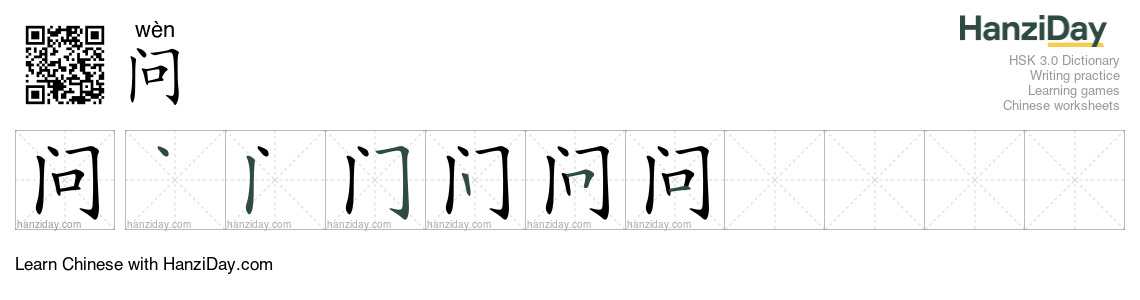
Stroke order
Games & Exercises 9
Find Hanzi
Find Hanzi is a playful exercise for learning Chinese. Spot characters, boost attention, download PDF, and enjoy studying Chinese through games!
Find Radical
Practice Chinese radicals online: choose the Hanzi containing the target component, use optional pinyin hints, and create printable PDF exercises.
Tone Trainer
Learn Mandarin tones online with the Chinese Tone Trainer. Practice tone recognition, pronunciation, and exercises for beginners and advanced learners.
Hanzi Connect
Match Hanzi with pinyin or identify words by sound. Use your own vocabulary or HSK 3.0/YCT levels. Play online after sign-in; printable PDFs with answers are for PRO.
Lost Stroke
Play online: find the missing stroke or radical, restore Chinese characters in order, and create printable PDF worksheets with pinyin and answers.
Calligraphy
Create calligraphy and custom Chinese character coloring pages with pinyin, stroke order, outline styles, and writing grids. Download a print-ready PDF for class or home.
Memo
Flip cards to match Chinese characters or pair Hanzi with Pinyin. Build a custom HSK 3.0 or YCT deck, play online, and create printable PDF cards.
Sudoku
Play Hanzi Sudoku online with 4×4, 6×6, or 9×9 grids, four difficulty levels, custom characters, and HSK 3.0/YCT sets. Create printable PDFs with answers.
Writing trainer
Practice Chinese character writing online with correct stroke order, outlines, a 3–2–1 preview, mistake-based hints, pinyin, and focused Hanzi review.









Examples of use 37
问
题
(n.) question, problem
哲
学
家
们
对
本
体
的
问
题
各
抒
己
见
。
Philosophers have their own opinions on the issue of noumenon.
如
果
有
不
懂
的
地
方
,
一
定
要
问
老
师
。
If there is something you don't understand, you must ask the teacher.
当
大
导
演
进
一
步
询
问
原
因
时
,
当
地
人
的
回
答
令
他
受
益
终
生
。
When the director asked further why, the local people's answers benefited him all his life.
会
议
已
经
进
行
了
两
个
多
小
时
,
大
家
还
在
认
真
地
讨
论
这
个
问
题
。
The meeting has been going on for more than two hours, and everyone is still discussing this issue seriously.
请
大
家
一
定
要
高
度
重
视
这
个
问
题
。
Please attach great importance to this issue.
我
看
她
总
是
笑
着
回
答
老
师
的
问
题
。
In my opinion, she always answers the teacher's questions with a smile.
请
问
,
你
从
事
的
是
什
么
职
业
?
Excuse me, what occupation are you engaged in?
今
天
老
师
上
课
的
问
题
我
答
对
了
!
I answered the teacher's question correctly today!
请
问
,
这
里
有
没
有
打
印
的
地
方
?
Excuse me, is there any place to print here?
李
老
师
去
访
问
别
的
学
校
了
。
Miss Li has visited other schools.
请
问
,
这
里
附
近
有
停
车
的
地
方
吗
?
Excuse me, is there a parking place near here?
女
儿
却
是
一
脸
的
疑
惑
,
反
问
道
:
“
你
们
不
是
也
有
时
候
说
,
哪
个
朋
友
好
相
处
,
哪
个
朋
友
很
自
私
吗
?
The daughter was puzzled and asked, "don't you sometimes say which friend is easy to get along with and which friend is selfish?
请
问
您
家
的
住
址
有
没
有
变
?
Have you changed your address?
请
问
,
一
光
年
是
多
少
年
?
Excuse me, how many years is a light year?
我
们
去
问
问
售
货
员
这
个
多
少
钱
。
Let's ask the salesman how much it costs.
我
能
问
您
一
个
问
题
吗
?
Can I ask you a question?
我
有
一
个
问
题
。
I have a question.
詹
森
一
到
欧
洲
环
境
保
护
署
交
通
部
工
作
,
就
接
到
了
研
究
如
何
解
决
城
市
拥
堵
问
题
的
任
务
。
As soon as Jason came to work in the European Environmental Protection Agency's transport department, he was given the task of studying how to solve the problem of urban congestion.
这
种
状
态
如
果
持
续
数
天
、
数
周
、
数
月
,
将
导
致
高
血
压
、
失
眠
和
一
些
精
神
问
题
等
。
If this state lasts for several days, weeks and months, it will lead to high blood pressure, insomnia and some mental problems.
问
题
很
奇
怪
。
The question is very weird.
这
位
朋
友
很
会
利
用
“
登
门
槛
效
应
”
来
处
理
问
题
。
This friend is very good at using the "threshold effect" to deal with problems.
请
问
,
你
叫
什
么
名
字
?
What's your name, please?
下
周
您
来
看
房
子
?
没
问
题
!
Will you come to see the house next week? No problem!
请
问
是
李
老
师
吗
?
May I ask, is this Teacher Li?
我
们
去
问
老
师
吧
。
Let's ask the teacher.
我
喜
欢
主
动
问
老
师
问
题
。
I like to take the initiative to ask teachers questions.
这
个
问
题
你
们
听
懂
了
没
有
?
Did you understand this question or not?
请
问
,
我
可
以
在
这
里
照
相
吗
?
Excuse me, can I take pictures here?
请
问
这
个
日
期
你
们
有
空
房
吗
?
Do you have any vacancies on this date?
这
位
先
生
,
请
问
你
找
谁
?
This gentleman, who are you looking for?
七
郎
上
前
询
问
。
Qilang came forward to ask.
问
好
to say hello to | to send one's regards to
问
号
question mark (punct.) | unknown factor | unsolved problem | interrogation
问
路
to ask for directions | to ask the way (to some place)
请
问
.
.
.
May I ask...?
我
能
问
个
问
题
吗
?
May I ask a question?
Learn 问 (wèn) in context
问 appears here with its available localized meaning and tone-marked pinyin wèn. Listen to the pronunciation and review any examples, illustrations, or lexical links shown for this entry.
Use the sections available on this page to compare characters, components, radicals, related words, matching pronunciation, synonyms, or antonyms. HanziDay shows only the information supported by this entry.
问 in HSK 3.0 Level 1
HanziDay organizes HSK 3.0 vocabulary around the new three-stage, nine-level framework. This entry belongs to Level 1; open the level list to study it alongside other vocabulary from the same stage.
Practice the stroke order for 问
Use the stroke animation to follow the writing order, then practice the sequence with the interactive writing tool. After signing in, you can also create a printable worksheet from this entry within your current allowance.