


碍
得 — Obtain, Suit, or Be Satisfied
得 (dé) can mean to obtain or gain, suit or fit, or be pleased and satisfied in Mandarin Chinese.
得
Translation
- (par.) used after a verb to describe the action
- (av.) need, must, have to; will certainly
- (v.) result in (of calculation); (to end a conversation indicating agree or disagree) okay, stop (it); (expressing frustration) damn it
- (v.) obtain, get; to suit; be satisfied; (oral) be finished; (before verbs in negatives) expressing permission or possibility
Radical
Simplified
得
Traditional
得
Strokes count
11
Words with 得 54
Same pronunciation 6
Similar pronunciation 8
Synonyms 4
Writing and worksheets
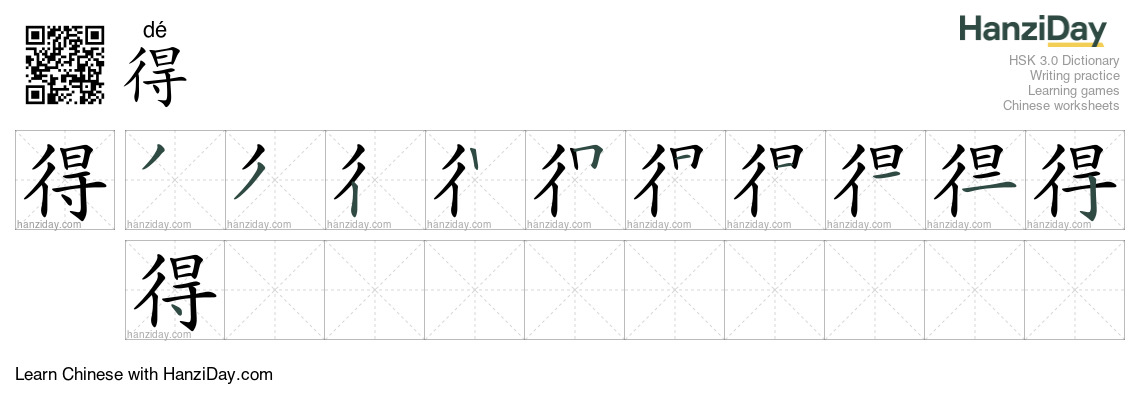
Stroke order
Games & Exercises 9
Find Hanzi
Find Hanzi is a playful exercise for learning Chinese. Spot characters, boost attention, download PDF, and enjoy studying Chinese through games!
Find Radical
Practice Chinese radicals online: choose the Hanzi containing the target component, use optional pinyin hints, and create printable PDF exercises.
Tone Trainer
Learn Mandarin tones online with the Chinese Tone Trainer. Practice tone recognition, pronunciation, and exercises for beginners and advanced learners.
Hanzi Connect
Match Hanzi with pinyin or identify words by sound. Use your own vocabulary or HSK 3.0/YCT levels. Play online after sign-in; printable PDFs with answers are for PRO.
Lost Stroke
Play online: find the missing stroke or radical, restore Chinese characters in order, and create printable PDF worksheets with pinyin and answers.
Calligraphy
Create calligraphy and custom Chinese character coloring pages with pinyin, stroke order, outline styles, and writing grids. Download a print-ready PDF for class or home.
Memo
Flip cards to match Chinese characters or pair Hanzi with Pinyin. Build a custom HSK 3.0 or YCT deck, play online, and create printable PDF cards.
Sudoku
Play Hanzi Sudoku online with 4×4, 6×6, or 9×9 grids, four difficulty levels, custom characters, and HSK 3.0/YCT sets. Create printable PDFs with answers.
Writing trainer
Practice Chinese character writing online with correct stroke order, outlines, a 3–2–1 preview, mistake-based hints, pinyin, and focused Hanzi review.









Examples of use 49
老
舍
很
有
爱
心
,
更
懂
得
快
乐
要
分
享
。
Lao She is very caring and knows how to share happiness.
到
月
底
了
,
爸
爸
又
要
写
报
告
了
,
他
又
得
加
班
了
。
At the end of the month, Dad has to write a report again, and he has to work overtime again.
如
果
您
在
本
商
店
购
买
超
过
三
百
元
的
商
品
,
就
可
以
得
到
一
个
精
美
的
购
物
袋
,
多
买
多
得
。
If you buy more than 300 yuan's worth of goods in this shop, you can get a beautiful shopping bag, and you can get more if you buy more.
成
功
不
是
随
随
便
便
就
能
取
得
的
。
Success can't be achieved casually.
不
知
道
为
什
么
,
我
今
天
觉
得
有
点
烦
,
我
可
能
得
休
息
一
下
。
I don't know why, but I feel a little bored today. I may have to have a rest.
今
天
学
的
跳
舞
动
作
有
点
儿
难
,
我
恐
怕
做
得
不
太
标
准
,
在
比
赛
前
我
还
想
多
练
习
练
习
。
The dance moves I learned today are a bit difficult. I'm afraid I didn't do them very well. I want to practice more before the competition.
要
是
我
不
那
么
粗
心
,
昨
天
的
考
试
一
定
能
得
第
一
名
。
If I hadn't been so careless, I would have won the first place in yesterday's exam.
回
家
的
快
乐
和
被
亲
情
包
围
的
幸
福
感
染
了
我
,
我
也
恨
不
得
马
上
飞
到
父
母
跟
前
,
与
他
们
团
圆
。
The happiness of going home and being surrounded by family infected me, and I couldn't wait to fly to my parents immediately to reunite with them.
我
们
虽
然
这
次
考
得
不
错
,
但
也
不
能
太
得
意
。
Although we did well in the exam this time, we can't be too proud.
猴
子
们
似
乎
只
弄
懂
了
主
人
前
面
说
的
一
个
“
三
”
,
觉
得
自
己
吃
了
亏
。
Monkeys seem to have only understood a "three" mentioned by their masters and feel that they have suffered losses.
吃
得
慢
一
点
。
Eat slowly.
昆
虫
这
样
的
小
动
物
,
一
秒
钟
之
内
接
收
的
信
息
量
,
比
人
类
等
体
型
大
的
生
物
多
得
多
。
Small animals like insects receive much more information in one second than large creatures like humans.
听
说
您
孙
子
已
经
读
大
学
了
,
时
间
过
得
真
快
啊
!
I heard that your grandson has gone to college. How time flies!
你
的
中
文
学
得
怎
样
?
How are you getting on with Chinese?
今
天
在
餐
厅
过
生
日
的
小
朋
友
可
以
获
得
一
个
生
日
蛋
糕
。
Children who are celebrating their birthday in the restaurant today can get a birthday cake.
他
能
把
什
么
事
都
说
得
让
人
很
明
白
,
他
的
口
才
很
好
。
He can make everything clear, and his eloquence is very good.
你
的
中
文
说
得
真
好
!
You speak Chinese really well!
通
过
这
几
年
的
积
累
,
他
已
经
获
得
了
一
些
这
个
专
业
的
基
础
知
识
。
Through accumulation in recent years, he has acquired some basic knowledge of this major.
表
演
时
,
福
根
的
蝴
蝶
舞
得
了
舞
蹈
组
的
冠
军
。
During the performance, Fogen's butterfly dance won the championship of the dance group.
我
的
身
份
证
过
期
了
,
我
得
办
一
张
新
的
身
份
证
。
My ID card has expired. I have to get a new one.
我
的
数
学
考
得
还
可
以
。
I did OK in the math exam.
我
今
天
得
到
了
一
个
来
自
国
外
的
礼
物
。
I got a gift from abroad today.
我
们
得
快
点
了
。
We must hurry up.
车
子
开
得
慢
一
点
,
小
心
一
点
。
Drive slowly and carefully.
实
践
证
明
,
第
二
种
人
得
到
的
总
是
比
第
一
种
人
更
多
。
Practice has proved that the second kind of people always get more than the first kind of people.
郝
琳
硕
觉
得
自
己
的
收
获
远
多
于
给
孩
子
们
的
。
Hao Linshuo feels that his gains are far more than those for children.
要
对
付
感
冒
,
你
得
好
好
休
息
,
多
喝
热
水
。
To deal with a cold, you have to have a good rest and drink plenty of hot water.
他
受
伤
时
,
一
个
人
在
山
上
,
好
在
后
来
救
护
车
来
了
,
他
得
救
了
。
When he was injured, he was alone in the mountains. Fortunately, the ambulance came and he was saved.
我
发
现
在
难
得
的
寂
静
中
工
作
是
那
么
美
好
。
I find it wonderful to work in rare silence.
年
度
考
核
,
我
和
小
林
的
敬
业
精
神
、
兢
兢
业
业
的
工
作
态
度
受
到
了
表
扬
,
经
济
上
也
得
到
了
丰
厚
的
回
报
。
In the annual assessment, Kobayashi and I were praised for our professionalism and conscientious working attitude, and we also got rich returns economically.
她
学
得
比
我
好
。
She studies better than me.
最
近
几
年
,
我
们
国
家
发
展
得
非
常
好
。
In recent years, our country has developed very well.
谁
能
够
及
早
抓
住
机
会
,
谁
就
赢
得
了
机
遇
。
Whoever can seize the opportunity early will win the opportunity.
什
么
时
候
你
会
觉
得
到
无
聊
呢
?
When do you feel bored?
你
在
爷
爷
家
玩
得
开
心
吗
?
Did you have a good time at Grandpa's house?
有
时
赶
上
狂
风
暴
雨
,
情
况
紧
急
,
他
就
得
劳
驾
全
家
人
抢
救
花
草
。
Sometimes, when he catches up with the storm and the situation is urgent, he has to bother the whole family to rescue the flowers and plants.
这
次
考
试
你
考
得
怎
么
样
?
How did you do in this exam?
希
望
您
在
我
们
酒
店
住
得
愉
快
。
Hope you enjoy your stay in our hotel.
我
这
个
周
末
过
得
还
不
错
!
I had a good weekend!
看
得
出
can see | can tell
看
得
见
to be able to see; can see
听
得
懂
to understand (by hearing) | to catch (what sb says)
听
得
见
to be able to hear; can hear
说
得
太
快
speak too fast
吃
得
很
香
to eat voraciously
听
得
清
楚
hear clearly
做
得
很
好
do very well
车
开
得
不
快
The car is not driven very fast
起
得
很
早
to get up very early
With the reading dé, 得 means “obtain” or “gain,” as in 得奖 (dé jiǎng), “win a prize.” The complement particle de and modal děi are separate readings.