


Learn 相 in Chinese
Meaning of 相 (xiāng): (adv./v.) to each other, mutually; towards (indicating the object of an action); to evaluate by seeing for oneself
相
TOP-500
Frequency
The ranking is based on data from open sources.
Translation
- (adv./v.) to each other, mutually; towards (indicating the object of an action); to evaluate by seeing for oneself
- (n.) looks, appearance; carriage, bearing; (physics) phase position
- (char.) minister; image, picture, photo; exterior; prime minister (in feudal times); (lit.)assist
Simplified
相
Traditional
相
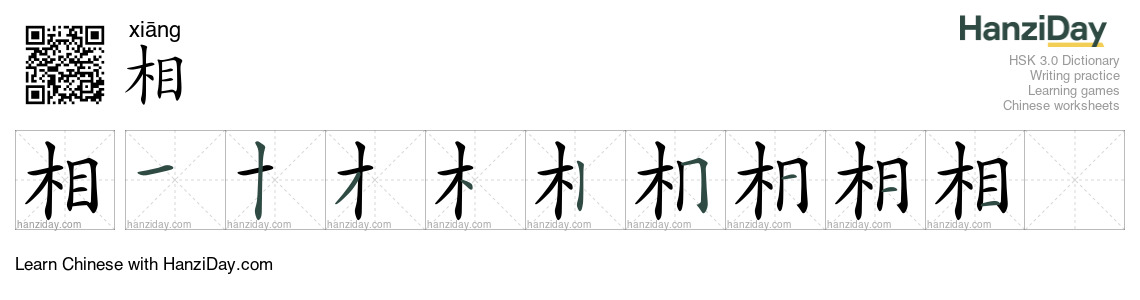
Strokes count
9
Words with 相 45
Writing and worksheets
Stroke order
Games & Exercises 9
Find Hanzi
Find Hanzi is a playful exercise for learning Chinese. Spot characters, boost attention, download PDF, and enjoy studying Chinese through games!
Find Radical
Practice Chinese radicals online: choose the Hanzi containing the target component, use optional pinyin hints, and create printable PDF exercises.
Tone Trainer
Learn Mandarin tones online with the Chinese Tone Trainer. Practice tone recognition, pronunciation, and exercises for beginners and advanced learners.
Hanzi Connect
Match Hanzi with pinyin or identify words by sound. Use your own vocabulary or HSK 3.0/YCT levels. Play online after sign-in; printable PDFs with answers are for PRO.
Lost Stroke
Play online: find the missing stroke or radical, restore Chinese characters in order, and create printable PDF worksheets with pinyin and answers.
Calligraphy
Create calligraphy and custom Chinese character coloring pages with pinyin, stroke order, outline styles, and writing grids. Download a print-ready PDF for class or home.
Memo
Flip cards to match Chinese characters or pair Hanzi with Pinyin. Build a custom HSK 3.0 or YCT deck, play online, and create printable PDF cards.
Sudoku
Play Hanzi Sudoku online with 4×4, 6×6, or 9×9 grids, four difficulty levels, custom characters, and HSK 3.0/YCT sets. Create printable PDFs with answers.
Writing trainer
Practice Chinese character writing online with correct stroke order, outlines, a 3–2–1 preview, mistake-based hints, pinyin, and focused Hanzi review.







Examples of use 24
互
相
(adv.) each other
刮
目
相
看
(idiom.) have a completely new appraisal of somebody
相
遇
(v.) to come across, to meet each other (without planning ahead of time)
我
本
来
以
为
这
次
做
的
菜
不
好
吃
,
相
反
,
大
家
竟
然
都
吃
完
了
。
I thought the food I cooked this time wasn't delicious, on the contrary, everyone actually finished eating it.
有
人
迫
不
及
待
地
想
探
究
其
真
相
。
Some people can't wait to explore the truth.
我
不
相
信
她
没
有
钱
,
相
反
,
我
觉
得
她
是
全
班
最
有
钱
的
人
。
I don't believe she has no money. On the contrary, I think she is the richest person in the class.
我
不
相
信
他
,
我
觉
得
他
不
可
信
。
I don't trust him. I don't think he can be trusted.
“
大
伙
儿
要
和
睦
相
处
,
对
人
要
宽
容
。
”
"Everyone should live in harmony and be tolerant of people."
那
个
骗
子
对
你
说
的
都
是
假
话
,
你
可
千
万
别
相
信
啊
!
What that liar told you is a lie. Don't believe it!
这
里
的
景
色
太
美
了
,
我
来
照
张
相
。
The scenery here is so beautiful. Let me take a picture.
他
是
一
个
很
自
信
的
人
,
相
信
自
己
可
以
做
到
。
He is a very confident person and believes he can do it.
女
儿
却
是
一
脸
的
疑
惑
,
反
问
道
:
“
你
们
不
是
也
有
时
候
说
,
哪
个
朋
友
好
相
处
,
哪
个
朋
友
很
自
私
吗
?
The daughter was puzzled and asked, "don't you sometimes say which friend is easy to get along with and which friend is selfish?
世
界
上
没
有
完
全
相
同
的
叶
子
。
There are no completely identical leaves in the world.
节
约
和
浪
费
这
两
个
词
的
意
思
是
相
反
的
。
The words economy and waste have opposite meanings.
他
们
走
的
方
向
正
好
是
相
反
的
:
一
个
向
东
,
一
个
向
西
。
They went in exactly opposite directions: one went east and the other went west.
例
如
,
做
节
目
时
,
与
开
幕
式
相
比
,
我
们
宁
可
把
更
多
的
精
力
集
中
在
闭
幕
式
上
,
这
样
可
以
加
强
观
众
对
节
目
的
印
象
。
For example, when doing a program, we would rather focus more on the closing ceremony than the opening ceremony, which can enhance the audience's impression of the program.
要
相
信
人
民
的
力
量
。
Believe in the strength of the people.
当
消
费
者
走
到
相
应
货
架
时
,
仪
器
会
发
出
提
示
音
,
以
免
消
费
者
错
过
商
品
。
When the consumer walks to the corresponding shelf, the instrument will sound a prompt to avoid the consumer missing the goods.
我
相
信
老
师
,
也
相
信
自
己
!
I believe in teachers and myself!
相
亲
blind date | arranged interview to evaluate a proposed marriage partner (Taiwan pr. [xiang4 qin1]) | to be deeply attached to each other
风
雨
相
伴
accompany each other whether wind or rain
相
救
come to (sb.'s) rescue; save (somebody) from danger
心
手
相
连
with one's hands and heart closely united
永
不
相
忘
will never forget each other
Learn 相 (xiāng) in context
相 appears here with its available localized meaning and tone-marked pinyin xiāng. Listen to the pronunciation and review any examples, illustrations, or lexical links shown for this entry.
Use the sections available on this page to compare characters, components, radicals, related words, matching pronunciation, synonyms, or antonyms. HanziDay shows only the information supported by this entry.
Practice the stroke order for 相
Use the stroke animation to follow the writing order, then practice the sequence with the interactive writing tool. After signing in, you can also create a printable worksheet from this entry within your current allowance.