


惑
Learn 感 — HSK 3.0 Level 4
感
TOP-500
Frequency
The ranking is based on data from open sources.
HSK 3.0 · Level 4
Translation
- (v.) to feel
- (char.) sense, feeling; move, touch, affect; to be grateful, to thank; to sensitize; (TCM) to be affected by or contract wind-cold
Radical
Simplified
感
Traditional
感
Strokes count
13

Words with 感 31
Same pronunciation 8
Similar pronunciation 28
Writing and worksheets
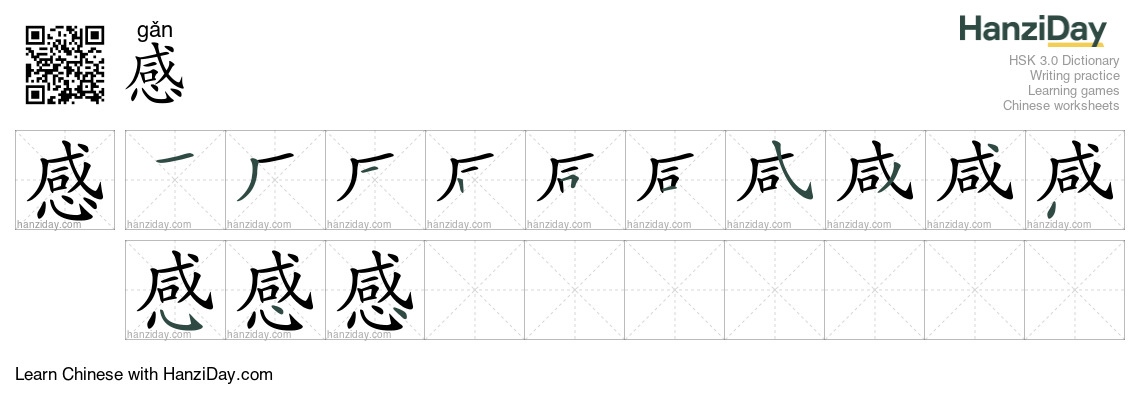
Stroke order
Games & Exercises 9
Find Hanzi
Find Hanzi is a playful exercise for learning Chinese. Spot characters, boost attention, download PDF, and enjoy studying Chinese through games!
Find Radical
Practice Chinese radicals online: choose the Hanzi containing the target component, use optional pinyin hints, and create printable PDF exercises.
Tone Trainer
Learn Mandarin tones online with the Chinese Tone Trainer. Practice tone recognition, pronunciation, and exercises for beginners and advanced learners.
Hanzi Connect
Match Hanzi with pinyin or identify words by sound. Use your own vocabulary or HSK 3.0/YCT levels. Play online after sign-in; printable PDFs with answers are for PRO.
Lost Stroke
Play online: find the missing stroke or radical, restore Chinese characters in order, and create printable PDF worksheets with pinyin and answers.
Calligraphy
Create calligraphy and custom Chinese character coloring pages with pinyin, stroke order, outline styles, and writing grids. Download a print-ready PDF for class or home.
Memo
Flip cards to match Chinese characters or pair Hanzi with Pinyin. Build a custom HSK 3.0 or YCT deck, play online, and create printable PDF cards.
Sudoku
Play Hanzi Sudoku online with 4×4, 6×6, or 9×9 grids, four difficulty levels, custom characters, and HSK 3.0/YCT sets. Create printable PDFs with answers.
Writing trainer
Practice Chinese character writing online with correct stroke order, outlines, a 3–2–1 preview, mistake-based hints, pinyin, and focused Hanzi review.









Examples of use 24
如
果
突
然
被
闹
钟
叫
醒
,
将
在
心
理
上
使
人
产
生
心
慌
、
情
绪
低
落
、
感
觉
没
睡
醒
等
不
适
。
If you are suddenly woken up by the alarm clock, it will make people feel flustered, depressed and uncomfortable.
回
家
的
快
乐
和
被
亲
情
包
围
的
幸
福
感
染
了
我
,
我
也
恨
不
得
马
上
飞
到
父
母
跟
前
,
与
他
们
团
圆
。
The happiness of going home and being surrounded by family infected me, and I couldn't wait to fly to my parents immediately to reunite with them.
我
对
法
律
很
感
兴
趣
,
长
大
后
我
想
做
一
名
律
师
。
I am very interested in law, and I want to be a lawyer when I grow up.
我
们
的
大
脑
究
竟
如
何
感
知
抽
象
艺
术
,
是
一
个
有
趣
的
话
题
。
How our brains perceive abstract art is an interesting topic.
我
对
中
国
的
文
化
和
语
言
很
感
兴
趣
。
I am very interested in Chinese culture and language.
我
能
当
上
经
理
,
得
感
谢
你
们
的
支
持
。
I can become a manager thanks to your support.
京
剧
是
一
种
优
美
的
传
统
艺
术
,
很
多
外
国
留
学
生
对
它
十
分
感
兴
趣
。
Peking Opera is a beautiful traditional art, and many foreign students are very interested in it.
你
今
天
感
觉
怎
么
样
?
好
一
点
了
吗
?
How are you feeling today? Is it better?
一
部
电
影
,
开
始
虽
然
剧
情
平
平
常
常
,
如
果
最
后
半
个
小
时
能
使
我
们
感
动
,
我
们
依
然
会
向
别
人
推
荐
它
。
Although the plot of a movie is ordinary at first, if the last half hour can move us, we will still recommend it to others.
你
们
都
对
音
乐
会
感
兴
趣
?
Are you all interested in concerts?
要
对
付
感
冒
,
你
得
好
好
休
息
,
多
喝
热
水
。
To deal with a cold, you have to have a good rest and drink plenty of hot water.
我
一
个
人
在
家
,
经
常
感
到
孤
单
。
I am at home alone and often feel lonely.
这
篇
小
说
让
我
很
感
动
。
This novel really moved me.
非
常
感
谢
你
请
我
去
你
家
过
春
节
。
Thank you very much for inviting me to your home for Spring Festival.
我
们
全
家
都
对
旅
游
感
兴
趣
。
My whole family is interested in traveling.
我
对
物
理
越
来
越
感
兴
趣
了
。
I am getting more interested in Physics.
我
感
冒
了
,
嗓
子
坏
了
,
说
不
出
话
了
。
I have a cold, my throat is broken, and I can't speak.
你
对
中
国
书
画
感
兴
趣
吗
?
Are you interested in Chinese painting and calligraphy?
它
那
丰
富
的
色
彩
、
微
甜
的
口
感
,
至
今
仍
让
我
十
分
想
念
。
Its rich colors and slightly sweet taste still make me miss it very much.
你
对
什
么
感
兴
趣
?
What are you interested in?
感
人
touching; moving
我
对
中
国
十
分
感
兴
趣
。
I am very interested in China.
听
到
这
个
消
息
我
深
感
宽
慰
。
Upon hearing this news, I felt deeply relieved.
感
到
快
乐
feel happy
Learn 感 (gǎn) in context
感 appears here with its available localized meaning and tone-marked pinyin gǎn. Listen to the pronunciation and review any examples, illustrations, or lexical links shown for this entry.
Use the sections available on this page to compare characters, components, radicals, related words, matching pronunciation, synonyms, or antonyms. HanziDay shows only the information supported by this entry.
感 in HSK 3.0 Level 4
HanziDay organizes HSK 3.0 vocabulary around the new three-stage, nine-level framework. This entry belongs to Level 4; open the level list to study it alongside other vocabulary from the same stage.
Practice the stroke order for 感
Use the stroke animation to follow the writing order, then practice the sequence with the interactive writing tool. After signing in, you can also create a printable worksheet from this entry within your current allowance.