


常 : Often, Normal, or Constant
常 (cháng) can mean “often or frequently, or normal, common, fixed, constant, or regular” in Chinese.
常
TOP-500
Frequency
The ranking is based on data from open sources.
HSK 3.0 · Level 3
Translation
- (adv.) often
- (adj.) normal, common, fixed
- (char.) law, order, discipline
Radical
Simplified
常
Traditional
常
Strokes count
11

Words with 常 24
Same pronunciation 12
Similar pronunciation 25
Synonyms 11
Antonyms 10
Writing and worksheets
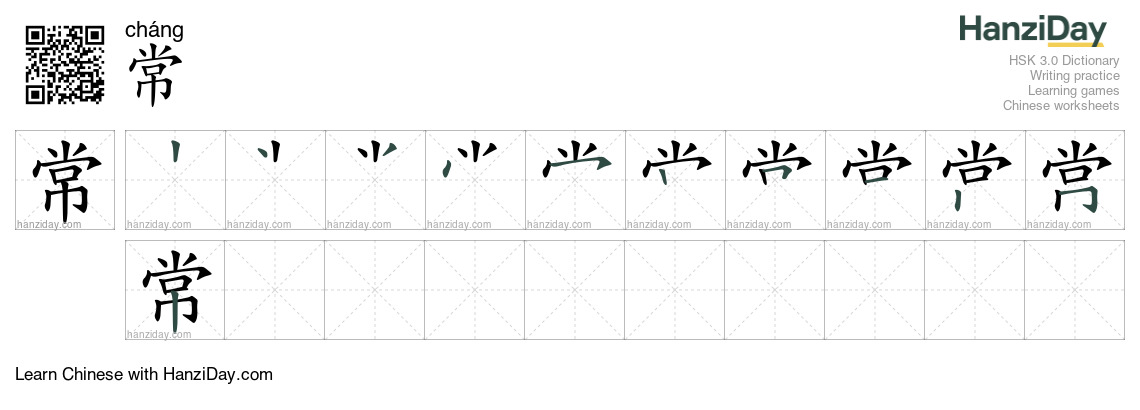
Stroke order
Games & Exercises 9
Find Hanzi
Find Hanzi is a playful exercise for learning Chinese. Spot characters, boost attention, download PDF, and enjoy studying Chinese through games!
Find Radical
Practice Chinese radicals online: choose the Hanzi containing the target component, use optional pinyin hints, and create printable PDF exercises.
Tone Trainer
Learn Mandarin tones online with the Chinese Tone Trainer. Practice tone recognition, pronunciation, and exercises for beginners and advanced learners.
Hanzi Connect
Match Hanzi with pinyin or identify words by sound. Use your own vocabulary or HSK 3.0/YCT levels. Play online after sign-in; printable PDFs with answers are for PRO.
Lost Stroke
Play online: find the missing stroke or radical, restore Chinese characters in order, and create printable PDF worksheets with pinyin and answers.
Calligraphy
Create calligraphy and custom Chinese character coloring pages with pinyin, stroke order, outline styles, and writing grids. Download a print-ready PDF for class or home.
Memo
Flip cards to match Chinese characters or pair Hanzi with Pinyin. Build a custom HSK 3.0 or YCT deck, play online, and create printable PDF cards.
Sudoku
Play Hanzi Sudoku online with 4×4, 6×6, or 9×9 grids, four difficulty levels, custom characters, and HSK 3.0/YCT sets. Create printable PDFs with answers.
Writing trainer
Practice Chinese character writing online with correct stroke order, outlines, a 3–2–1 preview, mistake-based hints, pinyin, and focused Hanzi review.








Examples of use 45
经
常
(adj./adv.) everyday, daily; often, frequently, constantly
所
以
,
鸟
儿
非
常
爱
惜
羽
毛
,
每
天
都
会
花
很
长
时
间
来
保
养
自
己
的
“
羽
衣
”
。
Therefore, birds cherish feathers very much and spend a long time maintaining their "feather clothes" every day.
爷
爷
虽
然
八
十
多
了
,
可
是
他
因
为
常
常
运
动
,
早
睡
早
起
,
身
子
可
好
呢
!
Although Grandpa is over 80 years old, he goes to bed early and gets up early because he often exercises.
西
安
真
是
个
好
地
方
,
不
仅
风
景
很
美
,
而
且
人
也
非
常
热
情
。
Xi'an truly is a good place; not only is the scenery beautiful, the people are also extremely enthusiastic.
我
不
常
游
泳
,
常
常
跑
步
。
I don't swim very often, I often run.
我
的
手
机
是
正
常
的
啊
,
为
什
么
突
然
不
能
打
电
话
了
?
是
不
是
没
有
交
电
话
费
?
My mobile phone is fine. Why can't I make a phone call suddenly? Did you not pay the phone bill?
我
们
学
校
餐
厅
的
饭
菜
非
常
好
吃
。
The food in our school dining room is very delicious.
奶
茶
非
常
好
喝
。
Milk tea is very delicious.
姐
姐
常
常
喝
奶
茶
。
My sister often drinks milk tea.
肉
片
炒
蛋
非
常
好
吃
!
Scrambled eggs with meat slices are very delicious!
星
期
五
中
午
老
师
常
常
吃
炒
面
。
The teacher often eats fried noodles at noon on Friday.
这
家
理
发
店
的
理
发
师
是
很
有
名
的
,
他
们
常
常
给
明
星
理
发
。
The barbers in this barber shop are very famous. They often cut stars' hair.
这
篇
文
章
的
作
者
是
一
个
非
常
著
名
的
作
家
。
The author of this article is a very famous writer.
中
国
是
一
个
非
常
安
全
的
国
家
。
China is a very safe country.
他
是
一
个
非
常
有
责
任
心
的
人
。
He is a person with a very responsible heart.
对
中
国
人
来
说
,
春
节
是
一
个
非
常
重
要
的
节
日
。
Spring Festival is a very important festival for Chinese people.
爷
爷
常
常
用
毛
笔
给
我
写
信
,
爷
爷
的
毛
笔
字
写
得
好
极
了
!
Grandpa often writes to me with a brush, and his calligraphy is excellent!
他
有
很
多
有
意
思
的
想
法
,
所
以
写
作
非
常
好
。
He has many interesting ideas, so his writing is very good.
小
时
候
我
特
别
喜
欢
看
天
上
的
云
,
我
觉
得
有
的
云
像
花
儿
,
有
的
云
像
小
狗
,
非
常
有
意
思
。
When I was a child, I especially liked to look at the clouds in the sky. I think some clouds are like flowers and some clouds are like puppies, which is very interesting.
我
非
常
信
任
我
的
朋
友
。
I trust my friends very much.
他
现
在
已
经
是
一
个
非
常
著
名
的
歌
手
了
。
He is a very famous singer now.
工
作
的
时
候
,
经
常
写
几
十
个
字
,
就
到
院
中
去
转
转
,
看
看
这
棵
,
看
看
那
朵
。
When he works, he often writes dozens of words, then goes around the courtyard and looks at this tree and that flower.
虽
然
中
文
写
字
有
点
难
,
但
是
汉
字
非
常
有
趣
!
Although writing in Chinese is a bit difficult, Chinese characters are very interesting!
那
个
明
星
这
两
年
很
火
,
我
经
常
在
电
视
上
看
到
他
。
That celebrity has been very popular in the past two years. I often see him on TV.
最
近
这
部
电
影
非
常
火
,
你
还
没
看
过
吗
?
This movie is very popular recently. Haven't you seen it yet?
一
部
电
影
,
开
始
虽
然
剧
情
平
平
常
常
,
如
果
最
后
半
个
小
时
能
使
我
们
感
动
,
我
们
依
然
会
向
别
人
推
荐
它
。
Although the plot of a movie is ordinary at first, if the last half hour can move us, we will still recommend it to others.
正
常
来
说
,
他
每
周
三
都
会
去
图
书
馆
。
Normally, he goes to the library every Wednesday.
我
这
个
学
期
课
太
多
了
,
每
天
都
非
常
忙
。
I have too many classes this semester, and I am very busy every day.
我
一
个
人
在
家
,
经
常
感
到
孤
单
。
I am at home alone and often feel lonely.
最
近
几
年
,
我
们
国
家
发
展
得
非
常
好
。
In recent years, our country has developed very well.
姐
姐
打
排
球
打
得
很
好
,
她
在
学
校
放
学
后
常
常
上
排
球
课
。
My sister plays volleyball very well. She often has volleyball lessons after school.
今
天
天
气
非
常
好
。
The weather is very fine today.
他
非
常
想
念
老
家
和
亲
人
。
He misses his hometown and relatives very much.
由
于
连
年
的
战
争
,
家
里
生
活
非
常
困
难
。
Life at home is very difficult because of years of war.
非
常
感
谢
你
请
我
去
你
家
过
春
节
。
Thank you very much for inviting me to your home for Spring Festival.
九
月
中
旬
的
一
天
早
晨
,
詹
森
照
常
提
前
出
门
赶
在
早
高
峰
之
前
去
交
通
部
。
One morning in mid-September, Zhan Sen went out early as usual to go to the Ministry of Transportation before the morning rush hour.
你
初
学
棋
,
输
是
正
常
的
。
It is normal for you to lose when you are a beginner in chess.
我
经
常
去
公
园
玩
滑
板
。
I often go skateboarding in the park.
她
经
常
去
健
身
房
运
动
。
She often goes to the gym to exercise.
她
早
睡
早
起
,
经
常
锻
炼
,
生
活
方
式
非
常
健
康
。
She goes to bed early and gets up early, exercises regularly, and has a very healthy lifestyle.
我
非
常
喜
欢
中
餐
。
I like Chinese food very much.
我
无
法
理
解
父
母
的
反
常
。
I can't understand my parents' abnormality.
在
中
国
,
结
婚
时
常
用
红
色
,
因
为
它
代
表
喜
庆
。
In China, red is often used when getting married, because it represents happiness.
红
烧
肉
非
常
香
。
Braised pork is very fragrant.
他
经
常
加
班
。
He often works overtime.
Learn 常 (cháng) in context
常 appears here with its available localized meaning and tone-marked pinyin cháng. Listen to the pronunciation and review any examples, illustrations, or lexical links shown for this entry.
Use the sections available on this page to compare characters, components, radicals, related words, matching pronunciation, synonyms, or antonyms. HanziDay shows only the information supported by this entry.
常 in HSK 3.0 Level 3
HanziDay organizes HSK 3.0 vocabulary around the new three-stage, nine-level framework. This entry belongs to Level 3; open the level list to study it alongside other vocabulary from the same stage.
Practice the stroke order for 常
Use the stroke animation to follow the writing order, then practice the sequence with the interactive writing tool. After signing in, you can also create a printable worksheet from this entry within your current allowance.