


锐
Learn 说 — HSK 3.0 Level 1
说
TOP-50
Frequency
The ranking is based on data from open sources.
HSK 3.0 · Level 1
Translation
- (v.) speak, say; explain; criticize; try to influence sb. to do...; refer to; perform
- (char.) persuade, canvass
- (char.) teaching, theory, doctrine
Radical
Simplified
说
Traditional
說
Strokes count
9

Words with 说 26
Similar pronunciation 12
Synonyms 39
Writing and worksheets
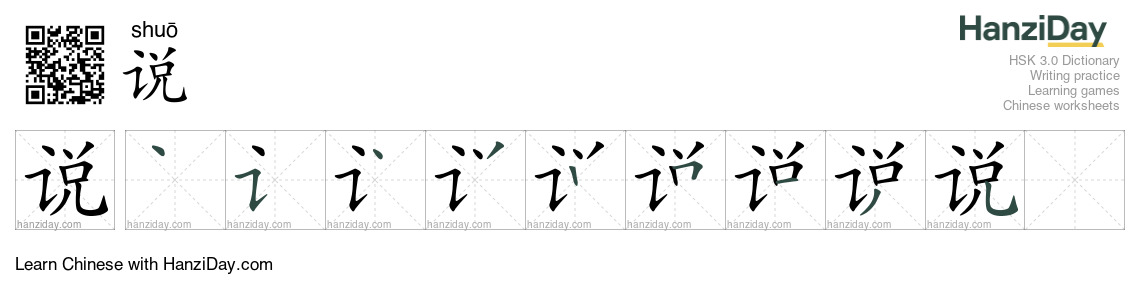
Stroke order
Games & Exercises 9
Find Hanzi
Find Hanzi is a playful exercise for learning Chinese. Spot characters, boost attention, download PDF, and enjoy studying Chinese through games!
Find Radical
Practice Chinese radicals online: choose the Hanzi containing the target component, use optional pinyin hints, and create printable PDF exercises.
Tone Trainer
Learn Mandarin tones online with the Chinese Tone Trainer. Practice tone recognition, pronunciation, and exercises for beginners and advanced learners.
Hanzi Connect
Match Hanzi with pinyin or identify words by sound. Use your own vocabulary or HSK 3.0/YCT levels. Play online after sign-in; printable PDFs with answers are for PRO.
Lost Stroke
Play online: find the missing stroke or radical, restore Chinese characters in order, and create printable PDF worksheets with pinyin and answers.
Calligraphy
Create calligraphy and custom Chinese character coloring pages with pinyin, stroke order, outline styles, and writing grids. Download a print-ready PDF for class or home.
Memo
Flip cards to match Chinese characters or pair Hanzi with Pinyin. Build a custom HSK 3.0 or YCT deck, play online, and create printable PDF cards.
Sudoku
Play Hanzi Sudoku online with 4×4, 6×6, or 9×9 grids, four difficulty levels, custom characters, and HSK 3.0/YCT sets. Create printable PDFs with answers.
Writing trainer
Practice Chinese character writing online with correct stroke order, outlines, a 3–2–1 preview, mistake-based hints, pinyin, and focused Hanzi review.







Examples of use 89
说
情
(sep-v.) intercede for someone, plead for mercy for someone
她
骄
傲
地
说
:
尽
管
我
的
家
很
小
,
但
这
里
是
全
世
界
最
温
暖
的
地
方
,
因
为
有
家
人
的
爱
。
She proudly said: Although my home is small, it is the warmest place in the world because of the love of my family.
据
说
,
曾
经
有
一
位
很
有
个
性
、
极
爱
冒
险
的
大
导
演
到
南
美
丛
林
拍
有
关
古
代
印
加
文
明
的
纪
录
片
。
It is said that there was once a great director with great personality and adventure who went to the jungles of South America to make a documentary about ancient Inca civilization.
今
天
是
五
四
青
年
节
。
我
听
说
今
天
十
四
到
二
十
八
岁
的
青
年
放
半
天
假
,
今
天
你
有
假
吗
?
Today is May Fourth Youth Day. I heard that young people between the ages of fourteen and twenty-eight have half a day off today. Do you have a holiday today?
医
生
说
我
不
能
吃
米
饭
。
The doctor said I can't eat rice.
一
年
前
,
我
第
一
次
来
到
中
国
,
当
时
我
一
句
汉
语
也
不
会
说
。
A year ago, when I first came to China, I couldn't even speak a word of Mandarin.
你
不
是
说
晚
上
睡
不
着
觉
吗
?
You're not saying you can't sleep at night, are you?
你
不
是
说
晚
上
睡
不
着
觉
吗
?
You're not saying you don't sleep at night, are you?
我
做
错
了
事
,
老
师
警
告
我
说
,
以
后
一
定
不
可
以
再
这
样
了
。
I did something wrong, and the teacher warned me that I must not do it again in the future.
你
要
好
好
跟
女
儿
说
,
不
要
动
手
!
You should tell your daughter well, don't do it!
请
不
要
说
话
!
Please don't talk!
哪
怕
你
不
说
,
大
家
也
会
知
道
。
Even if you don't say it, everyone will know.
不
好
意
思
,
刚
才
我
接
了
个
电
话
,
请
你
继
续
说
。
Sorry, I got a call just now. Please go on.
不
好
意
思
,
你
说
什
么
?
Excuse me, what did you say?
因
为
他
爸
妈
是
不
同
国
家
的
人
,
所
以
他
会
说
两
种
不
同
的
语
言
Because his parents are from different countries, he can speak two different languages
你
怎
么
不
停
地
说
话
,
请
安
静
一
点
儿
。
Why don't you keep talking? Please be quiet.
一
个
人
的
信
用
很
重
要
,
你
不
可
以
说
到
做
不
到
。
A person's credit is very important, you can't say you can't do it.
奶
奶
不
让
我
说
话
。
Grandma won't let me talk.
不
管
你
说
错
多
少
次
汉
语
,
你
还
是
要
坚
持
多
说
,
因
为
这
是
学
习
口
语
的
正
确
方
法
。
No matter how many times you make mistakes in Chinese, you should persist on speaking, because this is the correct way to learn spoken Chinese.
我
会
说
汉
语
,
可
是
,
我
不
会
写
汉
字
。
I can speak Chinese, but I can't write Chinese characters.
在
吃
药
之
前
,
应
该
好
好
读
一
下
盒
子
里
的
说
明
。
You should read the instructions in the box carefully before taking the medicine.
猴
子
们
似
乎
只
弄
懂
了
主
人
前
面
说
的
一
个
“
三
”
,
觉
得
自
己
吃
了
亏
。
Monkeys seem to have only understood a "three" mentioned by their masters and feel that they have suffered losses.
听
说
有
好
几
家
大
公
司
会
来
招
聘
呢
。
I heard that several big companies will come to recruit.
我
很
想
去
你
们
学
校
参
观
一
下
图
书
馆
,
听
说
那
儿
又
大
又
漂
亮
。
I really want to visit the library in your school. I heard it is big and beautiful.
老
师
说
我
这
个
学
期
进
步
很
大
。
The teacher said that I have made great progress this term.
大
象
愤
怒
地
说
:
“
你
这
个
愚
蠢
的
家
伙
。
”
The elephant said angrily, "you stupid fellow."
听
说
您
孙
子
已
经
读
大
学
了
,
时
间
过
得
真
快
啊
!
I heard that your grandson has gone to college. How time flies!
当
他
的
琴
声
雄
壮
豪
迈
的
时
候
,
打
柴
人
说
:
“
这
旋
律
表
达
了
高
山
的
雄
伟
壮
观
。
When his music was majestic and heroic, the woodcutter said, "This melody expresses the majesty of the mountains.
以
上
就
是
我
全
部
想
要
说
的
了
。
That's all I want to say.
我
们
说
的
四
季
,
一
般
指
春
夏
秋
冬
。
When we talk about the four seasons, we generally refer to spring, summer, autumn and winter.
他
能
把
什
么
事
都
说
得
让
人
很
明
白
,
他
的
口
才
很
好
。
He can make everything clear, and his eloquence is very good.
那
个
骗
子
对
你
说
的
都
是
假
话
,
你
可
千
万
别
相
信
啊
!
What that liar told you is a lie. Don't believe it!
我
的
朋
友
是
法
国
人
,
他
会
说
一
点
儿
中
文
。
My friend is French. He can speak a little Chinese.
我
觉
得
你
说
的
很
有
道
理
。
I think what you said is very reasonable.
我
的
阿
姨
会
说
三
门
外
语
。
My aunt can speak three foreign languages.
我
的
阿
姨
会
说
三
门
外
语
:
英
语
,
法
语
,
和
日
语
。
My aunt can speak three foreign languages: English, French and Japanese.
你
的
中
文
说
得
真
好
!
You speak Chinese really well!
奶
奶
说
,
现
在
的
生
活
比
以
前
的
生
活
好
多
了
。
Grandma said that life is much better now than before.
听
见
他
这
么
说
自
己
,
她
的
心
都
凉
了
。
Her heart was cold when she heard him say so about herself.
对
中
国
人
来
说
,
春
节
是
一
个
非
常
重
要
的
节
日
。
Spring Festival is a very important festival for Chinese people.
他
说
话
冷
冰
冰
的
。
He speaks coldly.
女
儿
拿
起
礼
物
开
心
地
说
:
妈
妈
,
这
是
送
你
的
。
My daughter picked up the gift and said happily, Mom, this is for you.
女
儿
却
是
一
脸
的
疑
惑
,
反
问
道
:
“
你
们
不
是
也
有
时
候
说
,
哪
个
朋
友
好
相
处
,
哪
个
朋
友
很
自
私
吗
?
The daughter was puzzled and asked, "don't you sometimes say which friend is easy to get along with and which friend is selfish?
我
们
应
该
以
那
些
敢
说
真
话
的
人
为
镜
子
,
这
样
才
能
及
时
发
现
自
己
的
缺
点
。
We should take those who dare to tell the truth as mirrors, so as to find our shortcomings in time.
我
怎
么
才
能
证
明
我
说
的
都
是
真
的
呢
?
How can I prove that what I said is true?
请
用
汉
语
说
你
的
名
字
。
Please say your name in Chinese.
我
会
说
一
点
儿
汉
语
。
I can speak a little Chinese.
我
觉
得
又
要
学
说
又
要
学
写
有
点
儿
难
。
I find it a bit difficult to learn to write as well as to learn to learn.
我
会
说
一
点
汉
语
。
I can speak a little Chinese.
这
部
中
国
电
影
对
我
来
说
稍
微
有
点
儿
难
。
This Chinese film is a little difficult for me.
你
在
中
国
,
至
少
要
会
说
一
点
儿
中
文
。
When you are in China, you should speak at least a little Chinese.
正
常
来
说
,
他
每
周
三
都
会
去
图
书
馆
。
Normally, he goes to the library every Wednesday.
我
有
三
个
外
国
朋
友
,
他
们
都
会
说
中
文
。
I have three foreign friends, all of whom speak Chinese.
听
说
他
从
四
岁
就
开
始
学
打
羽
毛
球
,
已
经
练
了
二
十
多
年
了
。
It is said that he has been learning to play badminton since he was four years old and has been practicing it for more than 20 years.
我
有
一
个
知
心
朋
友
,
我
什
么
都
跟
她
说
。
I have a bosom friend, and I tell her everything.
三
个
小
时
快
乐
减
一
个
小
时
无
聊
等
于
两
个
小
时
快
乐
,
也
就
是
说
,
我
愉
快
地
度
过
了
两
个
小
时
。
Three hours of happiness minus one hour of boredom equals two hours of happiness, that is to say, I spent two hours happily.
他
说
汉
语
说
得
很
流
利
。
He speaks Mandarin very fluently.
请
说
汉
语
。
Please speak Mandarin.
天
气
预
报
说
明
年
和
后
年
会
更
冷
。
The weather forecast says it will be colder next year and the following year.
这
篇
小
说
让
我
很
感
动
。
This novel really moved me.
我
觉
得
会
说
中
文
很
酷
。
I think it's cool to speak Chinese.
你
会
说
什
么
外
语
?
What foreign language can you speak?
你
会
说
几
门
外
语
?
How many foreign languages can you speak?
你
会
说
几
个
语
言
?
How many languages can you speak?
我
会
说
日
语
。
I can speak Japanese.
我
说
今
天
会
下
雨
,
果
然
下
雨
了
。
I said it would rain today, and it did.
我
是
上
海
人
,
会
说
上
海
话
。
I am from Shanghai and can speak Shanghai dialect.
听
说
新
开
了
一
家
海
洋
公
园
,
我
们
去
看
看
,
怎
么
样
?
I heard that a new ocean park has been opened. How about we go and have a look?
他
说
女
儿
念
了
硕
士
,
有
学
位
,
在
一
家
一
流
的
公
司
上
班
。
He said that his daughter has a master's degree and works in a first-class company.
说
干
就
干
,
索
性
这
礼
拜
就
开
始
。
Just do it, just start this week.
别
说
话
了
,
开
始
上
课
了
。
Stop talking and start the class.
你
有
了
一
千
三
百
块
再
说
吧
。
Let's talk about it when you have 1,300 RMB.
母
亲
却
说
,
近
来
他
们
比
较
忙
。
Mother said that they have been busy recently.
概
括
来
说
,
就
是
以
方
便
为
原
则
。
To sum up, it is based on the principle of convenience.
老
师
说
从
这
里
上
台
,
从
那
里
下
台
。
The teacher said to go on stage from here and step down from there.
我
感
冒
了
,
嗓
子
坏
了
,
说
不
出
话
了
。
I have a cold, my throat is broken, and I can't speak.
我
跟
爸
爸
妈
妈
说
明
了
这
件
事
。
I explained this matter to mum and dad.↵
请
你
详
细
地
跟
我
说
说
发
生
了
什
么
。
Please tell me in detail what happened.
你
听
说
过
“
中
国
制
造
”
吗
?
Have you ever heard of "Made in China"?
他
搓
着
手
,
迟
疑
地
说
:
“
有
件
事
想
拜
托
你
。
”
He rubbed his hands and said hesitantly, "I have something to ask you."
你
越
说
他
越
难
过
。
The more you talk about it, the more sad he is.
请
说
中
文
。
Please speak Chinese.
同
学
们
喜
欢
听
说
唱
音
乐
。
Students like to listen to rap music.
他
说
日
语
。
He speaks Japanese.
他
们
可
以
一
边
说
话
,
一
边
做
运
动
。
They can talk, while do exercise.↵
说
书
folk art consisting of storytelling to music
你
说
得
非
常
对
。
What you've said is totally right.
我
说
了
一
个
小
时
,
但
是
仍
然
没
有
人
理
解
。
I've been talking for an hour, but still nobody understood me.
可
真
是
没
的
说
呀
(term of complimenting) there is really nothing to criticize about, it's really almost perfect
Learn 说 (shuō) in context
说 appears here with its available localized meaning and tone-marked pinyin shuō. Listen to the pronunciation and review any examples, illustrations, or lexical links shown for this entry.
Use the sections available on this page to compare characters, components, radicals, related words, matching pronunciation, synonyms, or antonyms. HanziDay shows only the information supported by this entry.
说 in HSK 3.0 Level 1
HanziDay organizes HSK 3.0 vocabulary around the new three-stage, nine-level framework. This entry belongs to Level 1; open the level list to study it alongside other vocabulary from the same stage.
Practice the stroke order for 说
Use the stroke animation to follow the writing order, then practice the sequence with the interactive writing tool. After signing in, you can also create a printable worksheet from this entry within your current allowance.