


年
车 : Vehicle, Cart, or Wheeled Machine
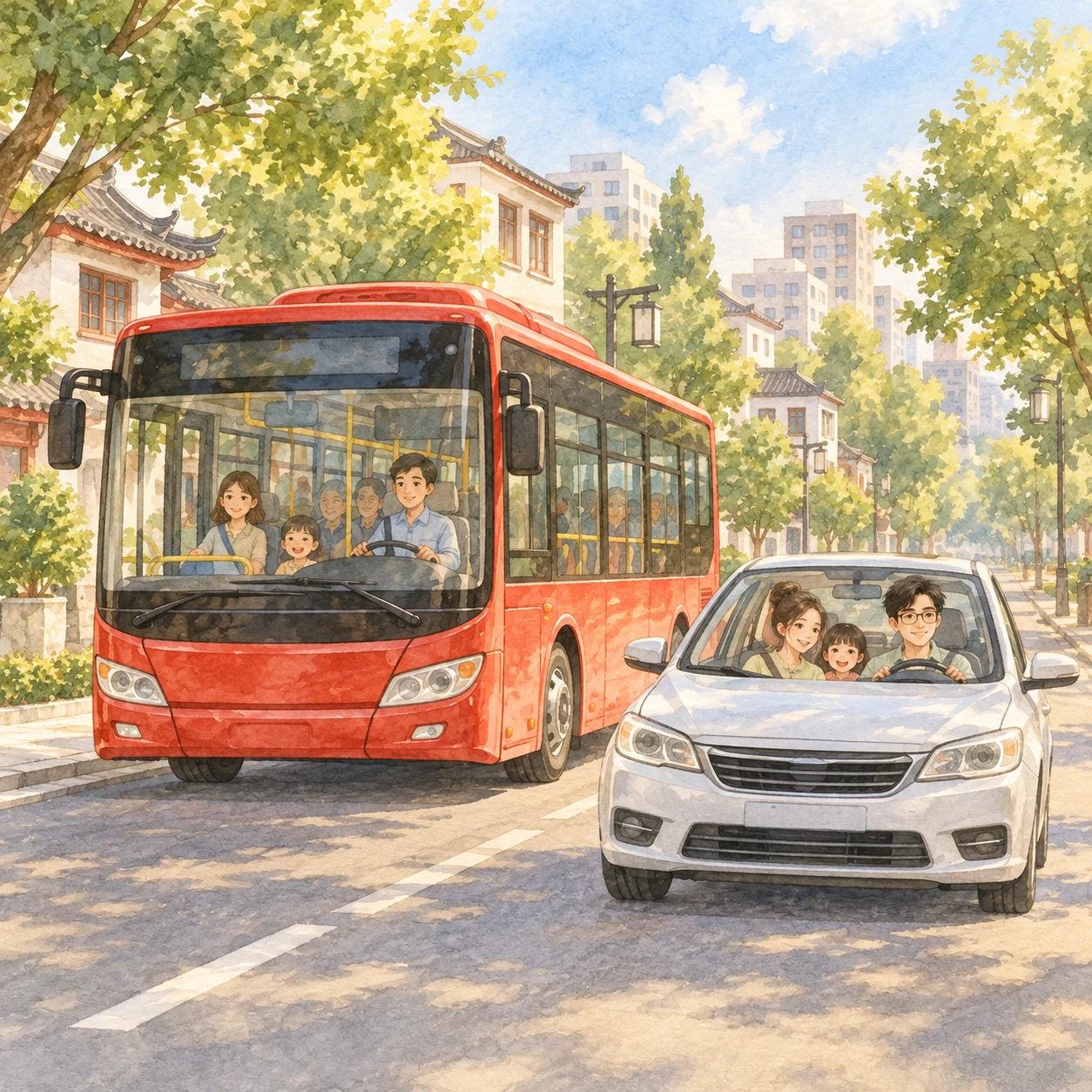
车 (chē) can mean “a car, bus, cart, vehicle, or machine with wheels or a rotating shaft” in Chinese.
车
TOP-500
Frequency
The ranking is based on data from open sources.
HSK 3.0 · Level 1
Translation
- (n.) car, bus, vehicle
- (n.) chariot (Chinese Chess)
- (radical.) vehicle
- (n.) wheeled instrument, machine
Simplified
车
Traditional
車
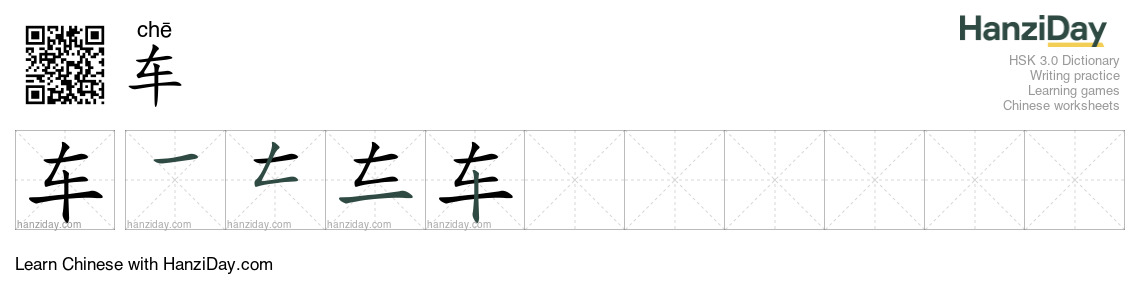
Strokes count
4
Words with 车 36
Same pronunciation 1
Similar pronunciation 9
Synonyms 3
Writing and worksheets
Stroke order
Games & Exercises 9
Find Hanzi
Find Hanzi is a playful exercise for learning Chinese. Spot characters, boost attention, download PDF, and enjoy studying Chinese through games!
Find Radical
Practice Chinese radicals online: choose the Hanzi containing the target component, use optional pinyin hints, and create printable PDF exercises.
Tone Trainer
Learn Mandarin tones online with the Chinese Tone Trainer. Practice tone recognition, pronunciation, and exercises for beginners and advanced learners.
Hanzi Connect
Match Hanzi with pinyin or identify words by sound. Use your own vocabulary or HSK 3.0/YCT levels. Play online after sign-in; printable PDFs with answers are for PRO.
Lost Stroke
Play online: find the missing stroke or radical, restore Chinese characters in order, and create printable PDF worksheets with pinyin and answers.
Calligraphy
Create calligraphy and custom Chinese character coloring pages with pinyin, stroke order, outline styles, and writing grids. Download a print-ready PDF for class or home.
Memo
Flip cards to match Chinese characters or pair Hanzi with Pinyin. Build a custom HSK 3.0 or YCT deck, play online, and create printable PDF cards.
Sudoku
Play Hanzi Sudoku online with 4×4, 6×6, or 9×9 grids, four difficulty levels, custom characters, and HSK 3.0/YCT sets. Create printable PDFs with answers.
Writing trainer
Practice Chinese character writing online with correct stroke order, outlines, a 3–2–1 preview, mistake-based hints, pinyin, and focused Hanzi review.






Examples of use 46
这
是
我
爸
爸
的
车
。
This is my father's car.
爸
爸
教
我
骑
车
,
开
始
的
时
候
我
很
紧
张
。
My father taught me to ride a bike. I was very nervous at first.
我
们
明
天
坐
火
车
去
北
京
。
We will go to Beijing by train tomorrow.
这
辆
车
是
从
日
本
进
口
的
。
This car is imported from Japan.
我
买
不
到
车
票
,
只
能
坐
船
回
家
了
。
I can't get a ticket, so I have to go home by boat.
不
要
在
路
口
玩
,
小
心
汽
车
!
Don't play at the intersection, watch out for cars!
事
实
证
明
这
只
是
我
们
美
好
的
主
观
愿
望
,
道
路
扩
建
的
速
度
远
远
跟
不
上
车
流
量
增
加
的
速
度
。
Facts have proved that this is just our good subjective wish, and the speed of road expansion is far behind the speed of traffic increase.
火
车
的
硬
卧
不
太
舒
服
。
The hard sleeper on the train is not very comfortable.
李
先
生
是
坐
出
租
车
去
饭
店
的
吗
?
Does Mr. Li go to the hotel by taxi?
一
边
开
车
一
边
打
电
话
很
危
险
。
It's dangerous to make a phone call while driving.
我
们
的
车
在
大
山
里
沿
着
公
路
盘
旋
而
行
。
Our car circled along the highway in the mountains.
这
是
去
首
都
机
场
的
班
车
吗
?
Is this the shuttle bus to Capital Airport?
您
想
买
的
玩
具
汽
车
是
什
么
样
子
的
?
What does the toy car that you want to buy look like?
我
怀
疑
是
他
把
我
的
自
行
车
骑
走
了
。
I suspect that he rode my bike away.
商
场
的
地
下
是
停
车
场
。
Underground the mall is a parking lot.
我
是
坐
公
共
汽
车
去
学
校
的
。
I go to school by bus.
我
想
是
那
辆
白
色
的
汽
车
引
起
了
交
通
事
故
。
I think it was the white car that caused the accident.
导
游
让
游
客
休
息
的
时
候
,
一
部
分
人
会
在
车
上
睡
觉
,
另
一
部
分
人
会
下
车
活
动
一
下
儿
。
When the tour guide gives tourists a rest, some people will sleep in the car, while others will get off the bus for a while.
他
开
车
的
速
度
很
快
。
The speed at which he drives is very fast.
请
问
,
这
里
附
近
有
停
车
的
地
方
吗
?
Excuse me, is there a parking place near here?
汽
车
是
造
成
空
气
污
染
的
重
要
原
因
之
一
。
Cars are one of the important causes of air pollution.
我
们
明
天
上
午
九
点
在
野
生
动
物
园
门
口
上
车
。
We'll take the bus at the gate of the safari park at nine tomorrow morning.
前
面
有
点
儿
堵
车
。
There is a traffic jam ahead.
汽
车
会
在
上
午
十
点
离
开
旅
馆
。
The bus will leave the hotel at ten in the morning.
车
子
开
得
慢
一
点
,
小
心
一
点
。
Drive slowly and carefully.
小
心
点
儿
,
别
撞
车
了
。
Be careful, don't crash.
马
路
上
有
很
多
车
。
There are many cars on the road.
这
条
马
路
上
车
很
多
。
There are many cars on this road.
翟
峰
和
妻
子
没
有
积
蓄
,
卖
房
卖
车
买
下
了
一
艘
二
手
船
,
翟
峰
叫
它
“
彩
虹
号
”
。
Zhai Feng and his wife had no savings, so they sold their houses and cars and bought a second-hand boat. Zhai Feng called it "Rainbow".
他
受
伤
时
,
一
个
人
在
山
上
,
好
在
后
来
救
护
车
来
了
,
他
得
救
了
。
When he was injured, he was alone in the mountains. Fortunately, the ambulance came and he was saved.
这
个
玩
具
火
车
真
好
玩
儿
。
This toy train is really interesting.
我
们
在
上
海
火
车
站
见
,
好
吗
?
Shall we meet at Shanghai Railway Station?
妈
妈
每
天
坐
首
发
班
车
下
班
回
家
。
Mother takes the first bus home from work every day.
你
会
开
车
吗
?
Can you drive?
他
上
午
去
学
开
车
了
。
He went to learn to drive this morning.
哥
哥
开
车
太
快
使
我
担
心
。
My brother drives too fast, which worries me.
开
车
要
小
心
。
Drive carefully.
运
动
员
们
都
上
车
了
。
The athletes all got on the bus.
我
明
天
坐
火
车
去
上
海
。
I will go to Shanghai by train tomorrow.
汽
车
站
在
哪
儿
?
Where is the bus stop?
你
应
该
坐
公
共
汽
车
去
。
You should go by bus.
请
在
前
边
停
车
,
我
要
下
车
。
Please stop ahead. I want to get off.
我
每
天
坐
校
车
上
学
。
I go to school by school bus every day.
我
坐
公
共
汽
车
上
学
。
I go to school by bus.
他
向
公
共
汽
车
跑
。
He runs towards the bus.
一
辆
公
共
汽
车
One ambulance
Learn 车 (chē) in context
车 appears here with its available localized meaning and tone-marked pinyin chē. Listen to the pronunciation and review any examples, illustrations, or lexical links shown for this entry.
Use the sections available on this page to compare characters, components, radicals, related words, matching pronunciation, synonyms, or antonyms. HanziDay shows only the information supported by this entry.
车 in HSK 3.0 Level 1
HanziDay organizes HSK 3.0 vocabulary around the new three-stage, nine-level framework. This entry belongs to Level 1; open the level list to study it alongside other vocabulary from the same stage.
Practice the stroke order for 车
Use the stroke animation to follow the writing order, then practice the sequence with the interactive writing tool. After signing in, you can also create a printable worksheet from this entry within your current allowance.