


没
Learn 汉 in Chinese
Meaning of 汉 (hàn): (char.) the Han nationality
Words with 汉 3
Writing and worksheets
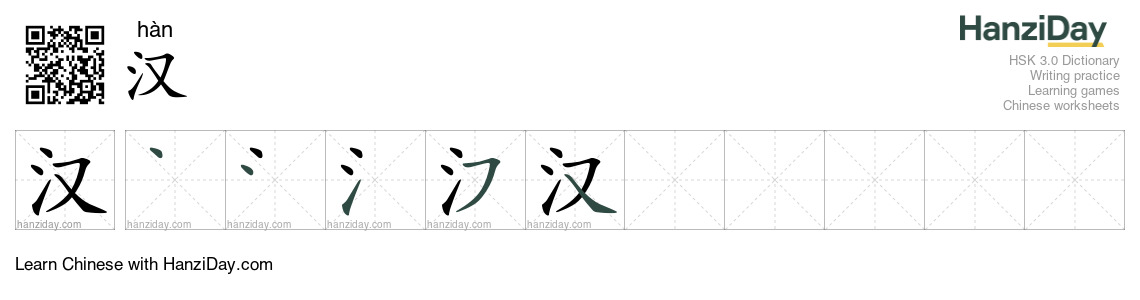
Stroke order
Games & Exercises 9
Find Hanzi
Find Hanzi is a playful exercise for learning Chinese. Spot characters, boost attention, download PDF, and enjoy studying Chinese through games!
Find Radical
Practice Chinese radicals online: choose the Hanzi containing the target component, use optional pinyin hints, and create printable PDF exercises.
Tone Trainer
Learn Mandarin tones online with the Chinese Tone Trainer. Practice tone recognition, pronunciation, and exercises for beginners and advanced learners.
Hanzi Connect
Match Hanzi with pinyin or identify words by sound. Use your own vocabulary or HSK 3.0/YCT levels. Play online after sign-in; printable PDFs with answers are for PRO.
Lost Stroke
Play online: find the missing stroke or radical, restore Chinese characters in order, and create printable PDF worksheets with pinyin and answers.
Calligraphy
Create calligraphy and custom Chinese character coloring pages with pinyin, stroke order, outline styles, and writing grids. Download a print-ready PDF for class or home.
Memo
Flip cards to match Chinese characters or pair Hanzi with Pinyin. Build a custom HSK 3.0 or YCT deck, play online, and create printable PDF cards.
Sudoku
Play Hanzi Sudoku online with 4×4, 6×6, or 9×9 grids, four difficulty levels, custom characters, and HSK 3.0/YCT sets. Create printable PDFs with answers.
Writing trainer
Practice Chinese character writing online with correct stroke order, outlines, a 3–2–1 preview, mistake-based hints, pinyin, and focused Hanzi review.









Examples of use 43
汉
语
(n.) Chinese language (also called 华语, 中文)
但
是
他
遗
憾
地
发
现
,
几
乎
没
有
一
本
英
文
书
能
充
分
解
释
汉
字
的
字
源
。
However, he regretted to find that almost no English book can fully explain the etymology of Chinese characters.
一
年
前
,
我
第
一
次
来
到
中
国
,
当
时
我
一
句
汉
语
也
不
会
说
。
A year ago, when I first came to China, I couldn't even speak a word of Mandarin.
不
管
你
说
错
多
少
次
汉
语
,
你
还
是
要
坚
持
多
说
,
因
为
这
是
学
习
口
语
的
正
确
方
法
。
No matter how many times you make mistakes in Chinese, you should persist on speaking, because this is the correct way to learn spoken Chinese.
我
会
说
汉
语
,
可
是
,
我
不
会
写
汉
字
。
I can speak Chinese, but I can't write Chinese characters.
我
现
在
会
用
汉
语
打
电
话
了
。
I can make phone calls in Chinese now.
请
大
家
严
格
按
照
老
师
的
要
求
按
时
完
成
作
业
,
这
对
提
高
汉
语
水
平
有
帮
助
。
Please finish your homework on time in strict accordance with the teacher's requirements, this would help to improve your Chinese.
我
哥
哥
在
武
汉
上
大
学
。
My brother goes to college in Wuhan.
他
的
汉
语
很
好
。
His Mandarin is very good.
虽
然
汉
语
的
词
语
很
多
,
但
是
我
们
有
很
多
办
法
来
记
住
它
们
Although there are many words in Mandarin, we have many ways to remember them
你
觉
得
汉
语
的
语
法
难
吗
?
Do you find Mandarin grammar difficult?
那
是
他
的
汉
语
老
师
。
That's his Chinese teacher.
一
个
教
室
是
汉
语
老
师
的
。
One classroom belongs to the Chinese teacher.
汉
语
是
他
的
母
语
。
Chinese is his mother tongue.
汉
语
的
语
法
很
容
易
。
The grammar of Chinese is very easy.
一
个
偶
然
的
机
会
,
他
发
现
如
果
了
解
汉
字
的
来
源
和
演
变
过
程
,
再
学
习
它
就
变
得
轻
松
、
容
易
。
By chance, he found that if he understood the origin and evolution of Chinese characters, it would be easy to learn them .
请
用
汉
语
说
你
的
名
字
。
Please say your name in Chinese.
你
的
汉
语
水
平
提
高
得
很
快
。
Your Chinese has improved rapidly.
我
会
说
一
点
儿
汉
语
。
I can speak a little Chinese.
我
会
说
一
点
汉
语
。
I can speak a little Chinese.
虽
然
中
文
写
字
有
点
难
,
但
是
汉
字
非
常
有
趣
!
Although writing in Chinese is a bit difficult, Chinese characters are very interesting!
我
们
都
有
汉
语
课
。
We all have Chinese lessons.
二
年
级
有
汉
语
课
吗
?
Are there any Chinese classes in year two?
一
个
美
国
人
的
汉
字
情
缘
An American's Love in Chinese Characters
我
有
五
个
汉
语
老
师
。
I have five Chinese teachers.
他
流
利
地
讲
了
一
个
汉
语
故
事
。
He told a Chinese story fluently.
你
一
年
以
前
开
始
学
习
汉
语
了
吗
?
Did you start studying Mandarin a year beforehand?
他
说
汉
语
说
得
很
流
利
。
He speaks Mandarin very fluently.
我
想
学
习
高
级
汉
语
。
I want to learn advanced Chinese.
她
星
期
六
上
午
要
上
网
学
汉
语
。
She will go online to learn Chinese on Saturday morning.
请
说
汉
语
。
Please speak Mandarin.
只
要
认
真
地
学
习
,
就
能
提
高
汉
语
水
平
。
As long as you study hard, you can improve your Chinese.
其
实
,
学
习
汉
语
很
有
意
思
。
Actually, learning Chinese is very interesting.
学
习
汉
语
其
实
很
有
意
思
。
Learning Chinese is actually very interesting.
我
在
学
习
汉
语
和
日
语
。
I'm learning Chinese and Japanese.
你
觉
得
汉
语
难
不
难
?
Do you think Mandarin is difficult or not?
西
方
人
觉
得
汉
字
很
难
学
。
Westerners find Chinese characters difficult to learn.
他
在
学
中
文
,
因
为
他
喜
欢
学
汉
字
。
He is learning Chinese because he likes learning Chinese characters.
他
被
网
友
亲
切
地
称
呼
为
“
汉
字
叔
叔
”
。
He was affectionately called "Uncle Chinese Characters" by netizens.
现
在
小
明
在
学
汉
字
。
Xiao Ming is learning Chinese characters now.
汉
字
Chinese character(s)
汉
文
Chinese written language | Chinese literature esp. as taught abroad
汉
族
Han ethnic group
Learn 汉 (hàn) in context
汉 appears here with its available localized meaning and tone-marked pinyin hàn. Listen to the pronunciation and review any examples, illustrations, or lexical links shown for this entry.
Use the sections available on this page to compare characters, components, radicals, related words, matching pronunciation, synonyms, or antonyms. HanziDay shows only the information supported by this entry.
Practice the stroke order for 汉
Use the stroke animation to follow the writing order, then practice the sequence with the interactive writing tool. After signing in, you can also create a printable worksheet from this entry within your current allowance.